
What Does a Plastic Extruder Do in Thermoforming Production?

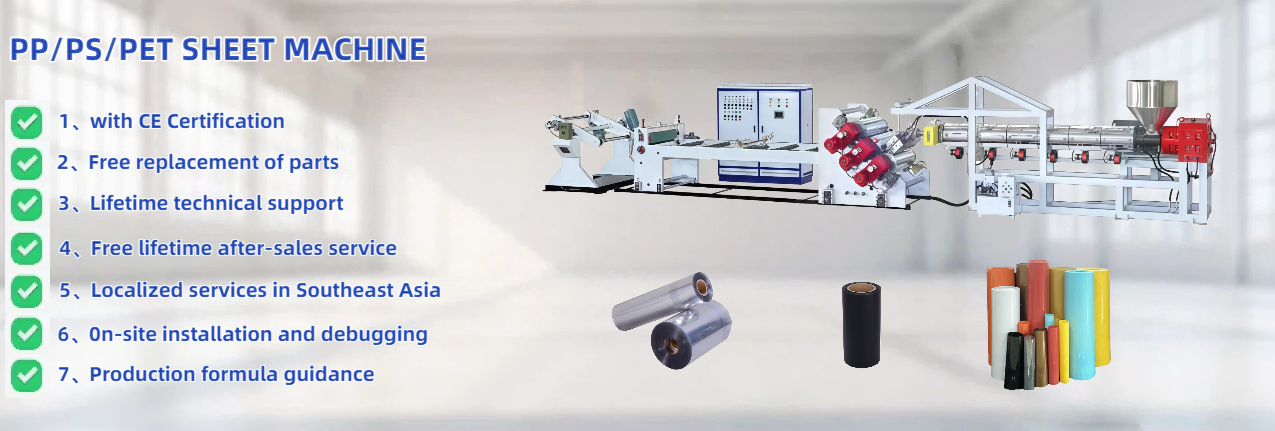
A plastic extruder is the core machine used to convert raw plastic materials into usable products such as sheets, films, or profiles.In packaging and thermoforming factories, the plastic extruder plays a decisive role in production stability and product consistency.
Downstream processes like thermoforming cannot be quality- and speed-wise maintained unless there is stable melt flow, accurate temperature control, and uniform sheet thickness.
ViHox develops plastic extrusion systems not as independent equipment, but as manufacturing platforms. It may be a full sheet extrusion line, a PP sheet extrusion machine with thermoforming, or even a small plastic extruder with pilot production, the aim is the same: transform raw polymer into stable and high quality material to be formed.
This article explains how a plastic extruder works, its role in industrial production, the materials it commonly processes, and the main challenges manufacturers face in maintaining stable output.
1. How Does a Plastic Extruder Work in Sheet Production?
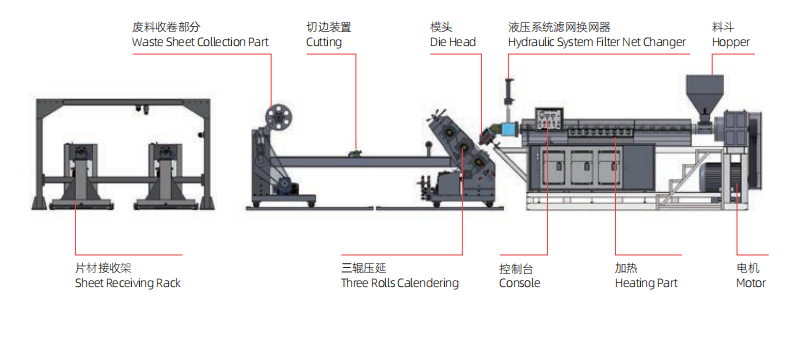
A plastic extruder operates by constantly melting raw plastic pellets and forcing the molten plastic through a shaping die to form a homogenous product, e.g. sheet or film. It might seem easy, but extrusion at the industrial level needs the close regulation of the heat, pressure, and flow of materials to ensure the production remains consistent.
A professional plastic extruder machine follows several coordinated steps to ensure consistent production.
Material Feeding and Compression
This is initiated by the plastic pellets being fed into the hopper and into the barrel. A rotating screw moving inside the barrel moves the material forward compressing it. The rotation of the screw causes friction and external heating of the material and this increases the temperature of the material until it turns into molten material.
Stable feeding is critical. When there is variation in the material input, the melt pressure is also not stable, this leads to the thickness control in sheet extrusion lines.
ViHox creates feeding systems which have a steady flow of materials, which ensures a consistent melt behavior earlier in the process.
Melting and Plasticization
As the material goes through the screw, it goes through several heating areas. The zones are heated in order to suit the melting properties of the polymer under processing.
Plasticization is made uniform in order to keep the melt viscosity constant. In case the material is overheated, degradation could be possible. Under-heating will result in a partial melt and flaws on the surface and change in thickness.
An effective sheet extrusion line for thermoforming machine ensures that there is a good temperature balance throughout the barrel and before the material is exposed to die, the machine does not become unstable.
Pressure Building and Filtration
Pressure is accumulated in the molten plastic before it is forced out of the barrel. This force has to be there in order to force the material to move evenly through the shaping die. At such a point, the melt is very likely to be filtered through a sieving screen so as to eliminate impurities or worn out particles.
Constant pressure is used to make sure that the sheet/profile that will be made later will be uniform in thickness throughout its width. One of the most widespread causes of sheet inconsistency is pressure fluctuation.
Screw geometry and pressure control are designed by professional plastic extrusion machine manufacturers to ensure stable production output in long production shifts.
Shaping Through the Die
The molten material flows out of the extruder via a die, in sheet production this is normally a flat T-die. The die then fills the melt evenly in the intended width creating a continuous sheet.
Precision at this stage determines:
-Thickness uniformity
-Edge stability
-Surface smoothness
In sheet extrusion lines combined with thermoforming machines, the accuracy of the thickness has a direct impact on both the performance of forming and the scrap rate.
Cooling and Stabilization
After leaving the die, the sheet passes through cooling rollers for stabilization and thickness control.
Controlled cooling allows the sheet structure to stabilize and establish end of roller thickness with the aid of calibrated roller gaps.
Inappropriate cooling may cause warping, internal stress or surface defects. Stable cooling is used to keep the sheet flat and uniform prior to winding or going to downstream processing.
Why the Plastic Extruder Working Principle Matters for Manufacturers
The mode of operation of a plastic extruder is worth knowing since each of the steps has an effect on the efficiency of production. Unstable melt flow and unstable cooling results in:
-Higher scrap rate
-Increased energy consumption
-Slower thermoforming cycles
-Reduced product consistency
At ViHox, we engineer extrusion systems to maintain stability across continuous operation. Whether you operate a full sheet extrusion line or a small plastic extruder for specialty production, controlled melting and shaping protect both product quality and long-term profitability.
2. What Is the Purpose of a Plastic Extruder in Thermoforming?
A plastic extruder is not merely meant to melt plastic but it is meant to provide a consistent stream of raw material which will be stable to aid in the onward production without failure. The plastic extrusion machine that is used in packaging and thermoforming factories dictates the consistency of material, cost management, and speed of production.
Polymer pellets are transformed into a controlled form of polymer (e.g. sheet) with homogeneous thickness and surface finish by an extruder. This sheet is the basis of thermoforming containers, trays, lids and other packaging products. Forming machines cannot be precise and high output without continuous extrusion.
Ensuring Material Uniformity
The main purpose of a sheet extrusion machine is to maintain uniform thickness across the full width of the sheet.Any slight deviation in thickness may result in uneven forming, weak bottoms of containers or trimming flaws.
Thermoforming machines are more efficient when the extrusion is stable. The heating is predictable, the formation of depth is constant and the scrap rate is reduced.
That is why those manufacturers that have high-speed forming lines rely on the stable sheet extrusion lines as the foundation of their production system.
Supporting Continuous Industrial Output
Industrial production has long working shifts. A plastic extruder should have the ability of maintaining consistent melt pressure and temperature throughout a long period of time. Poor production leads to unfinished production, rejection of products, and increased use of labor.
Professional plastic extrusion machines are designed for continuous operation with minimal performance variation. In ViHox, extrusion machines are constructed to withstand a long-term industrial workload, as opposed to brief testing.
Reducing Material Waste
Material cost is also high percentage of total cost of production. The aim of a quality plastic extruder machine is that it should have an optimal flow of materials and reduce any unwarranted variance.
Stable extrusion reduces:
-Thickness overcompensation
-Edge trimming waste
-Forming scrap
-Reprocessing cycles
Over time, even small reductions in material waste create substantial cost savings.
Enabling Production Flexibility
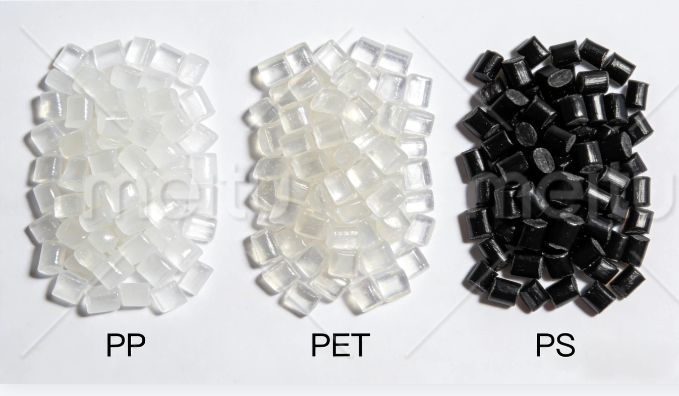
With the rightly set extrusion system, manufacturers can use other materials like PP, PS and PET without necessarily changing the entire machine. Such flexibility enables the factories to respond to the changes in demand in the market.
As an illustration, a sheet extrusion line fitted with thermoforming equipment can alternate between microwave-safe PP containers and clear PET retail trays, depending on the needs of a specific contract.
In the long term, flexibility defends investment and enables diversification into new types of products.
Why Purpose Matters for Investment Decisions
An extruder is not an addition to it, it is the working-horse of the factory. In case the extrusion quality is erratic, all the downstream processes become more difficult to manage.
The plastic extruder machines that we design at ViHox accommodate consistent sheet production, forming compatibility and scalable production. Our extrusion systems are aimed at offering manufacturers stability in materials supply that ensure quality and profitability.
3. What Materials Can a Plastic Extruder Process?
The work of a plastic extrusion machine is largely determined by the material in which one works with. The various polymers have varied effects with heat, pressure and cooling. The appropriate choice of the material is not limited to the appearance of the product only, the choice of the material influences not only the stability of forming but the level of energy consumption and the cost of production in the long term.
In the packaging and thermoforming of sheet extrusion lines, a number of materials are usually worked in.
Polypropylene (PP)
Polypropylene is a common material that is used in extrusion machines in the packaging of food. It is good in heat resistance, structural strength and chemical stability.
Controlled heating is necessary to avoid uneven shrinkage and warping in production of PP. It is also widely applied in microwave-safe containers of food, take away lunch boxes, and hot meal trays.
To manufacturers that use thermoforming lines, PP is flexible and durable and it is better in large volumes packaging market.
Polystyrene (PS)
Polystyrene is typically selected in terms of cost-focused application. It is also very clear and rigid and it is appropriate in cold food trays and disposable packaging.
Extrusion wise, the cooling of PS must be balanced to avoid brittleness. Control of thickness is also necessary to keep the cost of structures down without compromising on structural strength.
A high degree of surface quality and dimensional consistency of PS sheets during downstream forming is achieved by a stable sheet extrusion line.
Polyethylene Terephthalate (PET)
Clear packaging PET is also used extensively in clear packaging like food tray retailing and clear containers. It gives it very good clarity and good mechanical performance.
PET however requires high moisture control prior to extrusion. Bubbles or surface defects may be experienced unless it is dried properly. PET is also sensitive to temperature during the melting process in order to prevent degradation.
To ensure the stability of the PET sheet extrusion line, the manufacturers of the professional plastic extrusion machines design systems that are drying integrated and precisely thermically controlled.
PLA and Biodegradable Materials
As more people start thinking green, biodegradable products like PLA are adopting extrusion applications. The materials have low thermal stability and need to be handled with caution because of their low threshold.
The biodegradable materials may need changes in screw design and cooling factors to be processed. Such differences have to be accommodated by a flexible small plastic extruder or full-scale sheet extrusion line to provide stable production.
Material Selection and Production Strategy
The use of materials must be related to target markets and positioning of products. PP is generally used in microwave safe packaging and PET is commonly used in retail display packaging. PS might be used in cost-sensitive disposable trays.
We set up plastic extruder machines at ViHox based on the material profile and downstream forming needs. Material compatibility guarantees stable production of sheets, minimized wastes, and stable performance of forming.
4. What Are the Main Challenges in Plastic Extrusion?
The extrusion of plastics is a continuous process and any small variation of stability may impact large sheets of plastic. Even though the principle is straightforward, constant production during long production runs is a challenge, and there are a number of challenges.
- Thickness variation is a common issue caused by unstable melt pressure, uneven feeding, or poor die distribution. This leads to uneven thermoformed parts, higher scrap rates, and increased material usage.
- Temperature control is equally critical. Overheating can degrade polymers, while underheating causes incomplete melting and surface defects. Different materials such as PP, PS, and PET require precise multi-zone temperature stability.
- Cooling imbalance after the die can result in sheet warping and internal stress, negatively affecting thermoforming performance and cycle stability.
- Energy consumption is another concern. Inefficient heating and pressure control raise operating costs over time, reducing overall profitability.
- Finally, poor integration with downstream equipment can increase setup complexity and scrap if sheet dimensions and quality do not match forming requirements.
These issues are resolved at the extrusion phase to safeguard factory productivity. ViHox, being a long time manufacturer of plastic extrusion machines also concentrates on developing stable and industrial grade extrusion machines that minimize operational risk and facilitates the increase of production in the long term.
Conclusion
A plastic extruder is not just a melting machine it determines stability, efficiency, and profitability of the whole production line. Downstream thermoforming is faster, cleaner, and more predictable when the melt flow, temperature control, and sheet thickness is constant. In the case of unstable extrusion, scraps become higher, energy expenses are higher and production efficiency is lower.
ViHox develops plastic extruder machines and complete sheet extrusion lines, which are to run on the basis of consistent packaging manufacturing. You need a full scale sheet extrusion machine with thermoforming or you need a small plastic extruder with controlled output, the objective is to have a stable supply of material, minimize waste and increase the industrial performance accordingly. The right extrusion system is not just equipment; it is the foundation of long-term production security.
Need the Right Plastic Extruder for Your Production Line?
If you are planning a food packaging or thermoforming project, our engineering team can help you choose the right plastic extruder configuration based on your material, sheet thickness, and production target.
Frequently Asked Questions
1. How do I choose the right plastic extruder machine for my production target?
You choose the right plastic extrusion machine by aligning it with your actual output goals, sheet thickness requirements, and downstream forming equipment. Selecting a machine based only on maximum capacity often leads to instability or wasted energy. At ViHox, we evaluate your product range, material type, and expansion plan before recommending a configuration. This ensures your investment supports stable production today and scalable growth tomorrow.
2. Can one sheet extrusion line really handle PP, PS, and PET efficiently?
You can run PP, PS, and PET efficiently on one sheet extrusion line when the screw design, temperature control system, and drying configuration are properly engineered. Multi-material capability allows you to enter different packaging markets without buying separate equipment. ViHox designs extrusion systems that adapt to material shifts, protecting your factory from market fluctuations.
3. What happens if sheet quality is unstable during production?
If sheet quality is unstable, scrap increases, forming defects rise, and production speed drops. The key is preventing instability before it happens. ViHox extrusion systems are engineered for pressure stability, controlled cooling, and uniform thickness to reduce these risks. Stable extrusion protects not just sheet quality it protects your profit margin.
4. Is it better to buy extrusion and thermoforming equipment from the same supplier?
You reduce integration risk significantly when extrusion and forming systems are engineered together. When sheet thickness tolerance matches mold requirements, commissioning becomes faster and production stabilizes sooner. ViHox provides coordinated extrusion and forming solutions to eliminate compatibility issues that commonly occur when sourcing equipment separately.
5. How does working with ViHox reduce long-term operational risk?
You reduce long-term operational risk by choosing a supplier that focuses on system stability rather than isolated machine performance. ViHox provides complete sheet extrusion lines, technical guidance, and ongoing support to ensure your equipment operates consistently under industrial workloads. Reliable extrusion performance means fewer disruptions, lower waste, and stronger contract fulfillment capability.
6.Why Choose ViHox Plastic Extrusion Systems?
-Stable melt pressure for consistent sheet quality
-Configurations for PP, PS, PET, and PLA
-Designed for integration with thermoforming machines
-Reduced material waste and energy consumption
-Support for continuous industrial production
-Technical guidance for complete packaging lines