Plastic Cup Making Machine and Plastic Thermoforming Machine: Complete Guide for Packaging Manufacturers


Plastic Cup Making Machine and Plastic Thermoforming Machine: A Complete Guide for Packaging Manufacturers
The global packaging industry has experienced rapid growth in recent years, especially in the food and beverage sector. Disposable plastic containers such as cups, lids, trays, and plates are now essential products for restaurants, beverage brands, supermarkets, and takeaway businesses. To produce these products efficiently, manufacturers rely on advanced equipment such as the plastic cup making machine, plastic thermoforming machine, and plastic vacuum forming machine.
For factory owners and packaging manufacturers, selecting the right plastic forming equipment is a critical investment decision. Production efficiency, material compatibility, mold precision, and long-term operating costs all depend on the capabilities of the machines used in the production line.
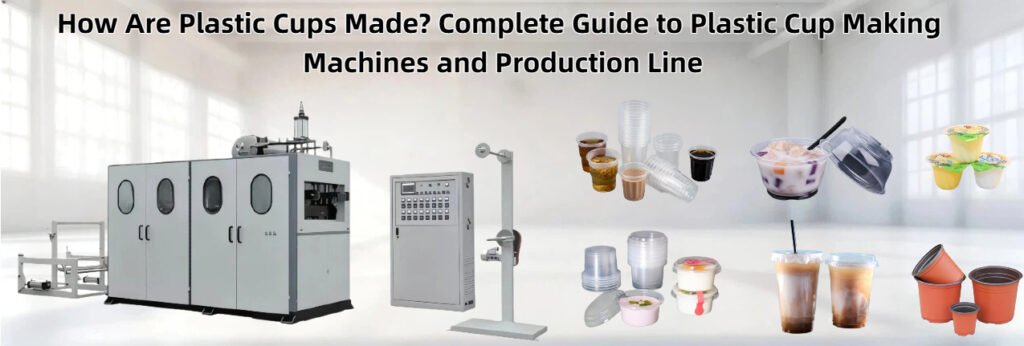
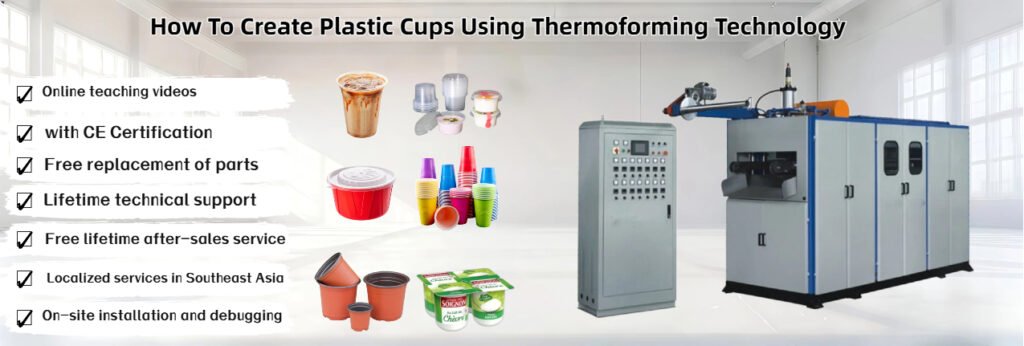
A plastic cup making machine uses thermoforming technology to transform heated plastic sheets into disposable containers through heating, forming, cooling, and trimming processes.
Modern thermoforming equipment allows manufacturers to produce thousands of cups per hour with consistent thickness and high production efficiency.
This article provides a comprehensive overview of plastic cup making machines, thermoforming technology, and vacuum forming equipment, helping packaging manufacturers understand the production process and choose the right machinery for their factory.
What Is a Plastic Cup Making Machine?
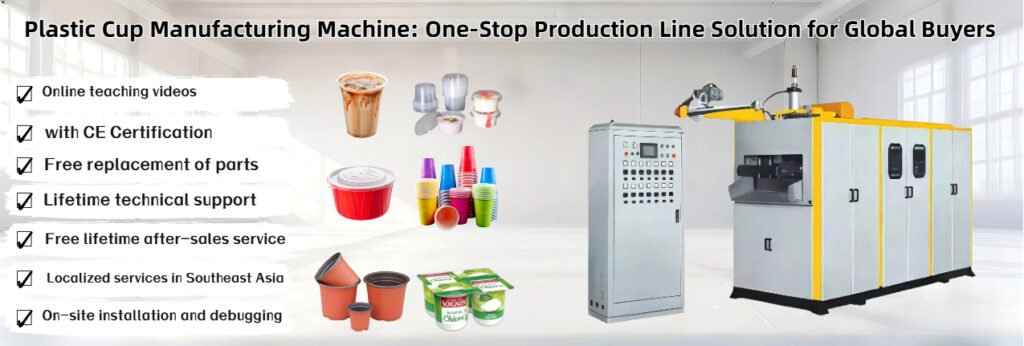
A plastic cup making machine is industrial equipment designed to manufacture disposable plastic cups, bowls, trays, and food containers from thermoplastic sheets such as PP, PET, or PS.
These machines are widely used in:
-beverage cup production
-yogurt container manufacturing
-food packaging factories
-takeaway container production
-supermarket packaging facilities
The machine typically consists of several integrated systems:
1、Plastic sheet feeding system
Plastic sheets or rolls are automatically fed into the machine through a sheet unwinder. This ensures continuous production and stable material supply.
2、Heating system
The electric heater softens the plastic sheet until it becomes pliable enough to be molded.
3、Forming station
At this stage, the heated sheet is pressed against a mold using vacuum pressure, compressed air, or mechanical force to shape the plastic into cups or containers.
4、Cooling system
The molded plastic is cooled quickly to maintain shape stability and structural strength.
5、Cutting and stacking system
Finally, the finished cups are trimmed from the sheet and automatically stacked for packaging.
The integration of these steps allows modern machines to perform continuous high-speed production with minimal labor requirements.
Understanding the Plastic Thermoforming Process
The core technology behind most disposable packaging equipment is plastic thermoforming.
Thermoforming is a manufacturing process in which a plastic sheet is heated to a pliable temperature, shaped over a mold, and then trimmed to create the final product.
This process is widely used in the packaging industry because it offers several advantages:
-lower tooling costs compared with injection molding
-faster production cycles
-high material utilization
-flexibility in product design
The thermoforming process typically involves the following steps.
Step 1 – Sheet Extrusion
The process begins with plastic pellets that are melted and extruded into thin sheets. These sheets serve as the base material for thermoforming.
Step 2 – Sheet Heating
The plastic sheet is heated in an oven until it becomes soft and flexible.
Step 3 – Forming
The heated sheet is pressed against a mold using vacuum pressure or compressed air, forming the shape of the final product.
Step 4 – Cooling
The molded plastic is cooled rapidly to maintain structural stability.
Step 5 – Trimming
Excess material is removed to create a finished product with clean edges.
Through this process, manufacturers can produce disposable cups, lids, trays, clamshell containers, and many other food packaging products.
Plastic Vacuum Forming Machine vs Thermoforming Machine
Many buyers are confused about the difference between vacuum forming machines and thermoforming machines.
In fact, vacuum forming is a type of thermoforming technology.
Vacuum forming works by heating a plastic sheet and using vacuum pressure to pull the material tightly against a mold.
Thermoforming, on the other hand, is a broader category that includes several forming methods:
-Vacuum forming
-Pressure forming
-Mechanical forming
For high-volume disposable packaging production, most modern factories use pressure thermoforming machines or fully automatic cup forming machines, which provide higher precision and better material distribution.
Vacuum forming machines are more commonly used for:
-trays and lids
-Disposable takeaway food containers
Understanding the differences between these technologies helps buyers choose equipment suitable for their production requirements.
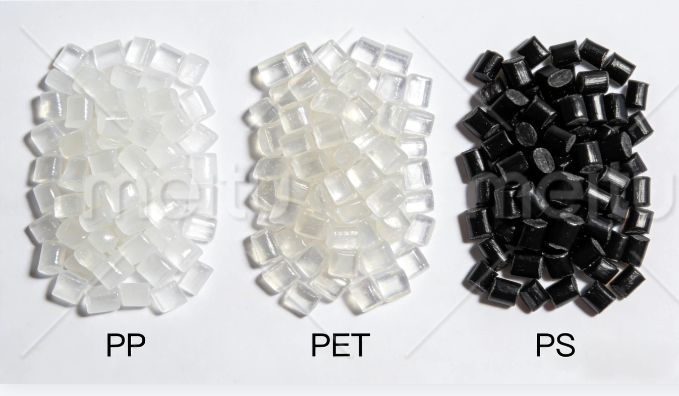
Key Materials Used in Plastic Cup Production
A wide range of thermoplastic materials can be used in cup manufacturing. The most common materials include:
PP (Polypropylene)
PP is widely used for hot beverage cups and food containers. It offers excellent heat resistance and chemical stability.
PET (Polyethylene Terephthalate)
PET is known for its transparency and strength. It is commonly used for cold beverage cups and dessert packaging.
PS (Polystyrene)
PS is lightweight and easy to thermoform, making it popular for disposable cups and yogurt containers.
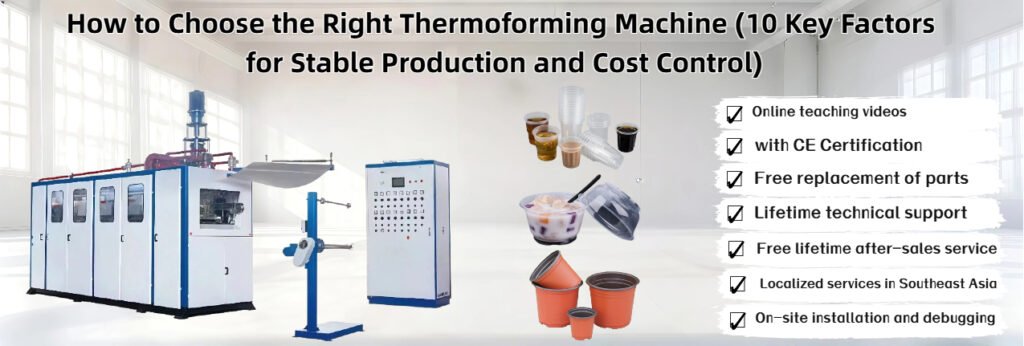
How to Choose the Right Plastic Cup Making Machine
For factory owners planning to start a disposable cup production line, several factors must be considered when selecting equipment.
Production capacity
Machine output can vary significantly depending on the forming area and mold design.
Typical production capacities include:
-10,000 cups per hour
-20,000 cups per hour
-30,000 cups per hour
Material compatibility
The machine should support multiple materials such as PP, PET, and PS to provide flexibility for different packaging applications.
Automation level
Modern machines often include fully automatic feeding, forming, trimming, and stacking systems, reducing labor costs.
Mold flexibility
A well-designed mold system allows manufacturers to produce multiple cup sizes using the same machine.
After-sales support
Technical support, training, and spare parts availability are essential for long-term production reliability.
Choosing the right supplier with strong engineering experience can significantly reduce operational risks.
Benefits of a Complete Plastic Cup Production Line
Many packaging factories today prefer a complete plastic cup production line, which integrates several machines:
-plastic sheet extrusion machine
-plastic cup making machine
-Cup dispenser
-Packaging machine
This integrated system offers several advantages.
Higher production efficiency
Continuous inline production reduces handling time and improves workflow.
Lower production costs
Recycling scrap material directly into the extrusion process reduces material waste.
Stable product quality
Automated systems maintain consistent temperature, pressure, and forming conditions.
For large-scale packaging factories, a full production line ensures maximum efficiency and profitability.
Future Trends in Plastic Thermoforming Technology
The plastic packaging industry continues to evolve, and new technologies are improving production efficiency and sustainability.
Some key trends include:
Servo-driven thermoforming machines
Servo systems provide higher precision and lower energy consumption compared with traditional hydraulic machines.
Smart manufacturing
Modern machines integrate sensors and digital monitoring systems to track production parameters and reduce downtime.
Sustainable materials
Biodegradable plastics and recyclable materials are becoming increasingly important in packaging production.
Energy-efficient heating systems
Advanced heating technology improves temperature control and reduces electricity consumption.
Manufacturers who invest in modern equipment will be better positioned to meet future market demands.
Conclusion
The demand for disposable packaging continues to grow worldwide, making plastic cup making machines and plastic thermoforming machines essential equipment for packaging manufacturers.
Understanding the thermoforming process, machine components, and material options allows factory owners to make informed investment decisions. By selecting high-quality equipment and optimizing production lines, manufacturers can achieve higher productivity, consistent product quality, and long-term operational efficiency.
For businesses entering the packaging industry, investing in reliable plastic cup production equipment is not only a technical decision but also a strategic step toward building a competitive and sustainable manufacturing operation.