Industry News

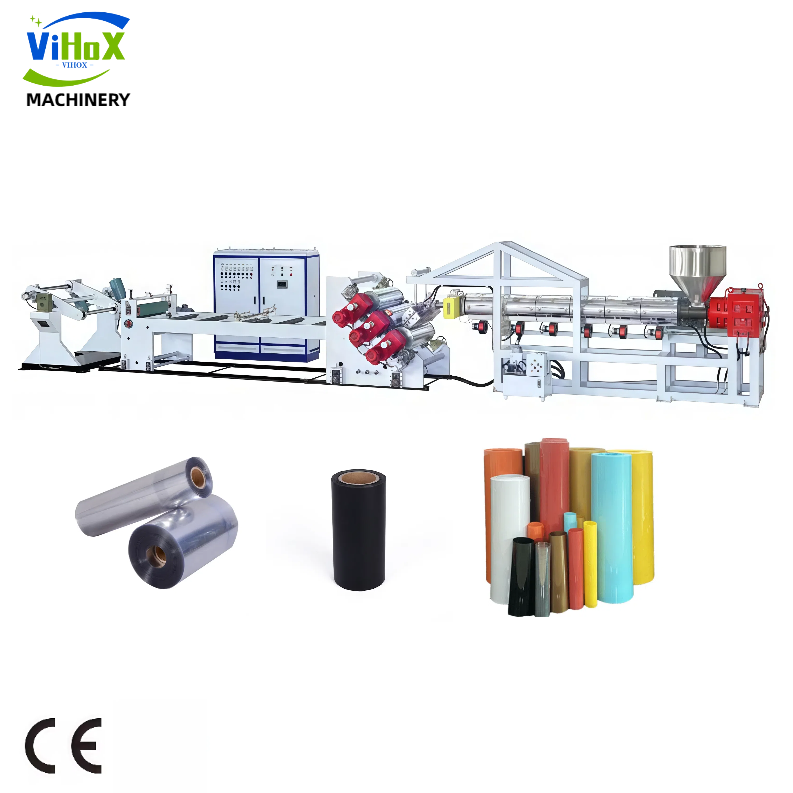
Plastic Sheet Extrusion Line for Thermoforming Production

PP/PS/PET Sheet Machine: Automatic Plastic Sheet Extrusion Equipment (Wear-Resistant, Corrosion Resistant & High Temp Resistant)

In any successful thermoforming factory, the sheet extrusion line, not the forming machine, is the real foundation of stable production.Even the most modern forming system cannot ensure precision output unless it produces a steady melt flow, consistent sheet thickness and even cooling.

For manufacturers entering the food packaging industry,disposable container, or PP/PET sheet production markets, the extrusion process defines the quality of products and efficiency of the material, as well as the cost of operation in the long term.

In ViHox, the plastic sheet extrusion machines are not designed as individual equipment, but they are incorporated into an entire production system. No matter you are constructing a new processing facility or refurbishing an old one, the appropriate plastic extruder machine will make your raw material conversion stable even before the thermoforming process is initiated. 

The sheet extrusion line is well configured to enhance the uniformity of sheets, minimize the waste of materials, and ensure that the sheet is compatible with other forming equipment down the line. We will take a closer look at the way a plastic sheet extrusion machine operates, the main parts of its design and see the reasons why a combination of extruders with molds and forming systems is even more profitable structure of production.

1. What Is a Plastic Sheet Extrusion Line for Thermoforming?

A sheet extrusion line for thermoforming is a continuous process used to manufacture thin sheets of plastic material which are of regulated thickness and with an even surface quality using plastic raw material pellets. They are then thermoformed in the form of food containers, trays, lids, cups, and other packaging products.The extrusion stage determines whether downstream forming machines can operate efficiently.If sheet quality is unstable, forming performance will decline.

A complete sheet extrusion line, in contrast to small stand-alone plastic extruder machines that produce basic sheet, combines feeding, melting, filtering, sheet forming, cooling, and winding into a single coordinated workflow. All steps have to be carried out with accuracy in order to have constant sheet width, thickness tolerance and smoothness.

Industrial Purpose of a Plastic Sheet Extrusion Machine

The quality of sheet used in food packaging production has a direct impact on the performance of forming. Uneven thickness can cause:

-Weak container bottoms

-Inconsistent wall distribution Poor sealing edges

-Increased scrap rate

Properly designed plastic sheet extrusion machine will assure:

-Stable melt pressure

-Uniform sheet thickness

-Controlled cooling

-Smooth surface finish

In the case of manufacturers that run systems of thermoforming, the stability in supplying sheets averts downtime in machines, and safeguard output efficiency.

Materials Processed in a Sheet Extrusion Line

The current sheet extrusion lines have been designed to work with the following materials:

-PP (Polypropylene)

-PS (Polystyrene)

-PET (Polyethylene Terephthalate)

-PLA (Biodegradable options)

Material behavior varies significantly. For example:

-PP requires stable temperature control to prevent warping.

-PET demands moisture control and precise melting conditions.

-PS needs controlled cooling to prevent brittleness.

ViHox assembles every plastic extruder machine based on the required material and downstream forming needs, and so that the amount of the fabricated sheet can be used to perform thermoforming.

Why Extrusion Line Quality Determines Long-Term Profitability

Most manufacturers emphasise a lot on forming machine and underestimate the extrusion stage. But the result of sheet production is unstable is:

-Higher defect rates

-Increased trimming waste

-Reduced forming speed

-Higher energy consumption

An extrusion line with constant sheet transforms facilitates resource use and decreases the unit cost of production.

As an experienced manufacturer of plastic extrusion machines,ViHox designs extrusion systems that are compatible with thermoforming machines, and this makes the production facilities to be synchronized rather than separated units.

2. How Does a Plastic Extrusion Machine Work?

A plastic extrusion machine is a type of machine that is used to shape plastic raw material into continuous flat sheet under regulated temperature and pressure requirements. Although the principle seems simple, the manufacturing of the industrial sheets demands the accurate regulation of the melting dynamics, the pressure maintenance, the thickness adjustment, and the rapidity of obtaining the coolness.

In an extrusion machine of plastic sheets, each step is synchronized so that there is consistency in the flow of materials and their dimensions.

Raw Material Feeding and Melting Process

Plastic pellets are sometimes loaded into the feeding hopper where the process starts. The material is then fed in the screw barrel system where it is compressed and slowly heated. The rotating screw pushes the material forward producing friction heat, a stable state of the plastic in molten state is attained.

The temperature level in different parts of the barrel is adjusted separately so that it corresponds to the melting properties of the material under processing. For example:

-PP requires stable heating to prevent degradation.

-PS needs balanced heating to maintain surface quality.

-PET demands consistent melt temperature and moisture control.

Stable melting ensures uniform viscosity before the material reaches the die head.

Melt Filtration and Pressure Stabilization

The molten plastic is filtered before it is molded into sheet. It eliminates impurities and contaminants that may impact smoothness of the sheets or precision of the downstream forming.

The pressure of the melt should not decrease during this period. Varying pressure will result in change of thickness, which will subsequently influence the performance of container forming. A properly designed plastic extruder machine also ensures that the pressure is constant due to the optimization of the screw and the melt flow channels.

ViHox extrusion systems are designed such that the melt pressure remains constant as the sheet thickness remains constant over the entire width.

Sheet Forming Through T-Die

The molten plastic is then filtered followed by injection into a flat T- die. The die disperses the material uniformly on the sheet required. Die design has a direct impact on uniformity of thickness and stability of edges.

Sub-micro fine adjustments regulate die lip. sheet-thickness. Accuracy in this case minimizes material waste and enhances downstream thermoforming accuracy.

Cooling and Thickness Calibration

After leaving the die, the sheet goes through a row of chilled rollers. These rollers are very important as they are used in two significant functions:

-Rapid cooling to stabilize sheet structure

-Thickness calibration through controlled roller gap

Even cooling eliminates the warping, and makes it flat. The amount of control at this stage is the thickness which defines the accuracy of the sheet in thermoforming.

Winding or Inline Integration

Once cooled, the sheet can be rolled up into a roller to be used later, or can be introduced into a thermoforming system in an inline system.

In line integration saves on the reheating time, and the efficiency in total production. It is especially useful in large-scale packaging plants.

Why Working Principle Matters for Buyers

It is significant to know the operating mechanism of a sheet extrusion line since it leads to sheet instability that results in:

-Forming defects

-Increased scrap

-Higher energy consumption

-Machine downtime

ViHox develops extrusion systems as a whole production strategy. Downstream forming machines work more effectively and generate consistent food-grade containers when the plastic extruder machine has a stable melt control, pressure balance and consistent cooling.

PP/PS Sheet Extrusion Machine - Automatic Plastic Sheet Manufacturing Equipment for Packaging

3. Core Components of a Plastic Sheet Extrusion Line and Their Functions

A sheet extrusion line for thermoforming does not exist as a single machine, rather, it is a system in which every component has a direct impact on the stability of the sheets, the ability to achieve thickness, the energy efficiency, and even the thermoforming performance in the downstream. The whole production flow becomes destabilized in case, even one of the sections is not designed properly.

PP/PS Sheet Extrusion Machine - Automatic Plastic Sheet Manufacturing Equipment for Packaging

In ViHox, we design PP sheet extrusion line for food packaging to have a balanced mechanistic structure and preventive control systems. The essential elements that define the quality of extrusion and durability are listed below.

Feeding System and Hopper

The feeding system regulates the entry of the raw material into the plastic extruder machine. It may seem to be a straightforward thing, but regular feeding will avoid fluctuation of the melt pressure and screw overloading.

Key functions:

-Ensures steady material input

-Prevents material bridging or blocking

-Supports automatic feeding options

-Can integrate drying systems for PET

In the case of PET thermoforming, it is important to control the moisture. Systems with inbuilt drying eliminate any residual moisture before extrusion and thus avoid the formation of bubbles and surface blemishes.

Constant feeding corresponds to constant melting, which directly safeguards uniformity of sheet thickness.

Extrusion Screw and Barrel

The plastic extrusion machine is composed of the screw and barrel. The melting efficiency, quality of the material mixed, and stability in pressure are dependent on their design.

Functions of the screw system:

-Gradual compression of pellets

-Uniform melting through shear and heat

-Stable forward material transport

-Pressure buildup before die entry

  • Pressure buildup before die entry

Screw combinations are dependent on the material. The melting behaviors of PP, PS and PET are different. An appropriately matched screw design helps to save energy although the melt flow remains constant.

ViHox extrusion systems are set to fit material type and the desired sheet thickness, making sure that there is an efficient plasticization without material degradation.

Heating System and Temperature Control

Multi-zone temperature control is needed in industrial extrusion. The heating of each barrel section is independent to control the melting stages.

Functions include:

-Controlled gradual melting

-Prevention of overheating

-Uniform melt viscosity

-Energy efficiency

Temperature instability causes:

-Thickness variation

-Surface waves

-Melt fracture

-Reduced mechanical strength

The high temperature of a sheet extrusion line allows consistency of materials prior to entering the die.

Melt Filter and Screen Changer

Molten plastic is filtered by a melt filtration system before going into the T-die. This eliminates dirt, pollutants and worn out particles.

Functions:

-Improves sheet surface smoothness

-Prevents die blockage

-Protects downstream forming molds

-Reduces defect rate

In food packaging production, surface cleanliness is essential. A stable filtration system protects final product appearance and structural quality.

T-Die (Sheet Forming Die)

T-die is used to roll plastic melting into a thin sheet of specific width and thickness.

Its precision determines:

-Thickness uniformity across width

-Edge stability

-Surface finish

-Material distribution

The operators can adjust thickness tolerance through fine lip adjustment mechanisms. Any small die misalignment may multiply scrap rate by a considerable margin.

ViHox plastic sheet extrusion machines employ dies of high accuracy to ensure that the material is uniformly distributed along the width of the sheet.

Calender Rollers and Cooling System

When the sheet comes out of the die, it passes through the roller system of the calender. In this step, cooling and thickness calibration is done.

Roller system functions:

-Rapid sheet cooling

-Surface smoothing

-Thickness adjustment

-Flatness stabilization

Controlled cooling ensures that there is no warping, no internal stress accumulation, and the surface is smooth. Final sheet thickness is determined by the gap between rollers.

The thickness variation in the production of thermoforming is a direct influence of forming depth and trimming precision. Calibration of the stable rollers lowers the amount of material wastage in forming.

Haul-Off and Winding System

After cooling, the sheet must be pulled forward at consistent speed. The haul-off unit controls sheet tension and maintains synchronization with upstream extrusion speed.

Functions:

-Maintains constant sheet tension

-Prevents stretching distortion

-Ensures smooth roll winding

The inappropriate tension leads to fluctuation of thickening and deformation of the sheets. Constant tension control is used to provide compatibility with downstream thermoforming machines.

Control System (PLC and Automation)

Modern sheet extrusion lines rely on centralized control systems.

Control system functions:

-Real-time temperature monitoring

-Melt pressure display

-Speed synchronization

-Alarm and safety protection

-Parameter storage

-Repeatability is enhanced by automation. When ideal settings are done, the operators will be able to replicate similar sheets without having to adjust the settings manually.

Why Component Quality Determines Long-Term ROI

Comparing extrusion systems most buyers base their criteria on power rating or maximum output only. Nevertheless, the actual stability of production is determined by the combination of screw design, precision of dies, and cooling performance coupled with automation.

A well-balanced sheet extrusion line:

-Reduces material waste

-Lowers energy consumption

-Improves thermoforming performance

-Protects mold lifespan

-Maintains stable output across long shifts

Being the long-established manufacturers of plastic extrusion machine, ViHox manufactures a system that is compatible with thermoforming equipment to produce a complete production efficiency instead of the isolated performance of the machine.

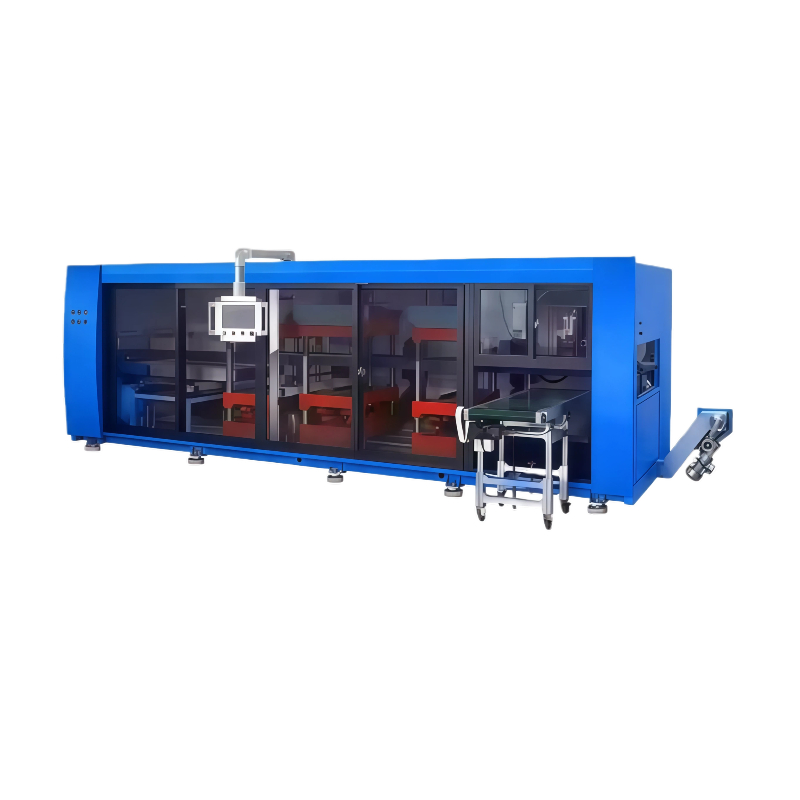
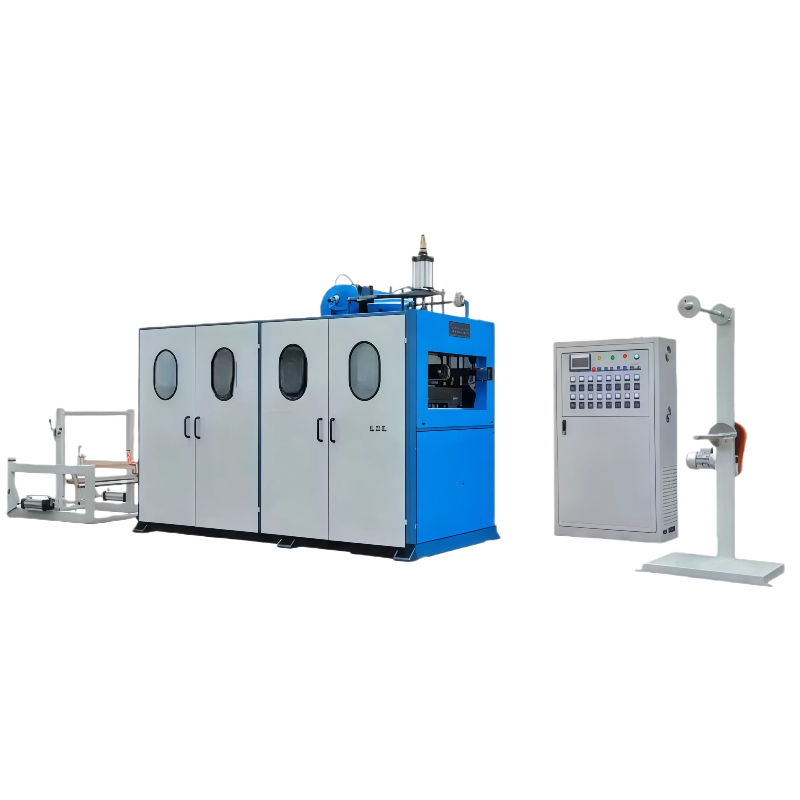
4. One-Stop Production Lines: Extruders + Molds + Forming Machines

A lot of factories buy plastic extruder machine, molds, and thermoforming equipment of various suppliers. Practically it frequently causes difficulties in integration – variability of sheet thickness, unreliable forming results and increased commissioning time. The extrusion machine of the plastic sheets should be designed to fit into the system of forming. When the requirements of the sheet quality and the requirements of the mold are not matched, the efficiency of the production will decrease, and the quantity of scrap will increase.

At ViHox, we offer end to end solutions of sheet extrusion lines coupled with molds and thermoforming machines. The extrusion system is set in terms of forming area, type of material and structure of final product. This guarantees stability in sheet thickness, heating control behavior and predictable forming behavior. Rather than debugging the functionality across several suppliers, manufacturers are being given an integrated production system that would be executed as a single unit.

Complete one-stop plastic production line English flow chart

Why Integration Matters

When extrusion and forming are designed to go hand in hand, it is easier to get commissioning and manufacturing is stabilized sooner. Sheet tolerance is equivalent to the mold design, minimizing the waste of trimming and safeguarding the lifetime of the mold. This enhances productivity consistency and reduces the unit cost of production.

ViHox is a manufacturer of complete production systems and not individual machines as experienced plastic extrusion machines manufacturers. The synchronized extrusion and making line will lower the risk of operations and make a more sustainable base of the long-term food packaging manufacture.

Conclusion

A line of plastic sheet extrusion is not merely a support system it is the core of thermoforming production stability. By means of the control of sheet thickness, melt flow, and cooling stability, downstream forming machines work more effectively, and the quality of products is consistent. Lack of extrusion performance compounds scrap, wastes energy and reduces the speed of production.

At ViHox, we design plastic sheet extrusion machines as part of complete production solutions. By integrating extrusion systems with molds and thermoforming equipment, manufacturers reduce compatibility risk, shorten commissioning time, and protect long-term profitability. If your goal is to build a reliable food packaging production line with stable output and scalable capacity, the right extrusion configuration is where long-term efficiency begins.

Frequently Asked Questions

1. How do I know if a plastic sheet extrusion line fits my production needs?

You know if a sheet extrusion line fits your production needs by evaluating your target sheet thickness, material type, and forming machine compatibility. ViHox analyzes your thermoforming requirements and configures the extrusion system accordingly to ensure stable integration and predictable output.

2. Can one plastic extruder machine run both PP and PS materials?

You can run both PP and PS materials on one plastic extruder machine when it is configured with appropriate screw design, temperature control, and drying systems. ViHox adjusts extrusion parameters to ensure consistent melting and sheet quality for multi-material production.

3. What makes a professional plastic extrusion machine manufacturer different?

A professional plastic extrusion machine manufacturer focuses on system stability, material compatibility, and downstream integration not just maximum output numbers. ViHox designs sheet extrusion lines that synchronize with thermoforming machines to reduce waste and improve long-term operational reliability.

4. How long does it take to integrate extrusion with thermoforming?

You can integrate extrusion with thermoforming more efficiently when both systems are engineered together. ViHox provides synchronized configurations that reduce commissioning complexity and accelerate production startup.

5. Why choose a one-stop extrusion and forming solution?

You choose a one-stop solution to reduce technical mismatch, shorten installation time, and lower operational risk. By sourcing extrusion, molds, and forming machines from ViHox, manufacturers gain a coordinated production system designed for consistent food packaging manufacturing.

发表回复

您的邮箱地址不会被公开。 必填项已用 * 标注