
Plastic Vacuum Forming Machines for Packaging Trays and Custom-Formed Parts
Semi-automatic vacuum forming solutions for shaping thermoplastic sheets into trays, blister shells, electronic inserts, masks, signs and other plastic parts. Separate hydraulic cutting or trimming is required after forming.
✅️ Custom Forming Area and Depth ✅️ Mold and Trimming Solutions
✅️ Factory Trial Forming Before Delivery ✅️ Installation, Training and Spare Parts Support
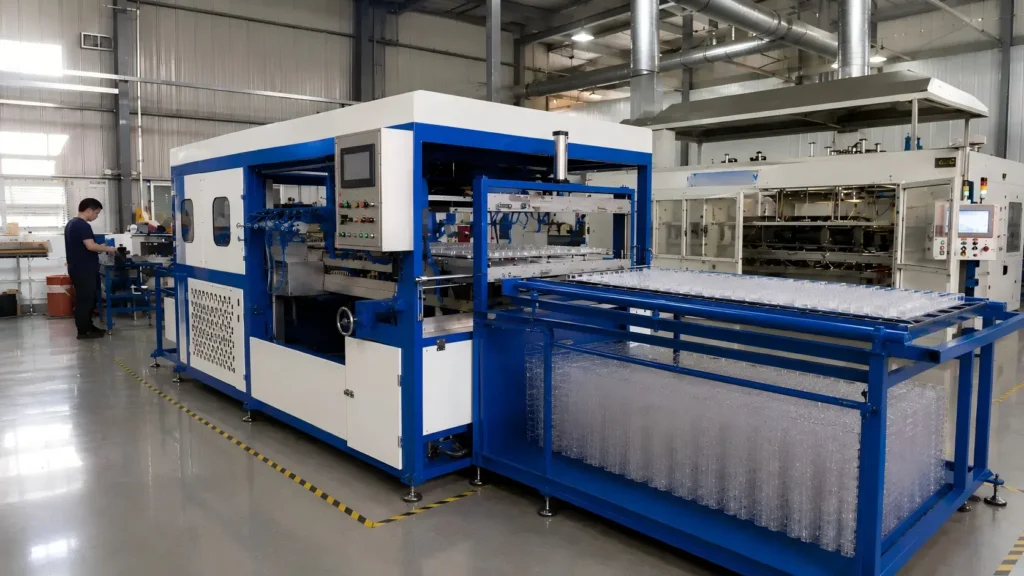
What Is a Plastic Vacuum Forming Machine?
A plastic vacuum forming machine heats a thermoplastic sheet until it becomes soft, then uses vacuum pressure to pull the heated sheet tightly over or into a forming mold. After cooling, the formed plastic part is released and trimmed according to the final product shape.
Compared with high-speed multi-station thermoforming equipment, vacuum forming machines are often selected for products with larger shapes, lower or medium production volumes, prototype development and applications that require flexible mold changes. The suitable machine configuration depends on the product dimensions, forming depth, sheet material, thickness, trimming method and required output.
Sheet Clamping → Heating → Vacuum Forming → Cooling and Demolding
What Products Can a Plastic Vacuum Forming Machine Produce?
Vacuum forming machines can be configured for packaging, industrial trays, prototypes and customized plastic parts in different materials and thicknesses.
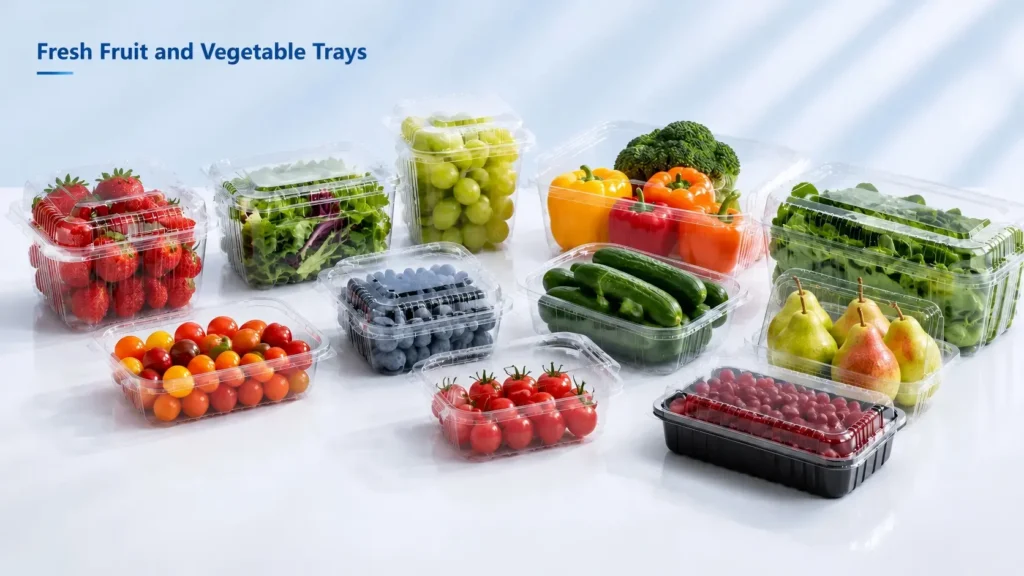
Fresh Fruit and Vegetable Trays
Typical sheet materials: PET, PP or PS
Suitable for berries, grapes, tomatoes, mushrooms and other fresh produce. Tray dimensions, cavity layouts and product-positioning structures can be customized for retail display, transportation and gift-box packaging.
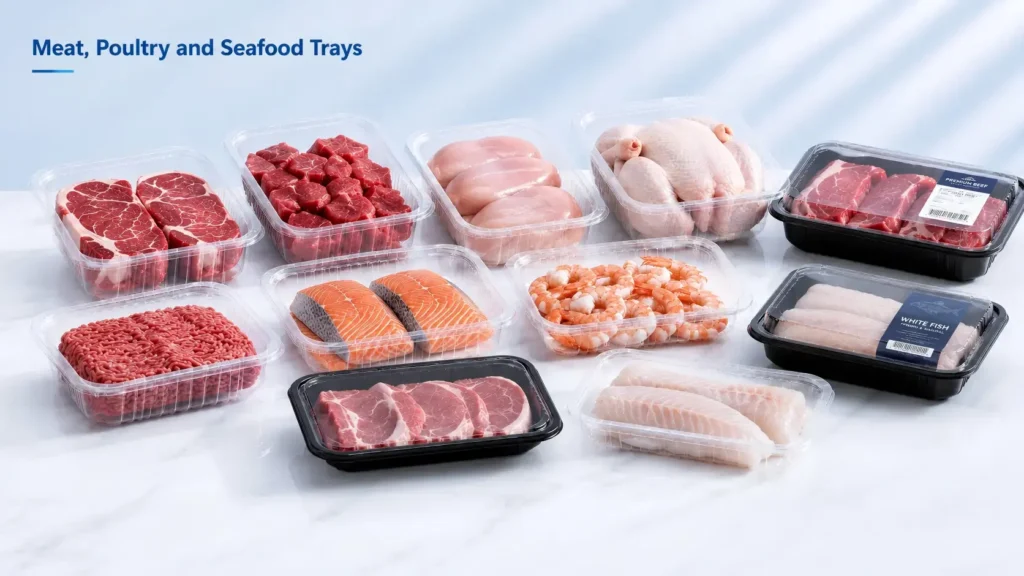
Meat, Poultry and Seafood Trays
Typical sheet materials: PET, PP or PS
Suitable for chilled meat, poultry, seafood and frozen-food packaging. Tray dimensions, forming depth and compartment layouts can be customized according to product size and downstream sealing requirements.

Cosmetic and Personal Care Inserts
Typical sheet materials: PET, PVC or PS
Suitable for perfume, skincare products, cosmetics, beauty tools and personal care gift sets. Cavity shapes, compartment layouts, sheet colors and surface textures can be customized to match the packaged products.
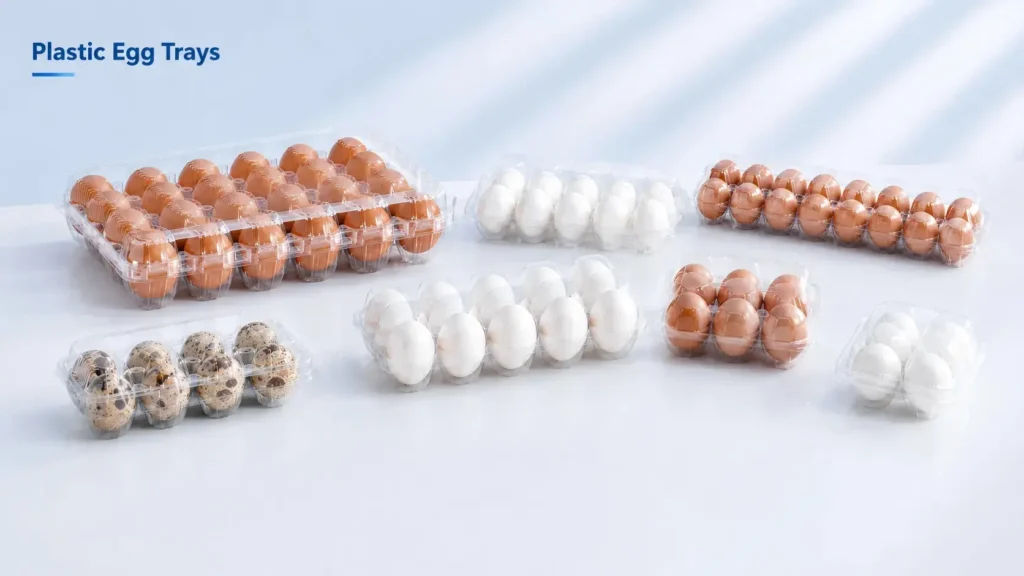
Plastic Egg Trays
Typical sheet materials: PET, PP or PS
Suitable for retail egg packs and stackable transport trays with different cavity counts. Egg size, tray capacity, cavity layout and stacking structure can be customized according to the packaging requirements.
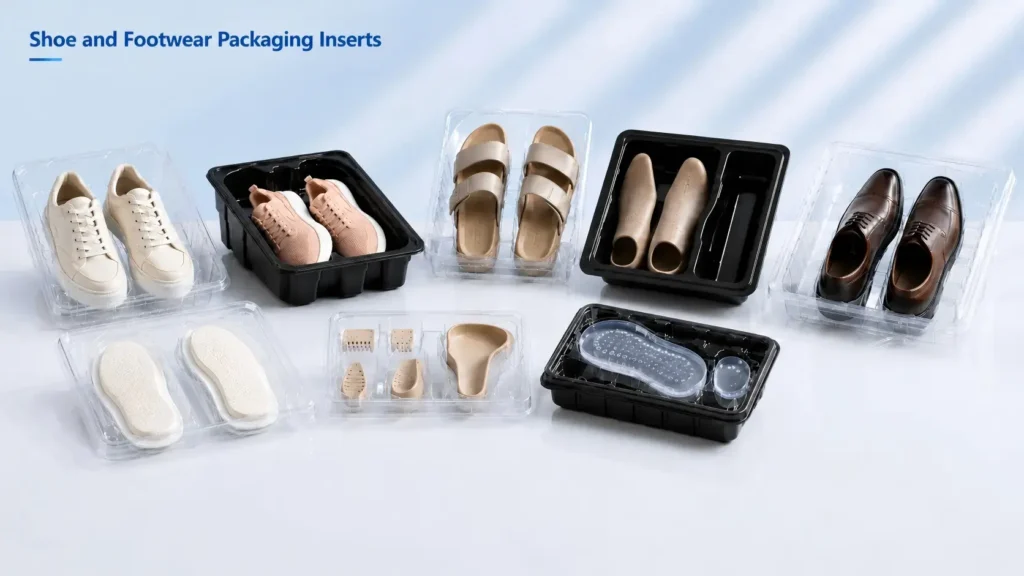
Shoe and Footwear Packaging Inserts
Typical sheet materials: PS, PET or PVC
Suitable for shoe-box inserts, slipper trays, footwear display forms and protective supports. Product contours, dimensions, surface textures and sheet colors can be customized for different footwear styles and packaging designs.
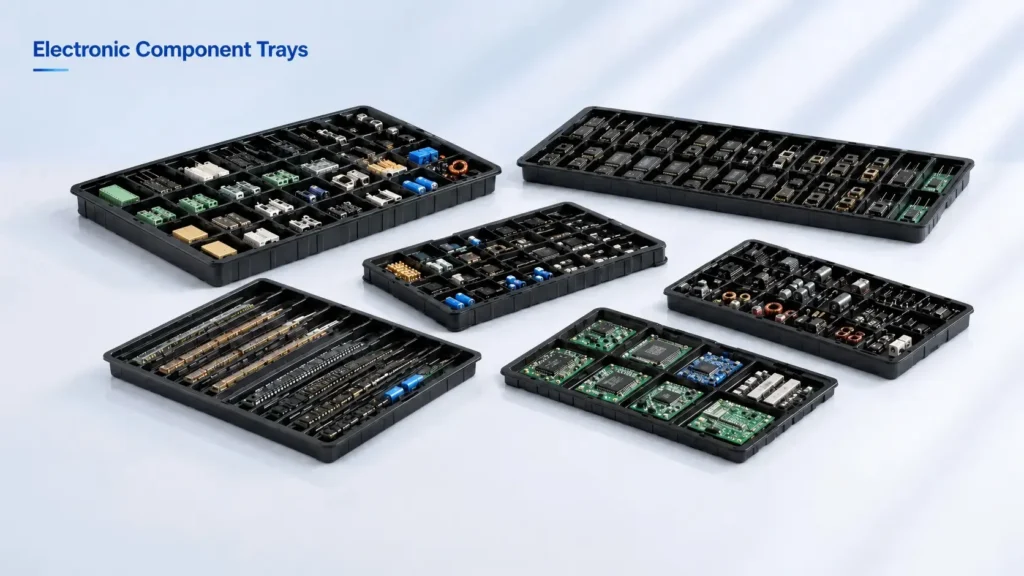
Electronic Component Trays
Typical sheet materials: PET, PS, PP or functional antistatic sheets
Suitable for connectors, circuit boards, electronic components and precision parts. Cavity dimensions, spacing and tray layouts can be customized, while antistatic performance depends on the selected functional sheet material.
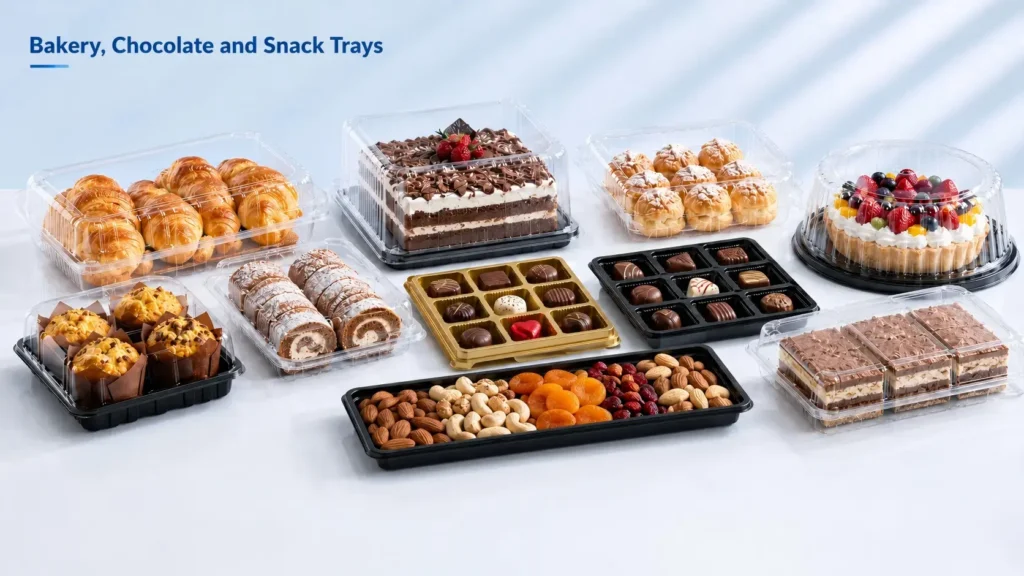
Bakery, Chocolate and Snack Trays
Typical sheet materials: PET, PS or PP
Suitable for cakes, biscuits, chocolate, dates, confectionery and snack gift boxes. Customized cavities help separate, position and protect products while improving their presentation inside the outer package.
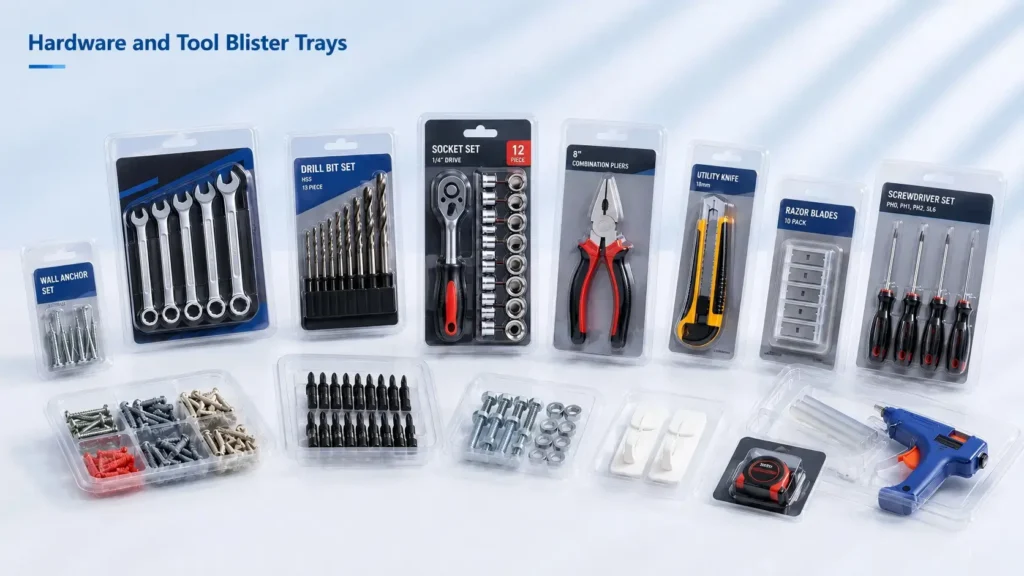
Hardware and Tool Blister Trays
Typical sheet materials: PET, PVC or PS
Suitable for hand tools, hardware, stationery and small consumer products. Blister shapes, cavity layouts and tray dimensions can be customized, while trimming and backing-card sealing are completed separately.
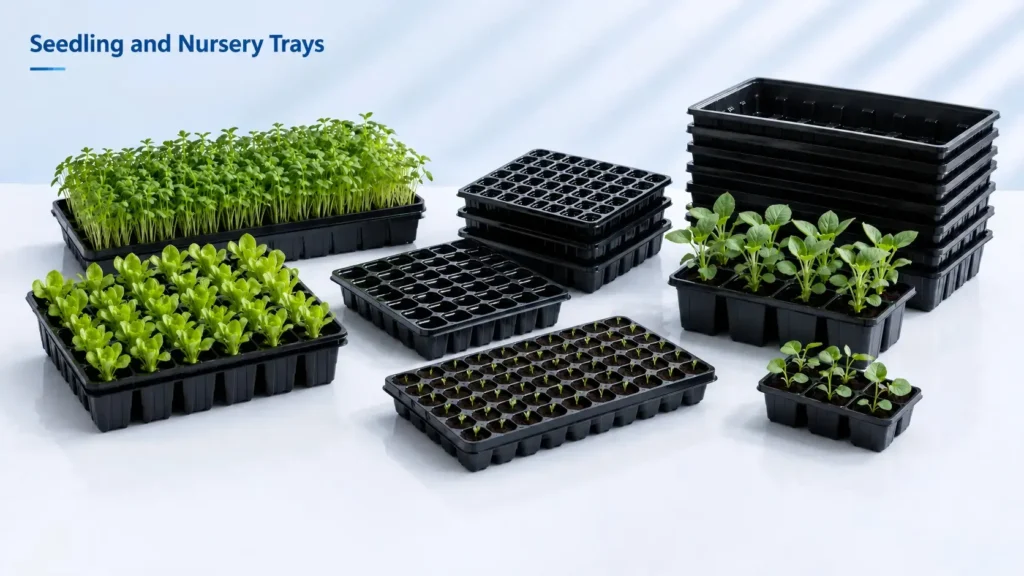
Seedling and Nursery Trays
Typical sheet materials: PP, PS or PET
Suitable for vegetable seedlings, flower propagation, nurseries and greenhouse growing. Cell count, cavity depth and tray dimensions can be customized, with drainage-hole punching and edge trimming arranged separately when required.
Which Plastic Forming Machine Is Right for Your Product?
Different plastic forming machines are designed for different product shapes, cutting methods and production volumes. Compare the options below to determine whether a semi-automatic vacuum forming machine, an integrated three-station thermoforming machine or a dedicated plastic cup thermoforming machine is the better fit for your project.
| Comparison Item | Vacuum Forming Machine | Three-Station Thermoforming Machine | Plastic Cup Thermoforming Machine |
|---|---|---|---|
| Sheet Feeding | Individual cut sheets or roll-fed sheets, depending on machine configuration | Continuous roll-fed sheet | Continuous roll-fed sheet |
| Main Process | Sheet heating, vacuum forming, cooling and demolding | Heating, pressure/vacuum forming, cutting and stacking | Heating, cup forming, cutting and stacking |
| Typical Products | Packaging trays, blister shells, electronic inserts, masks, signs and custom-formed parts | Food containers, lids, trays, clamshells and other packaging products | Cups, bowls, flower pots and similar cup-shaped products |
| Cutting / Trimming | Separate hydraulic cutting, die cutting or trimming is normally required | Integrated cutting | Integrated cutting |
| Production Volume | Prototyping, small batches and flexible medium-volume production | Medium- to high-volume automated production | High-volume dedicated production |
| Best For | Customized shapes, frequent mold changes and flexible product development | Automated food packaging and container production | Dedicated production of cups, bowls and similar products |
Choose a Plastic Vacuum Forming Machine for Your Application
Our plastic vacuum forming machines are configured according to product size, forming area, sheet material, forming depth and production requirements. Compare the options below to identify a suitable solution for prototyping, packaging trays, industrial inserts or larger custom-formed parts.
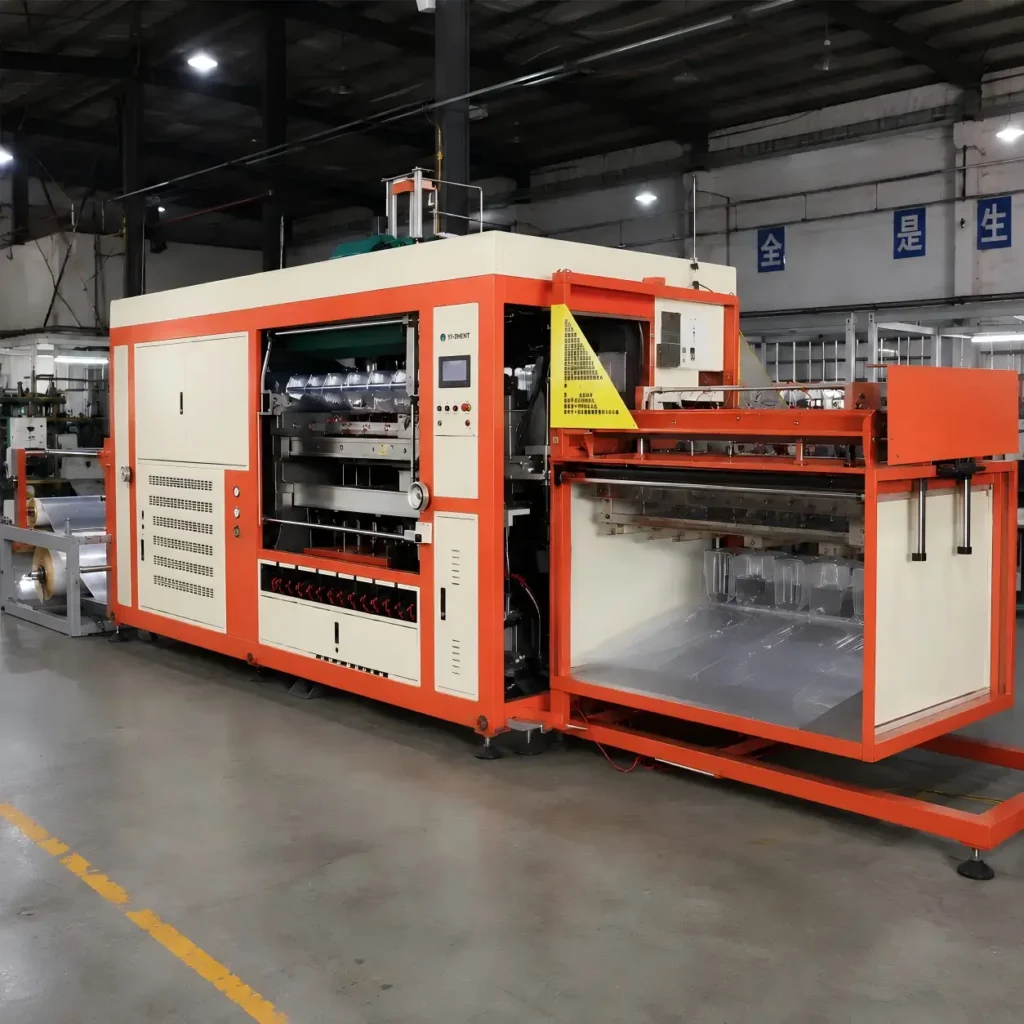
Semi-Automatic Vacuum Forming for Prototypes and Small Batches
This is a flexible solution for product development, sample making, and small-batch production of trays, blister packs, and custom plastic parts.
Recommended for:
• Product prototyping and sample development
• Small trays, blister packs, and plastic lids
• Small-batch custom parts packaging
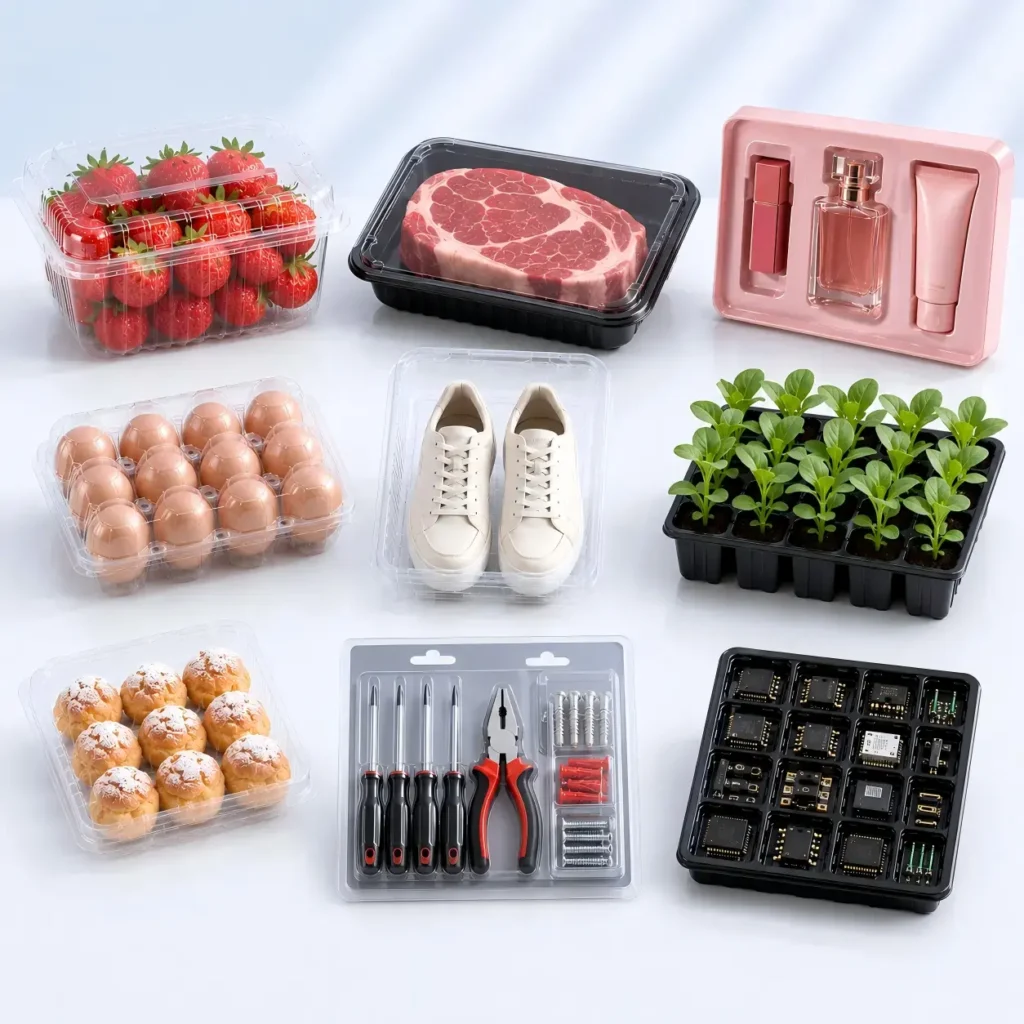
Packaging Trays, Plastic Inserts and Blister Shells
Form thermoplastic sheets into packaging trays, electronic inserts, produce trays, tool packaging and blister shells for flexible small- to medium-batch production.
Recommended for:
• Electronic component and industrial trays
• Food, produce and retail packaging trays
• Tool trays, blister shells and custom inserts
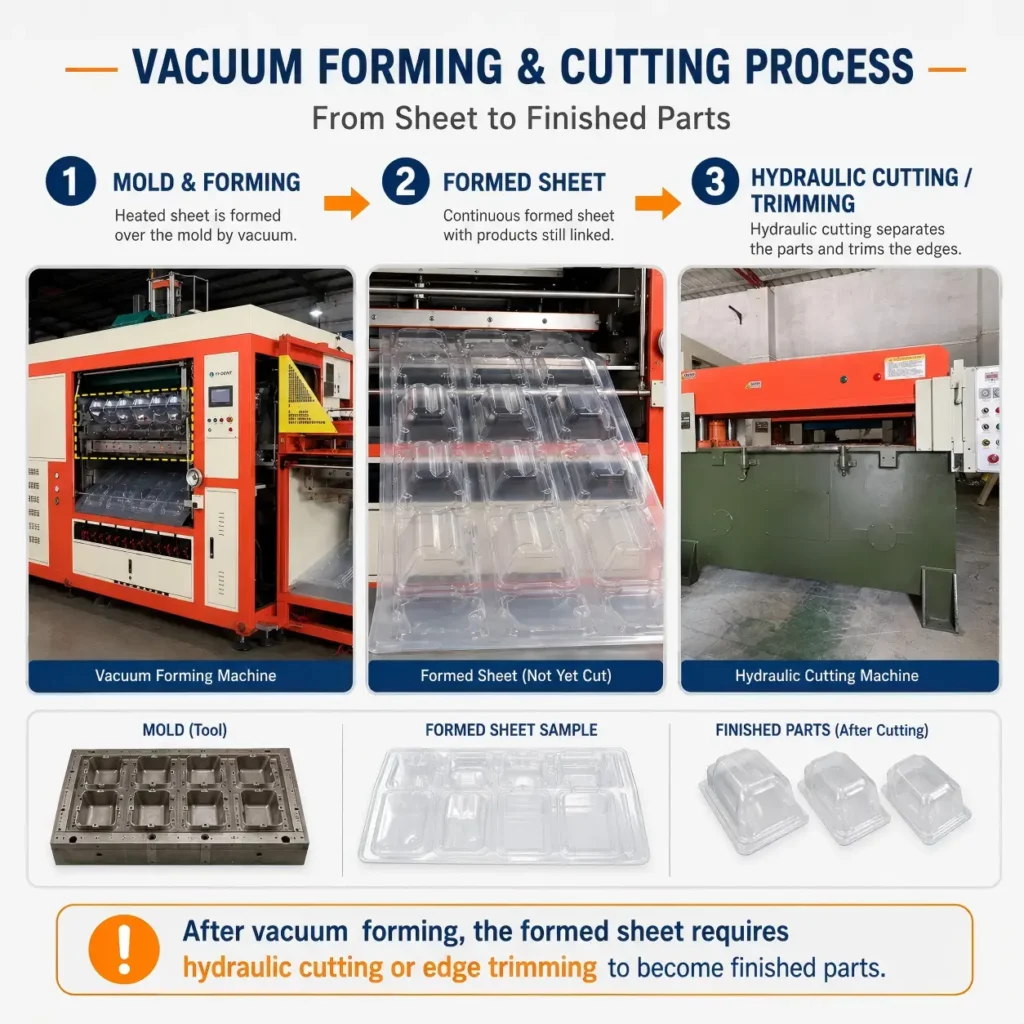
Custom Mold, Forming and Cutting Solution
We match the vacuum forming machine, mold and separate hydraulic cutting or trimming equipment to your product size, forming depth, sheet material and finished-edge requirements.
Recommended for:
- Large or deep-formed plastic parts
- Custom molds and formed-sheet projects
- Products requiring hydraulic cutting or edge trimming
Machine Selection Note:
The final configuration depends on product size, forming area, forming depth, sheet material, sheet thickness and required output. The machine completes sheet heating, vacuum forming and cooling. Hydraulic cutting, die cutting or trimming is normally required after forming to obtain finished parts.
WHX-1220 Plastic Vacuum Forming Machine Specifications
Review the main technical specifications of the WHX-1220 plastic vacuum forming machine, including forming size, cooling system, vacuum pump capacity, operating speed, power requirements and machine dimensions.
| Specification | WHX-1220 |
|---|---|
| Model | WHX-1220 |
| Forming Size | 450–750 mm (W) × 1,220 mm (L) |
| Cooling System | 2 Blowers + 10 Spray Nozzles |
| Vacuum Pump Capacity | 100 m³/h, 4 HP |
| Rated Power | 35 kW |
| Operating Speed | 200–600 cycles/hour |
| Power Supply | AC 380 V, 50 Hz, 3 Phase, 4 Wire |
| Overall Dimensions | 7,200 × 2,200 × 2,400 mm |
| Approximate Weight | 3,000 kg |
Specifications may be adjusted according to the plastic sheet material, product dimensions, mold design and local power supply. Please contact us for a recommended machine configuration based on your product samples.
Production Performance
The stated operating speed is a reference range rather than a guaranteed output for every product. Actual cycle time depends on the sheet material, sheet thickness, heating temperature, forming depth, mold cavity layout, cooling time and operator workflow.
Configuration Note
The specifications above describe the current WX-1220 configuration. Electrical components, power supply, mold design and auxiliary equipment can be confirmed according to the customer’s product, material, factory conditions and local electrical standards before production.
PP, PS and PET Sheet Materials for Vacuum Forming
The WHX-1220 plastic vacuum forming machine is designed to process PP, PS and PET sheets for packaging trays, inserts, blister shells and other formed plastic parts. Final forming performance depends on the sheet grade, thickness, product dimensions, forming depth, mold design, heating settings and cooling conditions.
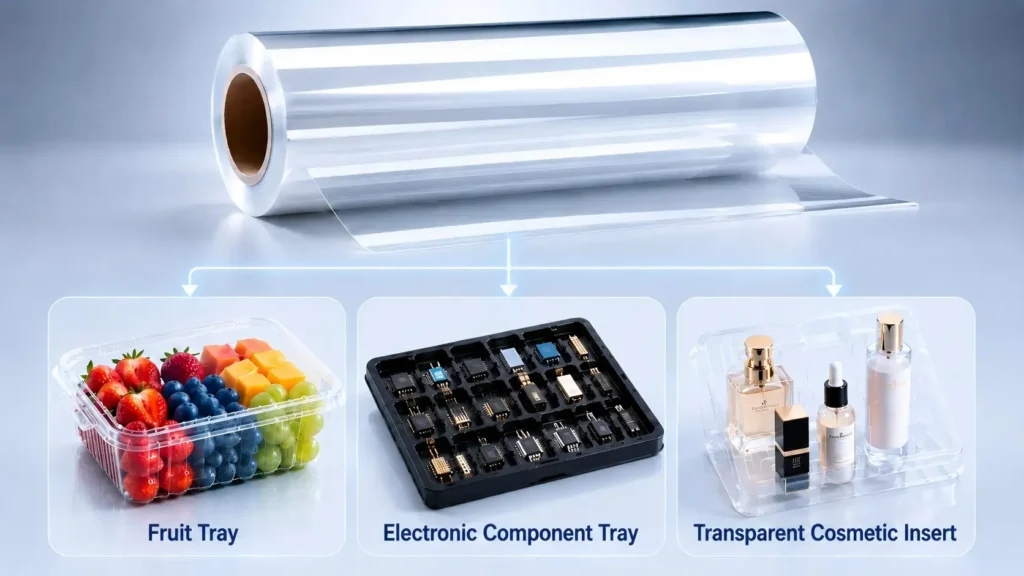
PET Sheet
Typical applications:
Clear fruit and vegetable trays, bakery and confectionery inserts, electronic component trays, cosmetic inserts and transparent blister shells.
Processing notes:
Confirm the PET sheet grade, thickness and any food-contact or antistatic requirements. Deep-draw products should be tested with the actual sheet and mold.
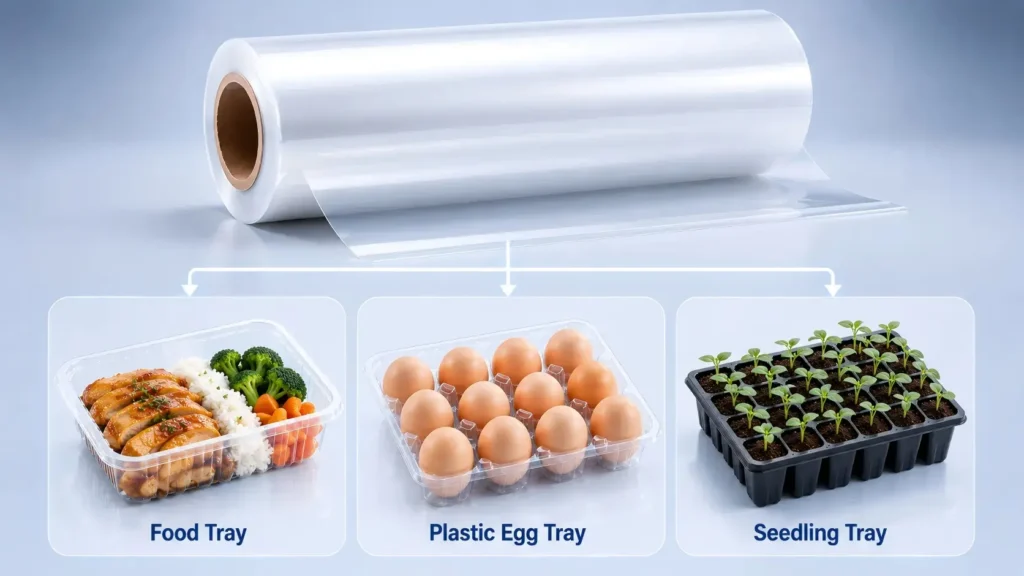
PP Sheet
Typical applications:
Food packaging trays, meat and seafood trays, plastic egg trays, seedling trays and durable packaging inserts.
Processing notes:
Heating and cooling settings should be matched to the PP sheet grade, thickness, forming depth and mold design. Sample testing is recommended before confirming the final configuration.
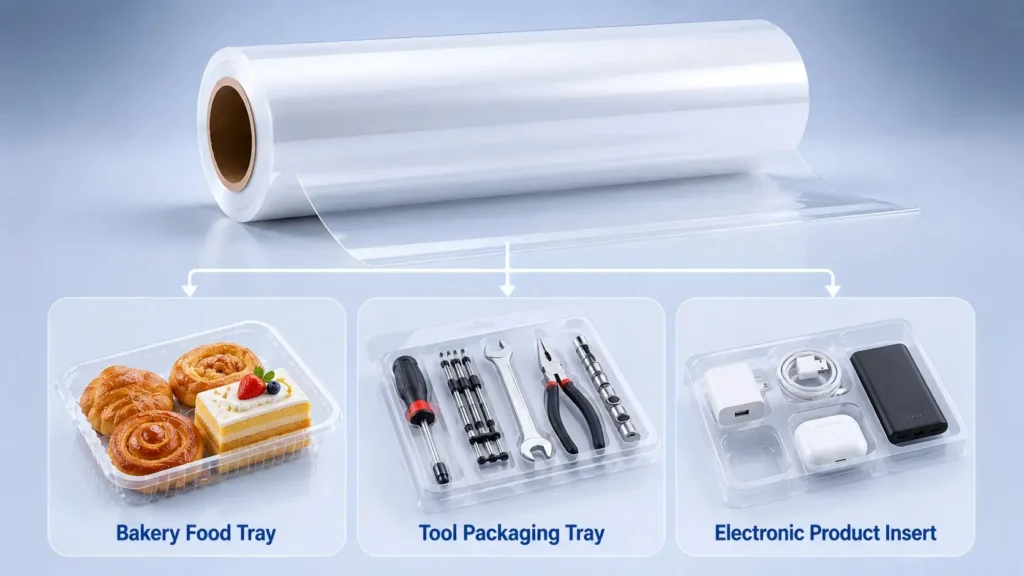
PS Sheet
Typical applications:
Bakery and snack trays, plastic egg trays, hardware and tool trays, electronic inserts and retail packaging inserts.
Processing notes:
Confirm the PS sheet grade, thickness, required rigidity and surface finish before finalizing the heating settings, cooling time and mold configuration.
How Does a Plastic Vacuum Forming Machine Work?
The WHX-1220 uses a semi-automatic vacuum forming process that includes sheet loading, heating, vacuum forming, cooling and part removal. Separate cutting, punching or edge trimming may be required according to the finished product design.
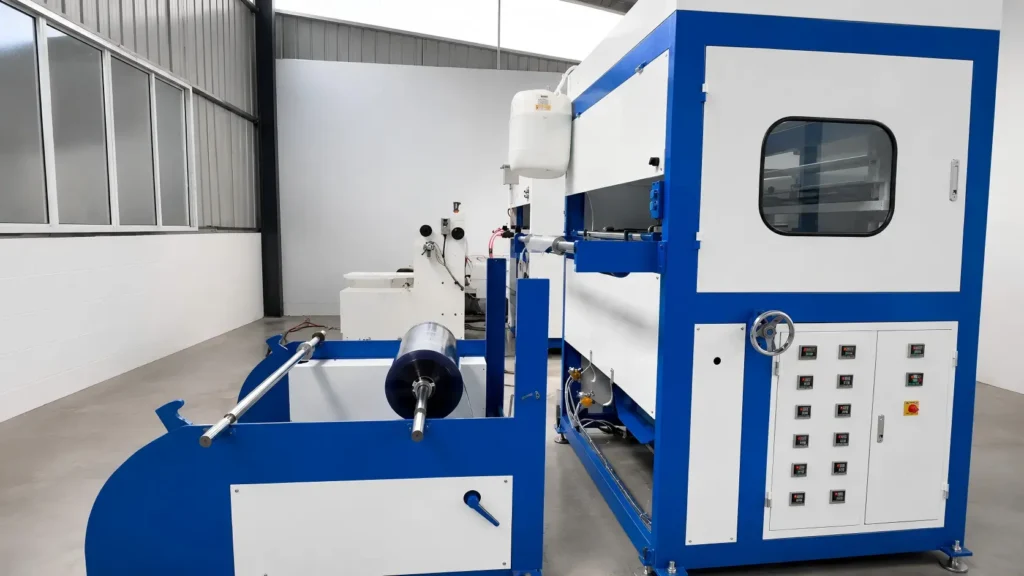
1.Sheet Roll Loading and Feeding
The PP, PS or PET sheet roll is installed on the feeding rack and continuously guided into the machine. The feeding system keeps the sheet aligned and transports it steadily toward the heating section.
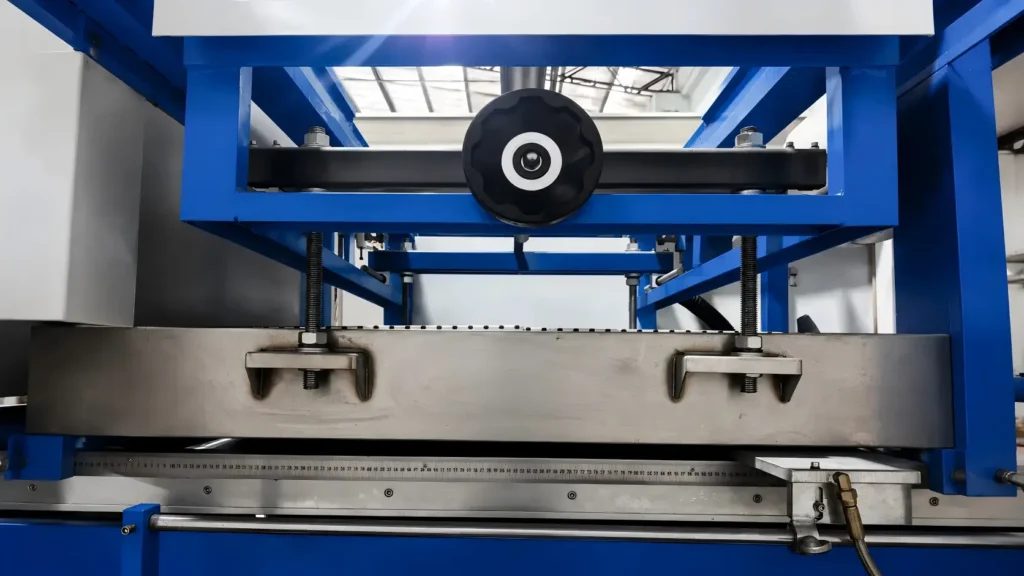
2.Sheet Heating and Softening
The plastic sheet enters the electric heating section and is heated evenly until it reaches the required forming condition. Heating time and temperature are adjusted according to the material, thickness and product depth.
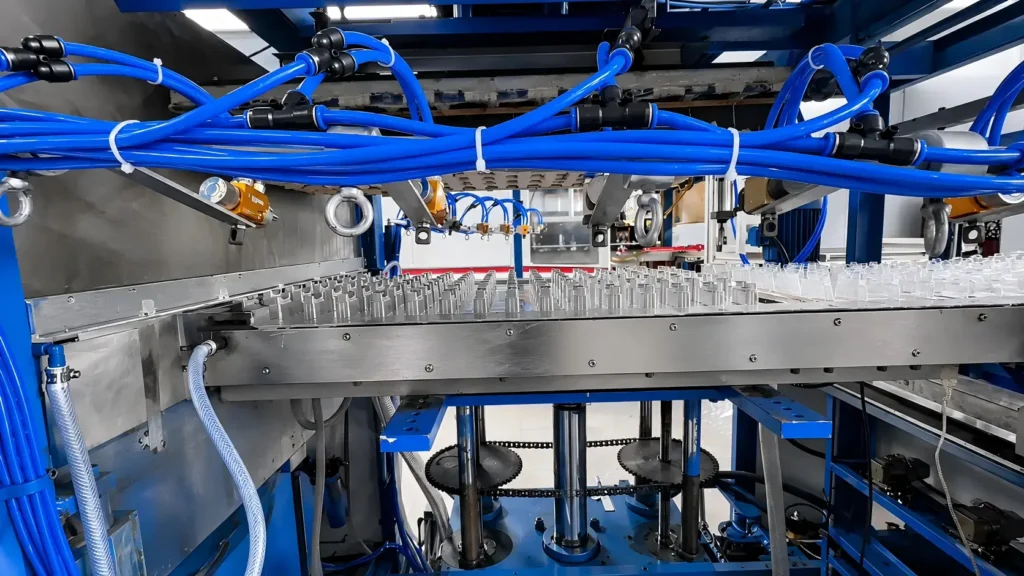
3. Vacuum Forming and Cooling
The mold rises into position while the vacuum system draws the softened sheet closely over the mold surface. Blower and spray cooling then help stabilize the shape before the formed sheet moves forward.
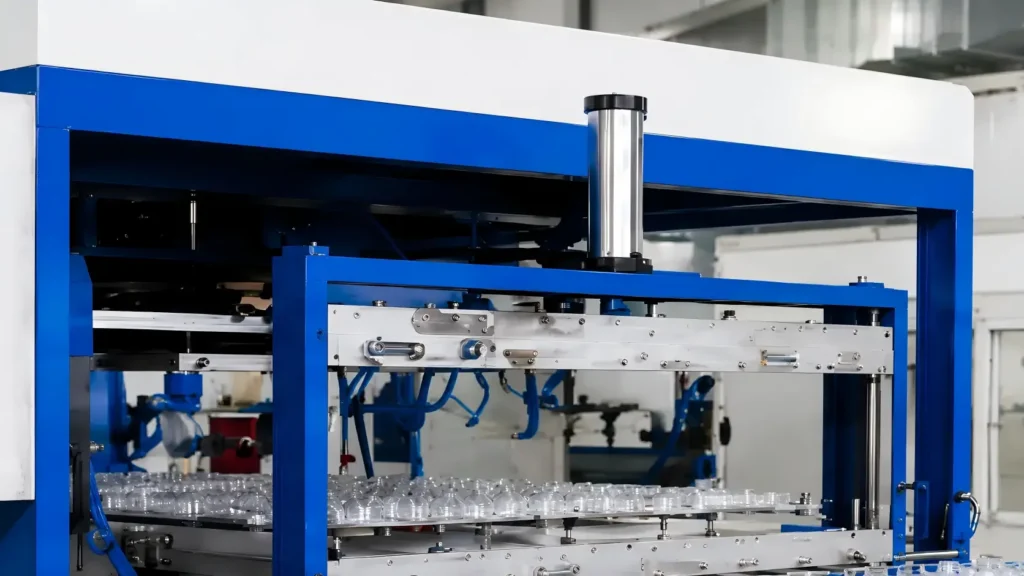
4. Formed Sheet Section Cutting
After forming, the products remain connected to the plastic sheet. The cutting unit separates the continuous formed web into manageable sections for collection and downstream die cutting.
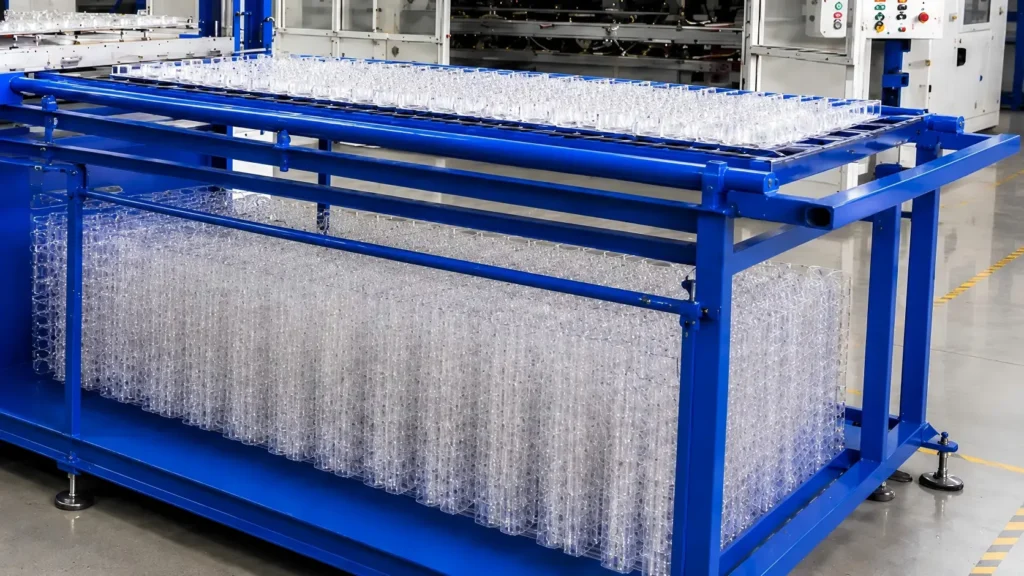
5. Output and Sheet Collection
The formed sheet sections are conveyed to the receiving rack for collection. At this stage, the formed products are still attached to the surrounding sheet and require a separate finishing process.
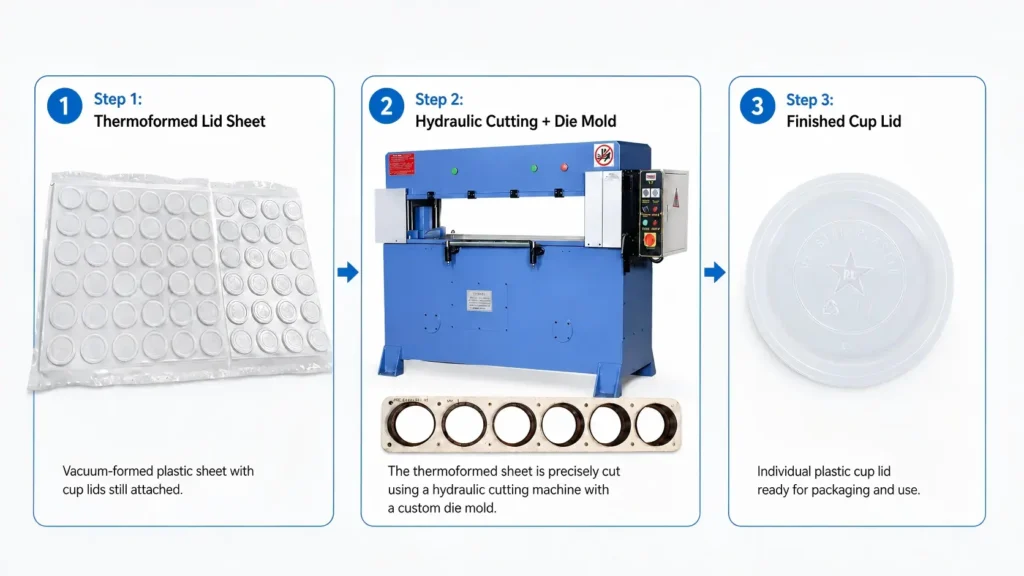
6.Hydraulic Die Cutting and Finished Product
The formed sheet is transferred to a separate hydraulic cutting machine. A customized cutting die removes the surrounding scrap and separates each formed part to produce the final finished product.
Process Note
The vacuum forming machine completes sheet feeding, heating, forming, cooling and section cutting. The products remain connected to the formed sheet after leaving the machine. A separate hydraulic cutting machine with a customized cutting die is required to obtain the final individual products.
Custom Molds and Downstream Cutting Solutions
A complete vacuum forming project can include a customized forming mold, a separate hydraulic cutting machine and matched cutting dies. We configure the solution according to the product dimensions, PP, PS or PET sheet, forming depth, finished-edge requirements and expected output.
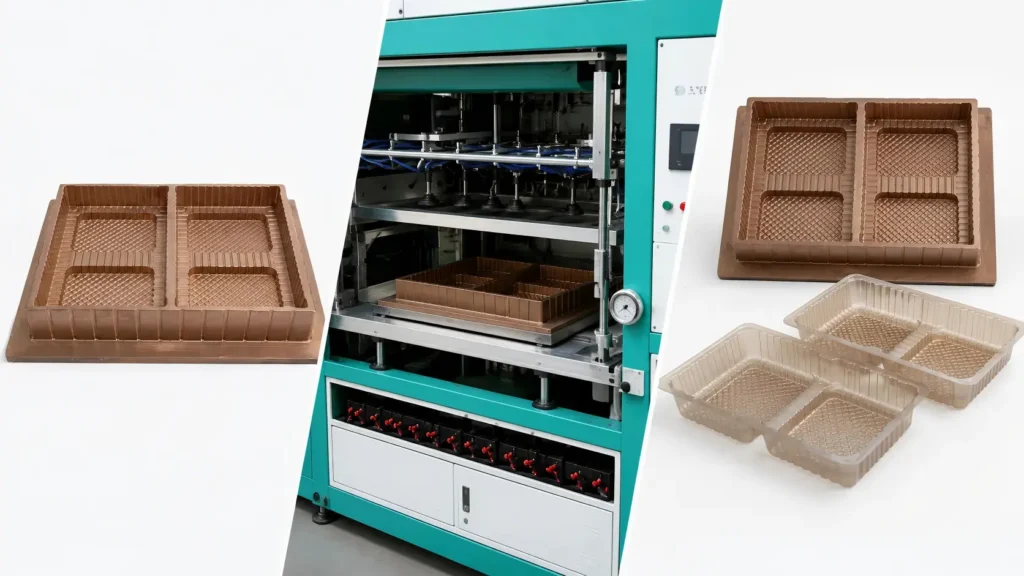
Custom Vacuum Forming Molds
Aluminum forming molds can be developed according to your product drawing or physical sample. Mold dimensions, cavity layout, forming depth, vacuum holes and product-release structure are matched to the PP, PS or PET sheet and required product shape.
✅️Product drawing or sample development
✅️Customized cavity layout and forming depth
✅️Mold installation and sample testing
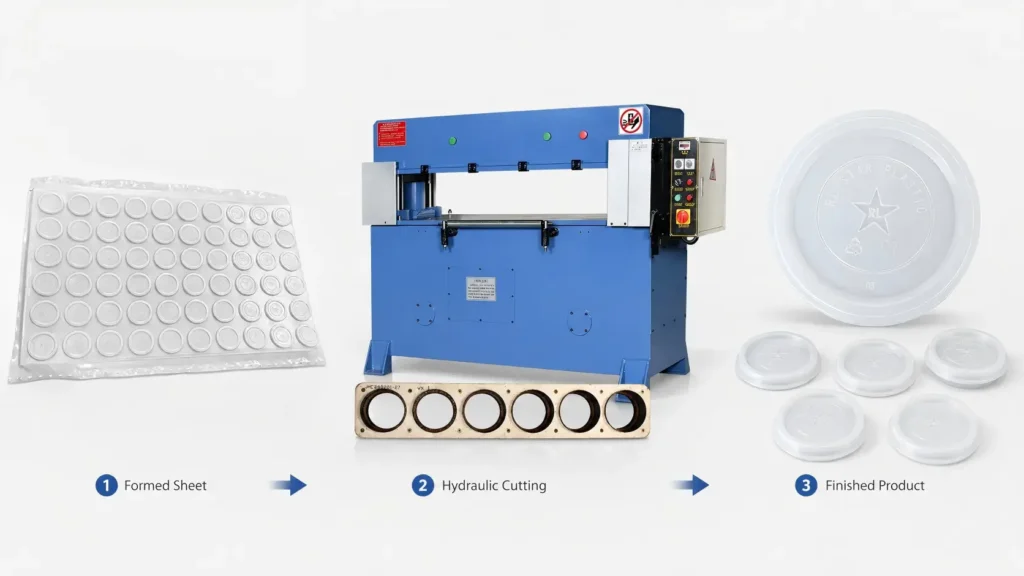
Hydraulic Die Cutting Machine
After vacuum forming, the products remain connected to the surrounding plastic sheet. A separate hydraulic cutting machine uses a matched cutting die to remove excess material and separate the individual finished products.
✅️Separate downstream cutting process
✅️Customized cutting die for the product outline
✅️Clean separation of products and surrounding scrap
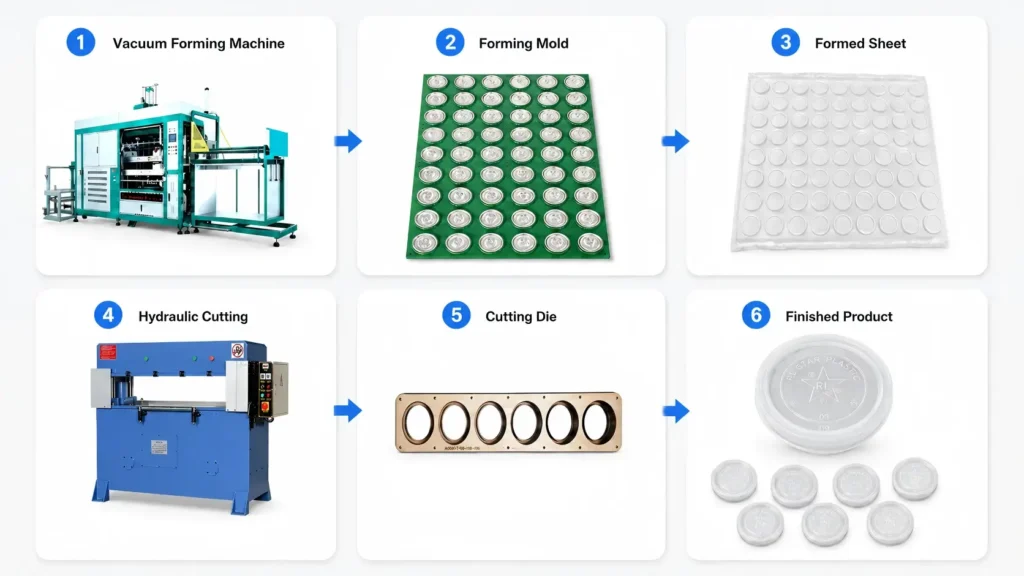
Complete Forming and Cutting Solution
We can match the WHX-1220 vacuum forming machine, forming mold, hydraulic cutting machine and cutting die according to the product dimensions, sheet material, forming depth, edge requirements and expected production output.
✅️Machine, mold and cutting equipment matching
✅️PP, PS and PET project configuration
✅️Sample testing before shipment
Complete Plastic Vacuum Forming Production Line Solutions
The sheet extrusion line is optional. Customers can also use purchased PP, PS or PET sheet rolls for production.
Choose a forming-only system, a forming and cutting solution, or a complete sheet-to-product production line. We configure the equipment according to your product dimensions, material, sheet thickness, forming depth, required output and local power supply.
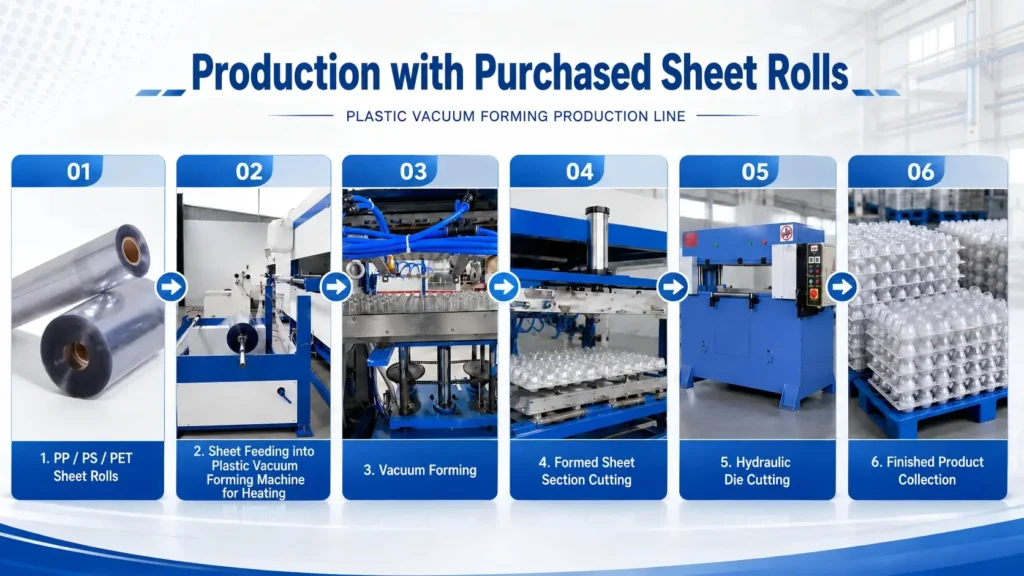
Option 1: Production with Purchased Sheet Rolls
Suitable for customers who can purchase PP, PS or PET sheet rolls locally and do not need to produce plastic sheets in-house.
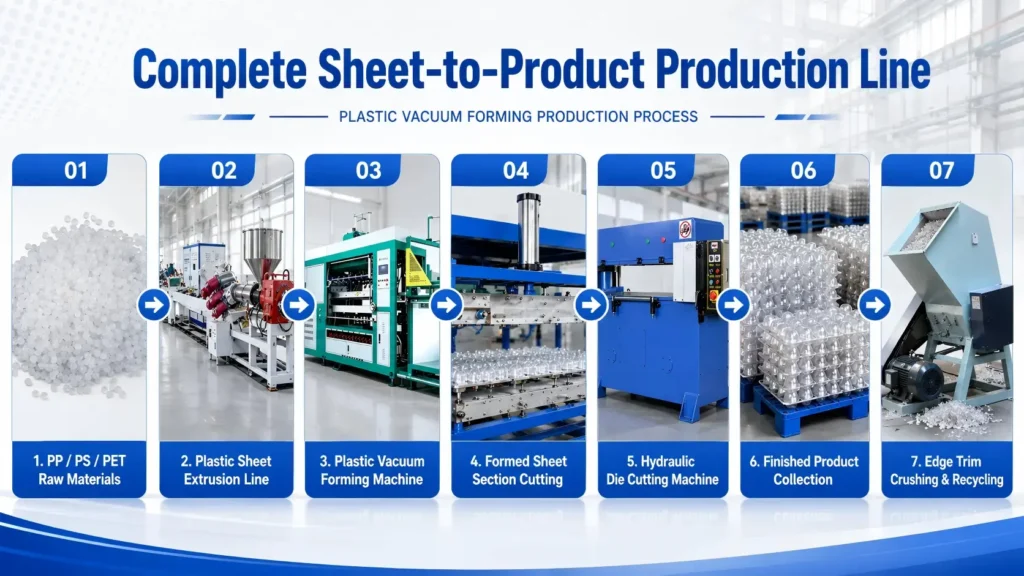
Option 2: Complete Sheet-to-Product Production Line
Suitable for new factories or customers who want to control sheet quality, thickness, production cost and material recycling.
1. PP / PS / PET Sheet Roll
Ready-made plastic sheet rolls are selected according to the final product, thickness and forming requirements.
1. PP / PS / PET Raw Material
Plastic raw materials and qualified recycled materials are prepared according to the product requirements.
2. Sheet Feeding and Heating
The sheet is fed into the machine and softened through controlled heating.
2. Plastic Sheet Extrusion Line
Raw materials are extruded into PP, PS or PET sheets with the required width and thickness.
3. Vacuum Forming
Vacuum pressure pulls the heated sheet onto the custom mold to form the required product shape.
3. Plastic Vacuum Forming Machine
The sheet is heated and vacuum formed using a customized forming mold.
4. Formed Sheet Section Cutting
The formed sheet is cut into manageable sections for downstream handling and die cutting.
4. Formed Sheet Section Cutting
The machine separates the formed sheet into sections, but this is not the final product trimming process.
5. Hydraulic Die Cutting
A separate hydraulic cutting machine and cutting die trim the formed products to their final shape.
5. Hydraulic Die Cutting Machine
The hydraulic cutting machine and cutting die complete the final product trimming.
6. Finished Product Collection
Finished trays, packaging products or custom-formed parts are collected for inspection and packing.
6. Finished Product Collection
The finished products are inspected, counted and prepared for packing.
7. Scrap Crushing and Recycling
Edge scrap can be crushed and returned to the sheet extrusion process according to the material and product quality requirements.
Why Choose ViHoX for Your Vacuum Forming Project?
From product analysis and machine configuration to mould matching, trial production and after-sales support, we provide practical solutions for PP, PS and PET vacuum forming projects.
Direct Factory Manufacturing
Machine frames, heating systems, vacuum components and electrical systems are assembled and inspected by our technical team.
Complete Line and Mould Matching
We match the vacuum forming machine, mould, hydraulic cutting machine and auxiliary equipment to your product requirements.
Real Machine Testing Before Shipment
Each machine can be powered on and tested with sample materials before delivery. Factory and video inspection are available.
Installation and Long-Term Support
We provide voltage customization, installation guidance, operator training, spare parts and long-term technical support.
24 Years
Plastic Machinery Experience
10,000+
10,000+ Customers and Projects Served
PP / PS / PET
Material Solution Experience
Factory & Video
Machine Inspection Available
Frequently Asked Questions About Plastic Vacuum Forming Machines
Find answers about materials, forming areas, cutting methods, moulds, machine testing, installation and complete production line configuration.
Our plastic vacuum forming machines are mainly designed for PP, PS and PET plastic sheets. The suitable forming temperature, heating time and vacuum settings vary according to the material type, sheet thickness, product depth and mould design. We recommend testing the customer’s actual sheet material before confirming the final configuration.
A standard vacuum forming machine normally produces a complete formed sheet with multiple connected products. A hydraulic cutting machine and cutting die are required to separate the individual trays or containers. We can provide the vacuum forming machine, forming mould, hydraulic cutting machine and cutting die as a complete solution.
A vacuum forming machine usually completes heating and vacuum forming, while product cutting is performed separately by a hydraulic cutting machine. It offers flexible product sizes and a relatively lower initial investment.
A three-station thermoforming machine integrates heating, forming and cutting into one production line. It is more suitable for standardized products, higher production output and automated continuous manufacturing.
The correct forming area depends on the product length, width, height, number of cavities, mould spacing and sheet width. Choosing a machine that is too small limits production, while an oversized machine may increase investment and energy consumption.
Please send us your product photo, drawing or physical sample. Our engineers will recommend a suitable forming area and mould layout.
Yes, one vacuum forming machine can normally process PP, PS and PET sheets within its specified thickness range. However, different materials require different heating temperatures, heating times, cooling conditions and forming settings.
When changing materials, the operator needs to adjust the production parameters. Material testing and operator training are available before shipment.
Please provide the following information:
- Product photo, drawing or physical sample
- Product length, width and height
- PP, PS or PET material
- Sheet thickness or finished product weight
- Required production output
- Number of mould cavities
- Local voltage, phase and frequency
- Whether you purchase ready-made sheets or require a sheet extrusion line
The more complete the information, the more accurate the machine configuration and quotation will be.
Yes. Customers can send us sheet samples, product samples or product drawings for evaluation. After the mould and machine are ready, we can conduct a trial production test and check the forming quality, product dimensions, heating condition and cutting result.
Factory inspection, live video testing and recorded trial-run videos are available before shipment.
Yes. The machine voltage can be customized according to the industrial power supply in the customer’s country.
Our common configuration is 380V, 50Hz, three-phase, but other voltage and frequency requirements can be evaluated. Please confirm the voltage, frequency and phase before production to avoid electrical compatibility problems after delivery.
Yes. We provide machine installation guidance, production parameter adjustment and operator training. Support can be provided through operating manuals, videos, online technical guidance or on-site engineer service according to the project requirements.
Training normally covers machine operation, mould installation, heating adjustment, vacuum settings, daily maintenance and basic troubleshooting.
The required auxiliary equipment depends on whether the customer purchases ready-made sheet rolls or produces sheets in-house.
A typical vacuum forming production line may include:
- PP, PS or PET sheet extrusion line
- Plastic vacuum forming machine
- Forming mould
- Hydraulic cutting machine
- Cutting die
- Vacuum pump
- Air compressor
- Chiller or cooling system
- Plastic crusher and recycling equipment
Customers who purchase ready-made sheet rolls can start with the vacuum forming machine, mould and hydraulic cutting solution, reducing the initial investment.