
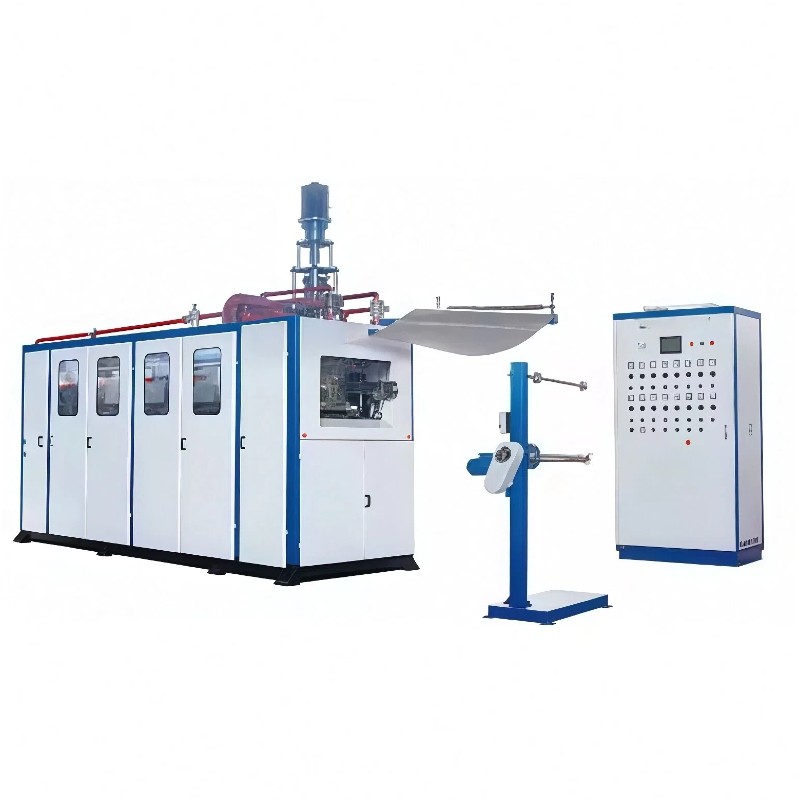
VihoX-660-B automatic plastic cup thermoforming machine: Type B upper servo (7.5 kW) + hydraulic lower clamp, 660×320 mm forming area, 150/180 mm depth, 0.3–2.0 mm sheet, 130 kW max., 20–40 kWh reference. Runs PP/PS/PET/PVC/PLA for water, yogurt and jelly cups. Powered up and trial-run with your mold before shipment.
Product Category: Plastic Cup Making Machines
The VihoX-660-B is a Type B automatic plastic cup thermoforming machine: a 7.5 kW AC servo drives the upper stretching axis while the lower clamp stays hydraulic on a 660 × 320 mm platform.
Its place in the range turns on one component: forming area, sheet width, depth envelope and installed power match the VihoX-660-A exactly, while the upper mold drive does not.
Three drive architectures share this platform, differing in how the plug and stretch motion is generated — and so in how tightly the cup wall can be held.
| Type | Upper mold drive | Lower mold drive | Sheet feeding | Best for |
|---|---|---|---|---|
| A | Pneumatic cylinder | Hydraulic clamp | Standard, non-servo | Everyday cups needing the simplest structure |
| B (this model) | AC servo stretch unit, 7.5 kW | Hydraulic clamp | Standard, non-servo | Cups whose wall weight and release must repeat every run |
| C | AC servo | AC servo clamp | Servo-driven | Long campaigns needing cycle repeatability and low idle energy |
Buyers arrive here for quality, not size. Their cup fits the table, yet cylinder stretch no longer feels safe: thin-wall yogurt cups in a narrow weight window, jelly cavities that must release cleanly every time.
A servo on the stretch axis lets plug speed, position and dwell be programmed as a motion profile rather than set by air pressure and a cushion, and that profile can be recalled when the mold returns.
Selection boundary: if fewer servo components and simpler maintenance matter more, the VihoX-660-A is the same table with a cylinder-driven upper mold. Choose Type B because the product needs repeatable wall control.
| Machine Type | Type B (Upper Servo + Lower Hydraulic) |
| Forming Area | 660 × 320 mm |
| Upper Stretch Servo Motor Power | 7.5 kW |
| Hydraulic Motor Power | 18.5 kW |
| Max. Sheet Width | 680 mm |
| Sheet Thickness | 0.3–2.0 mm |
| Max. Forming Depth | 150 / 180 mm |
| Speed | 15–35 cycles/min (reference) |
| Air Pressure | 0.6–0.8 MPa |
| Air Consumption | Approx. 3.8 m³/min |
| Cooling Water (reference) | Approx. 20 L/min |
| Cooling Recommendation | 3–5 HP Chiller |
| Suitable Material | PP / PS / PET / PVC / PLA |
| Power Consumption | 20–40 kWh (reference) |
| Total Power (Max.) | 130 kW |
| Power Supply | AC380V / 50Hz / 3 Phase / 4-wire (customizable) |
| Machine Dimension | Approx. L7000 × W2200 × H2500 mm |
| Machine Weight | Approx. 7 T |
| Typical Applications | Water cups, yogurt cups, jelly cups, etc. |
How to read these figures
The servo stretch matters most on the first three groups. In a narrow, deep cavity the sheet travels far from a small opening, so a programmed profile keeps material flowing evenly instead of drawing thin, and cups leave the tool with less ovality and a cleaner rim.
Selection boundary — when this is the wrong machine. A part deeper than 180 mm cannot be formed here; a VihoX-750 model reaches 220 mm. Milk tea cups, large beverage cups, bowls and meal boxes need the VihoX-720 family at 720 × 420 mm or a VihoX-750 platform.
| Material | Typical cups | Notes |
|---|---|---|
| PP | Drinking cups, yogurt cups, hot-fill containers | Tough, heat resistant; servo stretch aids wall uniformity |
| PS | Jelly cups, dessert cups, lightweight food cups | Forms and releases easily; a common first choice |
| PET | Clear cold cups and transparent packaging cups | High clarity; settings follow your actual sheet |
| PVC | Special and industrial formed parts | Confirm local regulatory requirements first |
| PLA | Compostable-oriented cups and containers | Narrow window; stretch, drying and temperature set on trial |
PE and HIPS sit outside this model’s scope: a PE-based product has to change platform, because PE appears in the material list from the VihoX-720-A upward.
Sheet roll is indexed through the heating zones and stops between the mold halves. The hydraulic clamp seals the web while the servo stretch unit drives the plug into the softened material on a programmed profile. Vacuum and pressure form the cup against the cooled cavity.
Type B changes that third step. Instead of a cylinder reaching the end of its stroke at fixed speed, the servo governs position, speed and dwell directly, so the stretch repeats cavity after cavity and release becomes more predictable.
The mold decides whether this specification is used well or wasted. On a 660 × 320 mm table with a 180 mm depth limit, cavity count should serve even heating and dependable release.
Because the table is compact, this model often runs one product family for months, so a spare plug set and a written process card per mold repay the effort. Cooling calls for a 3–5 HP chiller sized to your duty cycle.
How this model fits depends on where your sheet comes from. With a stable sheet-roll supplier you run a short line: former, matched mold, chiller, air supply, stacking and packing.
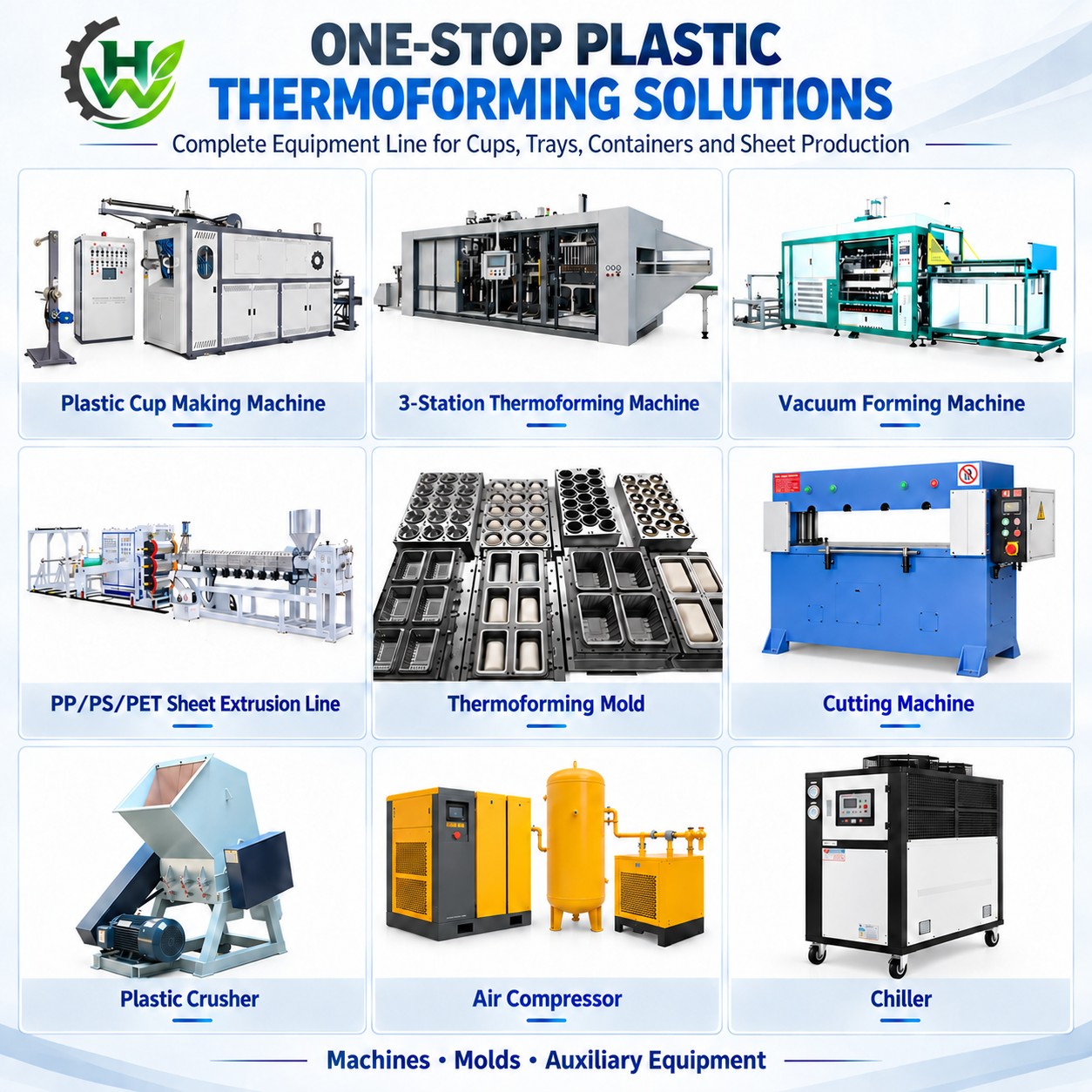
Background reading: Choosing the Right Plastic Cup Making Machine for Your Product Mix and What Equipment a Complete Cup Line Actually Needs.
No machine ships without being powered up and run with the mold on the order. You receive running footage, mold trial footage of your own product, cup samples, packing images, drawings and the spare-parts list.
You may inspect at the factory, watch a live trial over video call, or appoint a third-party inspector first.
What actually changes between the VihoX-660-A and the VihoX-660-B?
One element only. Table, gauge range, depth, cooling recommendation and the 130 kW installed maximum are shared; the upper mold moves from a cylinder to a 7.5 kW servo.
Will the servo stretch tighten my cup weight tolerance?
The fixed-speed cylinder approach disappears, so the same profile repeats every cycle instead of drifting with cushion wear. What you can hold depends on the mold, sheet gauge and material.
Can it run a narrow, deep jelly cup with a small base diameter?
That geometry is why this configuration exists. Send top and base diameter with depth, and our engineers will check the layout against the 660 × 320 mm table and 180 mm limit.
How many cups per hour will it make?
No single number exists. Output = the cycle you achieve × mold cavities × 60, and that cycle depends on cup size, material, gauge and cavity layout.
Which materials can be processed, and can it run PE?
PP, PS, PET, PVC and PLA sheet in 0.3–2.0 mm. PE and HIPS are not offered here — if PE is essential, the VihoX-720-A lists it.
Is the 15–35 cycles/min range a promised production rate?
No. It is a reference cycle range under suitable conditions; what a line delivers depends on the product, material and operating discipline.
Does it produce cups from plastic granules?
No. It forms finished sheet roll; making cups from raw material requires an upstream extrusion line.
What should I prepare before asking for a quotation?
The product photo or drawing, top and base diameter, height, unit weight, material, gauge, target capacity and factory voltage.
Tell us the cup you need to make and the conditions you will run it under. We will say honestly whether the VihoX-660-B is the right platform for it.
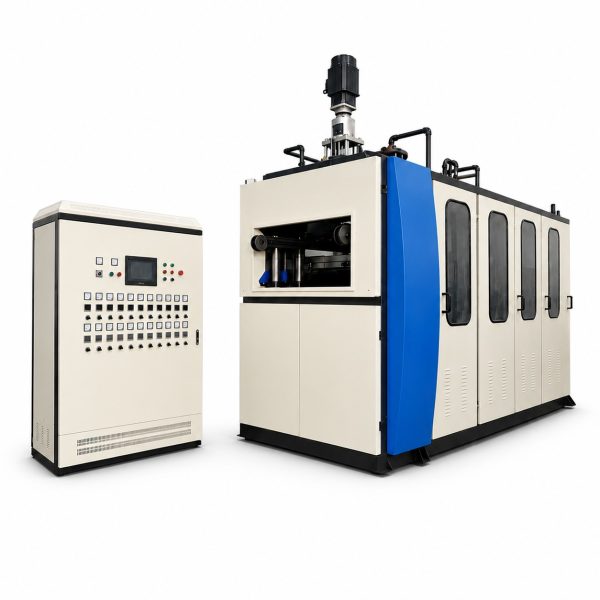
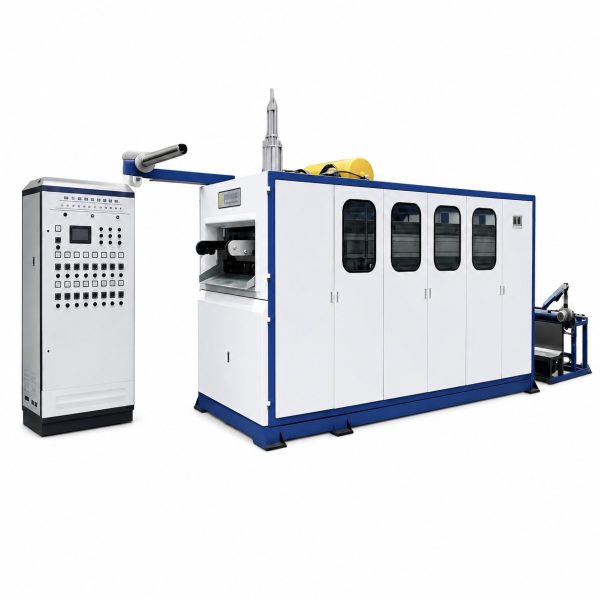
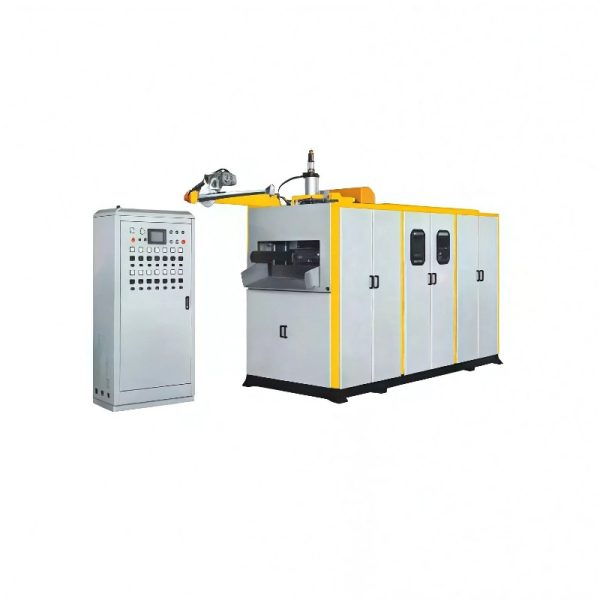
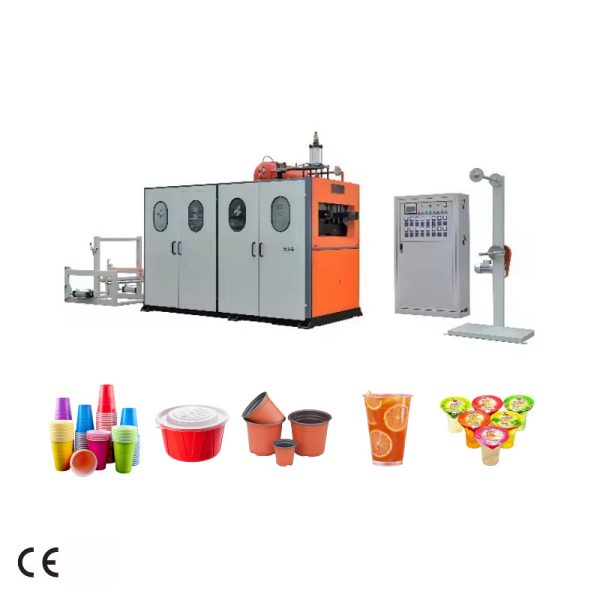
Matched molds and auxiliary equipment — crushers, mixers and recycling units sized to this machine.
See this machine family running in overseas case studies — background, output and on-site photos included.
Request pricing, technical specs or a video machine test — reply within 24 hours.