
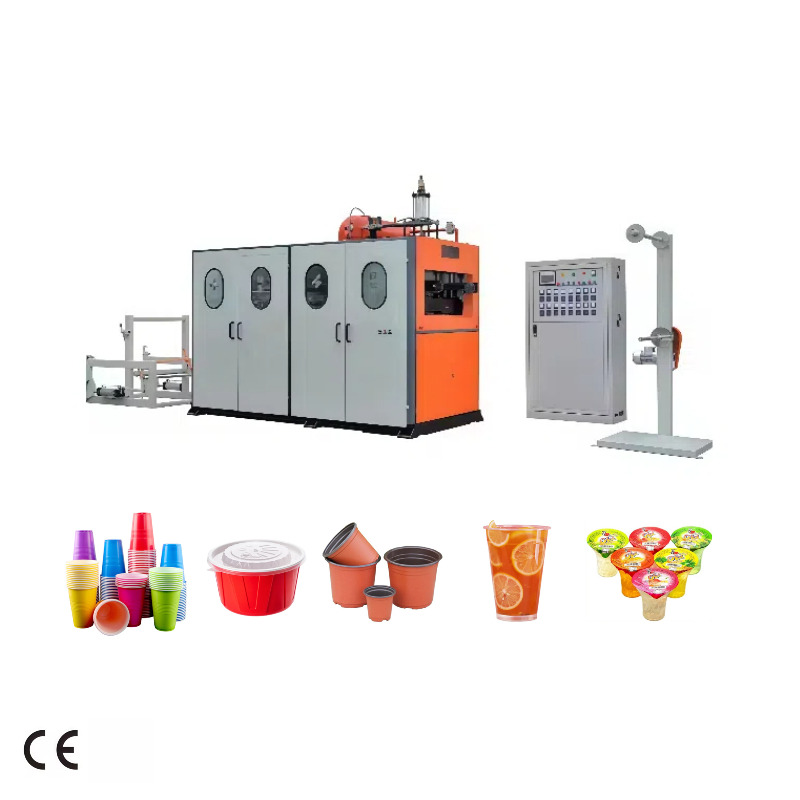
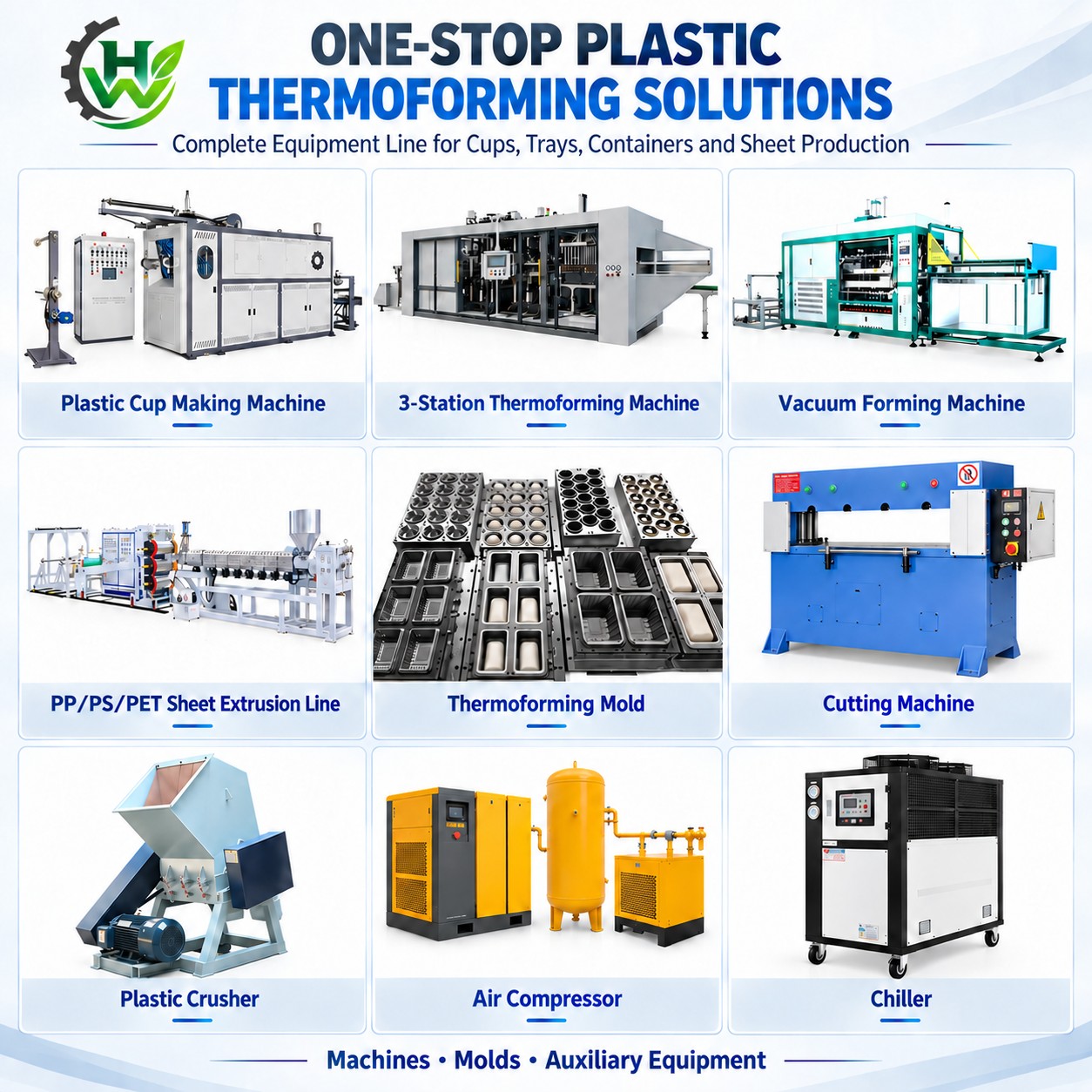
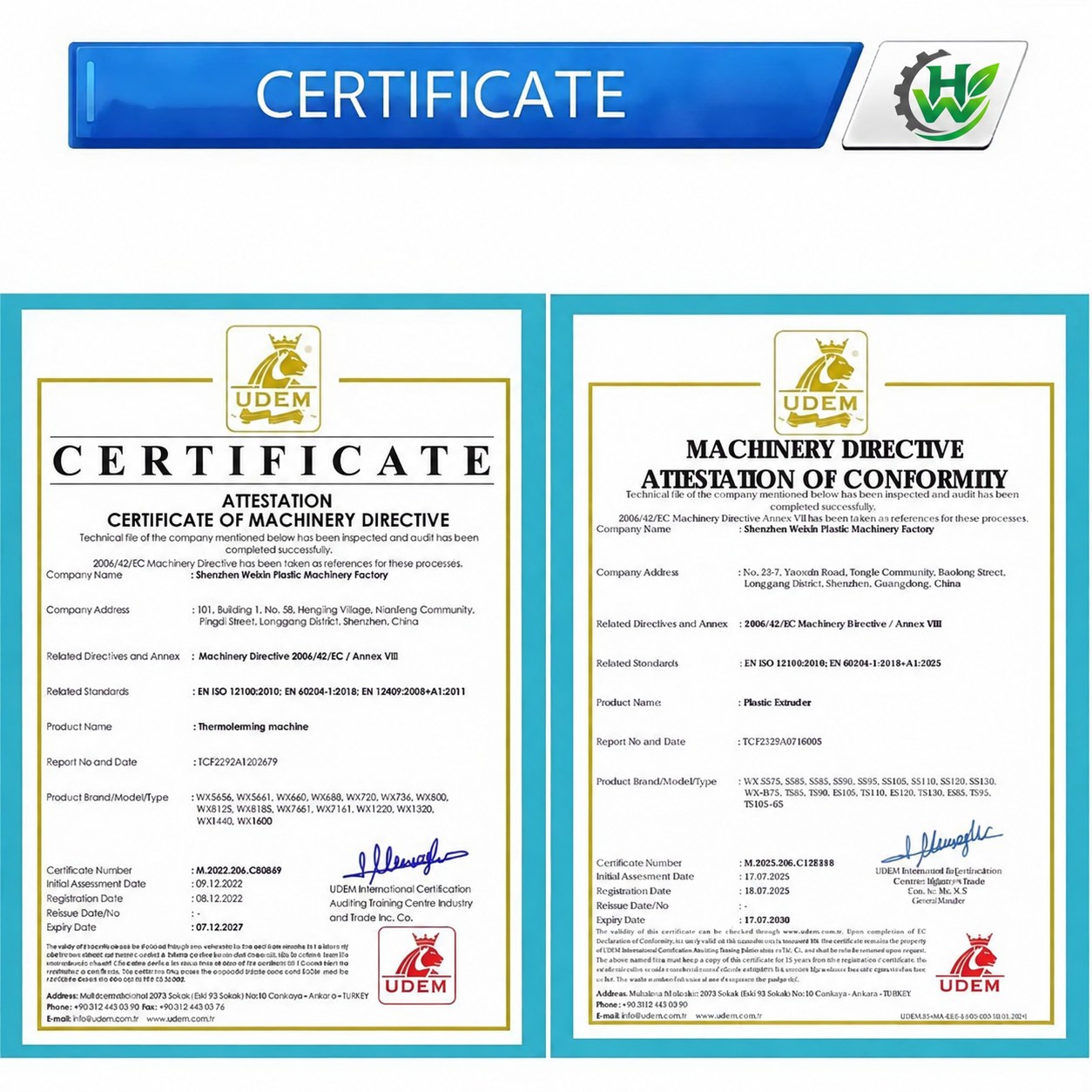
Fully automatic cup thermoforming with a servo or hydraulic forming stroke, for PP, PS and PET drinking cups. Forming depth, cycle time and mould are confirmed on your own tool during the factory trial. CE marking available.
Product Category: Plastic Cup Making Machines
Thermoforming is the step that decides everything a cup does afterwards: how it stacks, how it feels in the hand, whether a lid seats on the rim. This page explains the VihoX fully automatic cup thermoforming machines and the forming choices behind them.
The machines are built, wired and run on test in our factory in Yuanzhou Town, Huizhou. Mould making sits in the same workshop, so the forming window and the mould are developed together rather than separately.
| Type | Upper mold drive | Lower mold drive | Sheet feeding | Best for |
|---|---|---|---|---|
| Type A – upper cylinder + lower hydraulic | Cylinder | Hydraulic | Standard | Entry-level volume production; simple structure, low maintenance cost |
| Type B – upper servo + lower hydraulic | Servo | Hydraulic | Standard | Higher forming precision and stability; products with strict wall-thickness requirements |
| Type C – full servo | Servo | Servo | Servo | Full servo control; the most stable cycle and lowest energy loss for long continuous runs |
The forming motion is what separates the three builds. In Type A the upper mould is driven by a cylinder and the lower by hydraulics. Type B puts a servo motor on the upper mould, which is how a mould with several cavities is kept level across the bed. Type C drives both halves with servo motors and removes the hydraulic unit from the forming cycle, which is the build chosen for continuous unattended running.
| Parameter | 660 × 320 mm | 720 × 420 mm | 750 × 520 / 560 mm | 850 × 560 mm |
|---|---|---|---|---|
| Max. sheet width | 680 mm | 760 mm | 780 mm | 880 mm |
| Sheet thickness | 0.3–2.0 mm | 0.3–2.5 mm | 0.3–3.0 mm | 0.3–3.0 mm |
| Max. forming depth | 150 / 180 mm | 150 / 220 mm | 180 / 220 mm | 180 / 220 mm |
| Speed | 15–35 cycles/min (reference) | 15–35 cycles/min (reference) | 15–35 cycles/min (reference) | 15–35 cycles/min (reference) |
| Hydraulic motor power | 18.5 kW | 18.5 kW | 18.5 kW | 18.5 kW |
| Total power (max.) | 130 kW | 155 kW | 165 kW | 190 kW |
| Air pressure | 0.6–0.8 MPa | 0.6–0.8 MPa | 0.6–0.8 MPa | 0.6–0.8 MPa |
| Air consumption | Approx. 3.8 m³/min | Approx. 3.8 m³/min | Approx. 3.8 m³/min | Approx. 3.8 m³/min |
| Water consumption | Approx. 20 L/min | – | Approx. 20 L/min | Approx. 20 L/min |
| Cooling recommendation | 3–5 HP Chiller | 5 HP Chiller | 5–10 HP Chiller | 10 HP Chiller |
| Machine weight | Approx. 7 T | Approx. 8 T | Approx. 10 T | Approx. 15 T |
| Typical applications | Water cups, yogurt cups, jelly cups, etc. | Water cups, milk tea cups, beverage cups, meal boxes, bowls, etc. | Water cups, milk tea cups, beverage cups, meal boxes, bowls, etc. | Salad bowls, large-capacity food containers, catering trays |
| Power supply | AC380V / 50Hz / 3 Phase / 4-wire (customizable) | |||
The four forming areas below share the same machine architecture and the same drive options. What changes with size is the blank you can heat and the number of cups you can fit in it.
Heating is not uniform across a sheet, and it does not need to be. The zones along the oven are set so the material reaches the same forming temperature everywhere it has to stretch, which is why a tall cup usually needs a different profile from a shallow one on the same machine.
Drawing depth is the other limit. A cup that is deeper than the forming depth of the machine cannot be made on it at all, no matter how the settings are adjusted, so depth is checked before the bed size is chosen.
| Material | Typical cups | Notes |
|---|---|---|
| PP | Water cups, hot drink cups, general disposable cups | Good toughness and heat resistance |
| PS | Jelly cups, lightweight food cups | Good thermoforming performance |
| PET | Clear cold drink cups, transparent packaging cups | High transparency; needs suitable sheet quality and temperature control |
| PVC | Industrial and special applications | Confirm local regulations and market requirement before selection |
| PLA | Eco-oriented cups and containers | Narrower processing window; drying and temperature control must be confirmed by trial |
PP, PS and PET are all formable on this machine but they do not behave alike: PS forms easily and is forgiving, PP tolerates higher service temperatures, PET gives clarity and needs closer temperature control. The material table below lists what each is normally used for.
On a thermoformer the electrical load is dominated by the heating oven and the hydraulics. The reference consumption figures for the range are given per size in the table above; a servo build removes part of the hydraulic duty and is the reason Type C is specified for long continuous production.
Stable running comes from the cooling side as much as the heating side. Cooling water at the flow rate in the table keeps the mould temperature from drifting, and a chiller matched to the machine size prevents the slow rise in cycle time that appears when cooling water warms through a long shift.
Cup quality is decided in the mould: the rim radius, the taper that makes the cups stack, the surface finish that has to survive contact with the forming air. Moulds for this range are machined in our own workshop.
Because the mould and the machine come from one factory, the mould trial happens on the machine that will be shipped, and the recorded settings travel with it.
The table above summarises the range. Each model page below lists the full built parameters, including the values that are confirmed against the final servo configuration.
We run your mould and your material in the factory, record the settings, and send the formed samples with the machine. Installation, operator training and the continuing supply of moulds and spare parts are handled by the factory.
What is the difference between the hydraulic and the servo builds, in practice?
A hydraulic lower platen and a servo-driven upper mould are the classic arrangement. Moving to full servo takes the hydraulic unit out of the forming stroke, which is quieter and holds the same cycle time for longer, at a higher machine price.
Which material should I choose for a hot drink cup?
PP is the customary choice because it holds its shape at higher service temperatures. PS forms more easily but is normally kept to cold and ambient products.
Can the machine form a cup deeper than 220 mm?
The forming depth of this range tops out at 180 / 220 mm depending on the size and the mould. A deeper product needs a different machine class, so bring the depth to us at the enquiry stage.
Why does the table say the speed figure is a reference?
Because the achievable cycle depends on the mould, the sheet and the product. The machine is capable of the quoted range; your actual cycle is measured on your mould during the factory trial.
What happens if a heating zone fails?
The oven is built in separate zones and the machine is supplied with the wiring diagram and the spare recommendation, so a failed zone can be identified and replaced without shipping the oven back.
Does the machine need a chiller?
Yes. Cooling water is required for the mould and the hydraulics, and the table gives the recommended chiller size for each forming area. We supply the chiller if you want the whole line from one source.
How is the machine controlled and can operators be trained quickly?
The control cabinet uses a touch screen with the forming parameters in a single recipe per product. A mould change is a recipe recall rather than a re-setting exercise, and we train the operators during commissioning.
What documents and evidence do we receive with the shipment?
The packing list, the bill of lading, the container number and photographs of the machine being packed and loaded. If your own inspector or a third party needs to check the machine before loading, the inspection is arranged at our yard.
Send the cup drawing or a sample, the material and the output you need. We will confirm the forming area, the drive build and the mould, and quote the complete line.
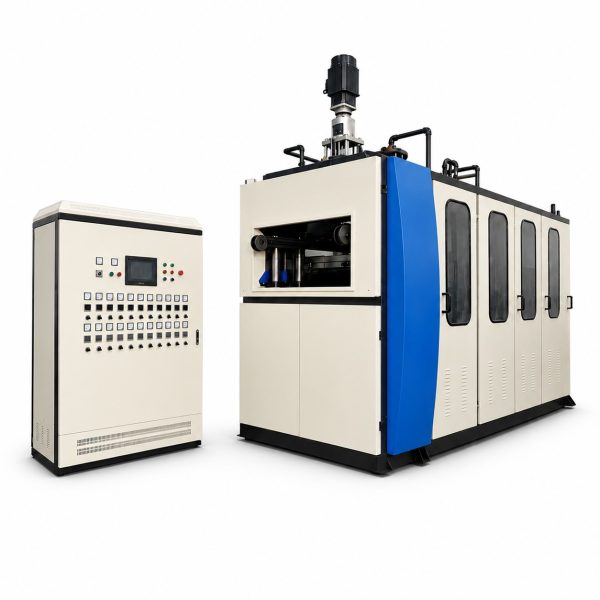
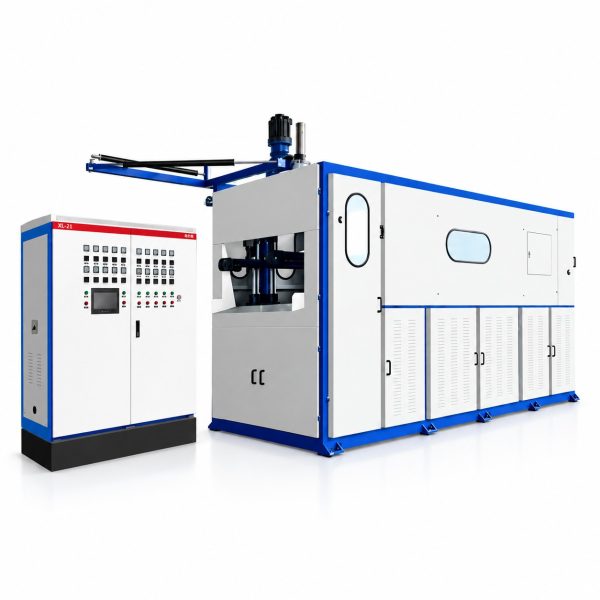
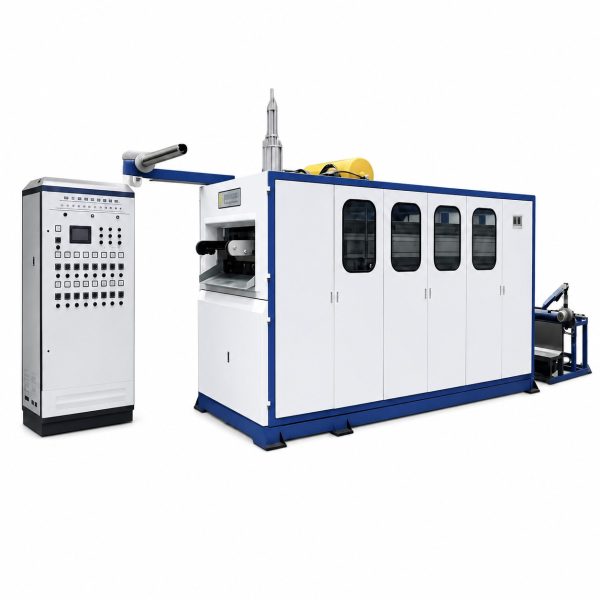
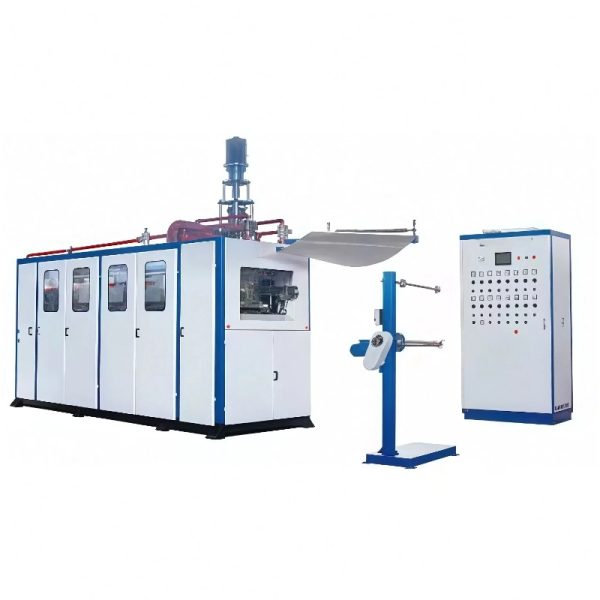
Matched molds and auxiliary equipment — crushers, mixers and recycling units sized to this machine.
See this machine family running in overseas case studies — background, output and on-site photos included.
Request pricing, technical specs or a video machine test — reply within 24 hours.