
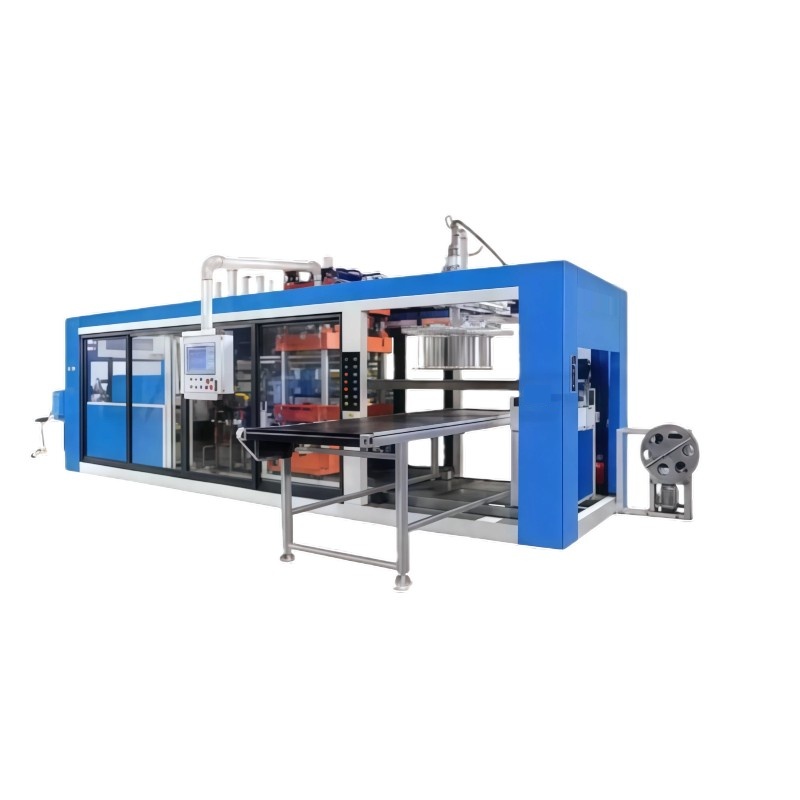
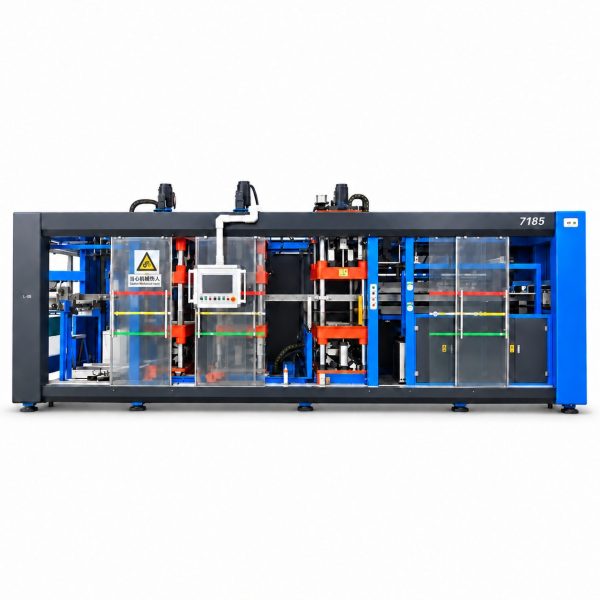
VihoX 710×610 positive & negative pressure 3-station thermoformer for lunch boxes and salad boxes: 710×610 mm full-footprint forming and cutting, 460–760 mm sheet width, 0.15–2.5 mm sheet, 120 mm depth, 80 T, ≥3.5 m³/min air, PP/PS/PET/PVC/PLA. Mold and cutting die quoted with the machine.
The VihoX 710×610 is the volume model of the 710 mm three-station thermoformer family, with forming, cutting and stacking at three separate working stations on one bed. What separates it from its smaller sister is measured at the cutting station: this machine trims across the full footprint of its forming area, so a lunch box or salad box leaves the line complete and stacked.
Buy it when the product is a container rather than a lid — a meal box with a real wall, a salad bowl with a wide sealing flange, a serving tray. Sheet thickness reaches 2.5 mm and sheet width starts at 460 mm. Cups remain outside its remit: a drinking cup is formed and cut inside one tool on a cup making machine, while this platform serves lidded, boxed, tray-shaped and blister products.
Wide box-shaped parts demand two things lids never do: a long continuous cut around a deep shell, and trimming that happens after the plastic has cooled enough to hold its flange. Both are awkward when a mold and a die share one stroke. Three stations let the forming station own the draw and the cutting station own the outline, so a lunch box flange stays flat and a salad bowl rim stays round.
Because the cut covers the whole 710×610 mm envelope, multi-cavity layouts are not squeezed — a 2×2 arrangement of meal boxes fits without trimming cavity count to make room for the blade frame. The 80 T cutting force carries that longer perimeter, since a full box layout writes a knife line at the upper end of the 10–15 m band. The stacker then collects heavier parts at press rhythm, so specify it alongside the die.
The range is stepped, and this model sits in the middle of the 710 mm group. Only the adjacent steps are listed.
| Model | Max. Forming Area | Forming Depth | Rated / Total Power | Machine Weight |
|---|---|---|---|---|
| VihoX 710×520 (entry step) | 710×520 mm | 120 mm | 120 kW | Approx. 10 T |
| VihoX 710×610 (this model) | 710×610 mm | 120 mm | 120 kW | Approx. 12 T |
| VihoX 710×850 (large-format step) | 710×850 mm | 120 mm | 120 kW | Approx. 15 T |
| Machine Type | Positive & Negative Pressure 3-Station Thermoformer |
| Working Stations | Forming + Cutting + Stacking |
| Forming Method | Positive + Negative Pressure |
| Forming Servo | Top + Bottom 5.5 kW |
| Punching Servo | Top + Bottom 7.5 kW |
| Suitable Material | PP / PS / PET / PVC / PLA |
| Max. Forming Area | 710×610 mm |
| Min. Forming Area | 420×350 mm |
| Max. Cutting Area | 710×610 mm; knife-line length approx. 10–15 m |
| Applicable Sheet Width | 460–760 mm |
| Sheet Thickness | 0.15–2.5 mm |
| Forming Depth | 120 mm |
| Forming / Cutting Stroke | 150 mm |
| Max. Cutting Force | 80 T |
| Production Speed | Max. 15–35 cycles/min |
| Max. Roll Diameter / Weight | Φ600 mm / 300 kg |
| Air Pressure | 0.6–0.8 MPa |
| Air Consumption | ≥3.5 m³/min |
| Heating Method | Upper & lower 3-section heating |
| Heating Power | 80 kW (source note: two-stage heating in upper and lower furnaces) |
| Rated / Total Power | 120 kW |
| Actual Power Consumption | Approx. 30–50 kWh |
| Cooling Method | Air-cooled chiller |
| Power Supply | AC 380V / 50Hz / 3+N+PE (customizable) |
| Machine Dimension | Approx. L10000×W2300×H2500 mm |
| Machine Weight | Approx. 12 T |
| Typical Applications | Lunch boxes, salad boxes, trays, lids and food containers |
| Recommended Air Compressor | 20 HP |
| Recommended Chiller | 10 HP |
The core of this page is the meal container: a wall, a flange, and a footprint large enough that multi-cavity nesting matters.
Two limits are worth stating plainly. The bed will not make a cup. And if a part grows towards a full catering tray, or the plant wants long campaigns on the largest roll available, the 710×850 is the honest next step.
The five polymers behave differently in box work, because a deep flange exposes heating inconsistency that a shallow lid hides.
| Material | Typical parts on this bed | Notes |
|---|---|---|
| PP | Lunch boxes, salad boxes, trays | The default for container work; tolerates the deep draw and holds a flange |
| PS | Meal boxes, catering trays, lids | Stiff and dimensionally stable, which helps matched box-and-lid sets |
| PET | Clear boxes, transparent trays | Chosen for visibility; keep the profile gentle so clarity survives the draw |
| PVC | Specialised and industrial trays | Confirm the end use and local regulation before specifying |
| PLA | Plant-based boxes and trays | Narrow window; even zoning across the 3-section furnace is the deciding factor |
A box programme lives or dies on how well its forming mold and cutting die are matched. The die runs to the full 710×610 mm footprint, and its blade perimeter climbs with every cavity and corner radius, so a four-cavity layout writes a knife line at the heavy end of the 10–15 m band. That needs more shearing force and creates more wear points. Consistent trim margins, radiused corners and cooling channels that firm the flange all reduce the load the 80 T must deliver.
Air is the number to verify first. Because consumption is quoted as a minimum of 3.5 m³/min at 0.6–0.8 MPa, the 20 HP compressor recommendation is the floor of a properly sized installation — a box mold with positive-pressure assist is the heaviest air user in the family. An air-cooled chiller in the 10 HP class holds the cutting station steady, and the unwind takes rolls to Φ600 mm and 300 kg. Sheet width starts at 460 mm, so confirm your supply falls inside the 460–760 mm window before ordering tooling.
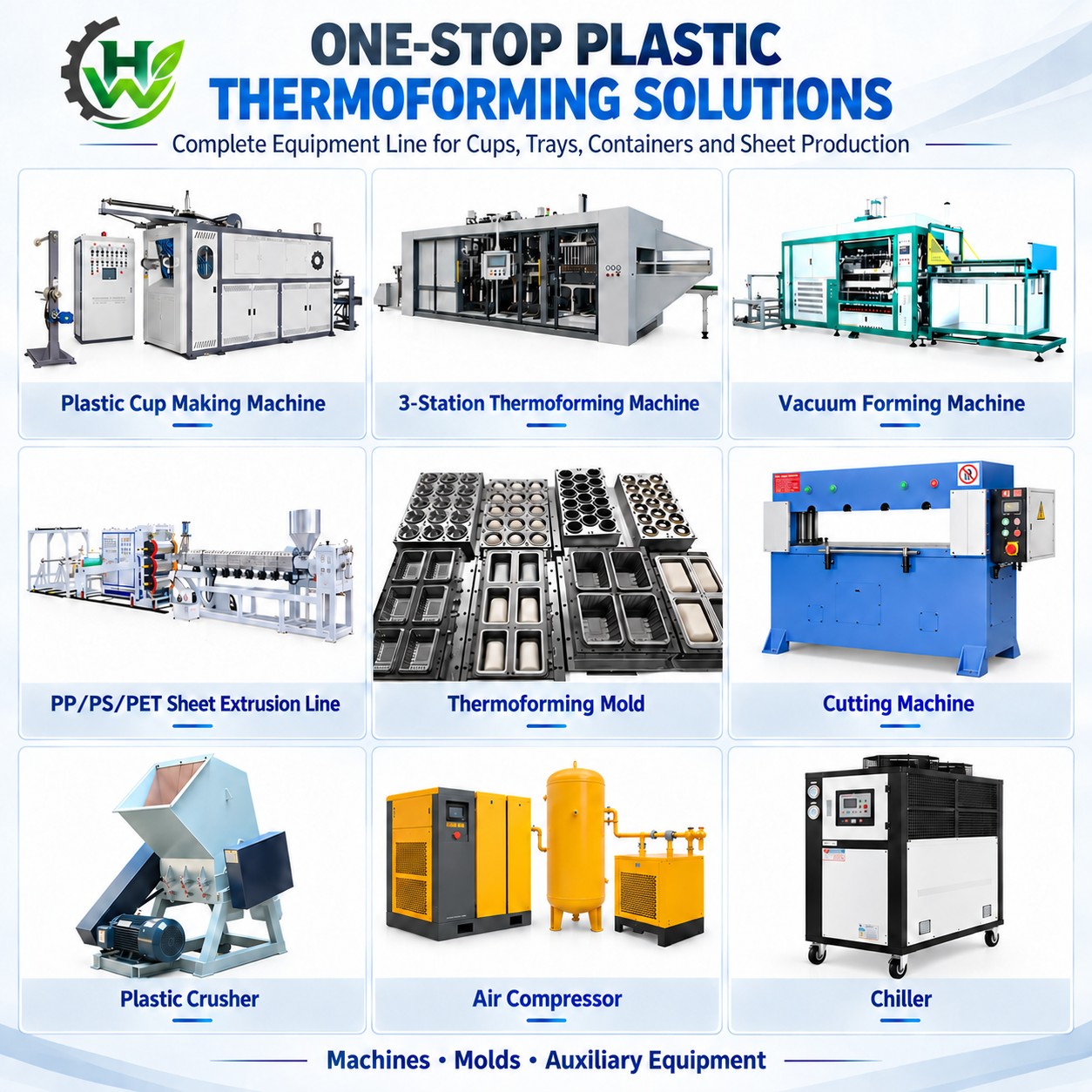
A box line is more than the press. Sheet supply, drying, cooling, compressed air, trim recovery and downstream packing all affect the rate the machine can hold. Starting points: the three-station thermoforming range · cup making machines if your demand is cups · matched auxiliary equipment · case studies from installed lines · a look inside the factory · line layout guidance.
The machine is assembled, wired and operated under power before dispatch, and the trial is documented for you: running video, mold trial footage, samples, cabinet photographs, drawings, manuals and the spare-parts list. On a box programme the trial should prove flange flatness after trimming, a clean cut around the full perimeter, and a stack that stays square at production speed. Inspect at the factory, have the trial streamed live, or engage an inspector of your own before the balance falls due.
Why choose the 710×610 instead of the 710×520?
Two reasons only: full-footprint cutting and 2.5 mm sheet. If your container needs the whole 710×610 mm outline trimmed in one stroke, or a wall thicker than 2.2 mm, the smaller bed runs out of envelope.
What does full-footprint cutting actually mean?
The cutting station trims across the same 710×610 mm area the part was formed in, so no cavity has to be pulled inwards to leave travel room for the blade frame. That is what lets a nested layout keep its cavity count.
Why does sheet width start at 460 mm here?
The applicable range is 460–760 mm. Confirm that the width your extrusion line or roll supplier delivers falls inside that window before committing to a die layout.
What does ≥3.5 m³/min of air consumption mean for my compressor?
Treat it as a minimum flow at 0.6–0.8 MPa rather than an average. A 20 HP unit is recommended, sized with spare capacity if other machines share the receiver.
Can this machine make cups as well as boxes?
No, and it is not intended to. Cups come off a dedicated cup making machine, whose tool cuts each cup free during the forming stroke. This platform handles boxes, trays, lids and similar open products.
What is the difference between 120 kW and 30–50 kWh on this sheet?
120 kW is the installed maximum the plant supply must be able to feed; 30–50 kWh is the approximate consumption of a machine in production. The two are not additive.
Which material suits lunch and salad boxes best?
PP is the usual first choice: it takes the deeper draw without stress whitening and holds a sealing flange. PS follows for matched box-and-lid sets, and PET when the contents must be seen.
What should I send for an accurate quotation?
A drawing or sample, outline size, wall depth, material, sheet thickness and required output, plus shifts, supply voltage, country, and whether the order covers the press alone or with mold, die, chiller and compressor.
Tell us the box or tray you have in mind, the material and thickness, your required output and the width of sheet you can supply. Our engineers will confirm whether the VihoX 710×610 is the right size for your container and will quote the machine with its forming mold, cutting die and auxiliary equipment.
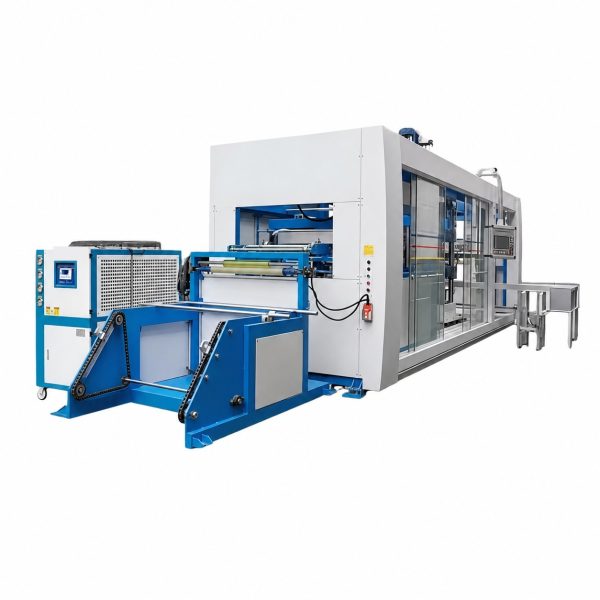
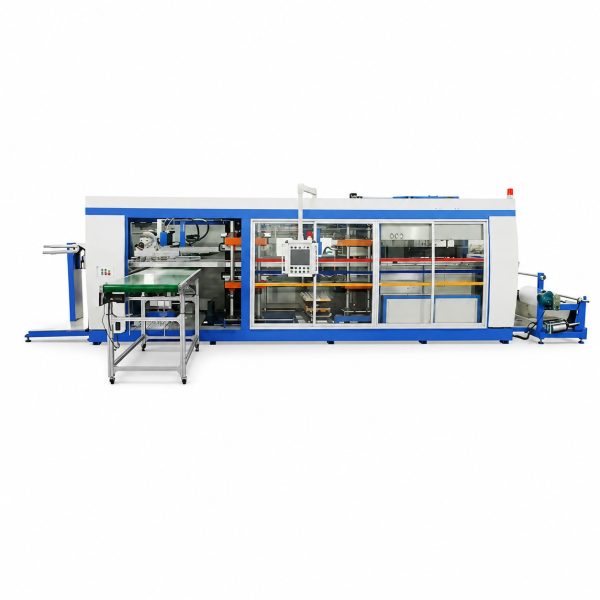
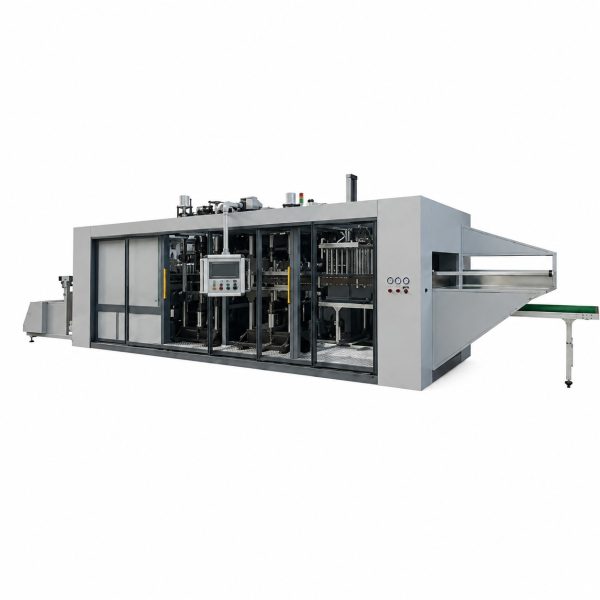
Matched molds and auxiliary equipment — crushers, mixers and recycling units sized to this machine.
See this machine family running in overseas case studies — background, output and on-site photos included.
Request pricing, technical specs or a video machine test — reply within 24 hours.