
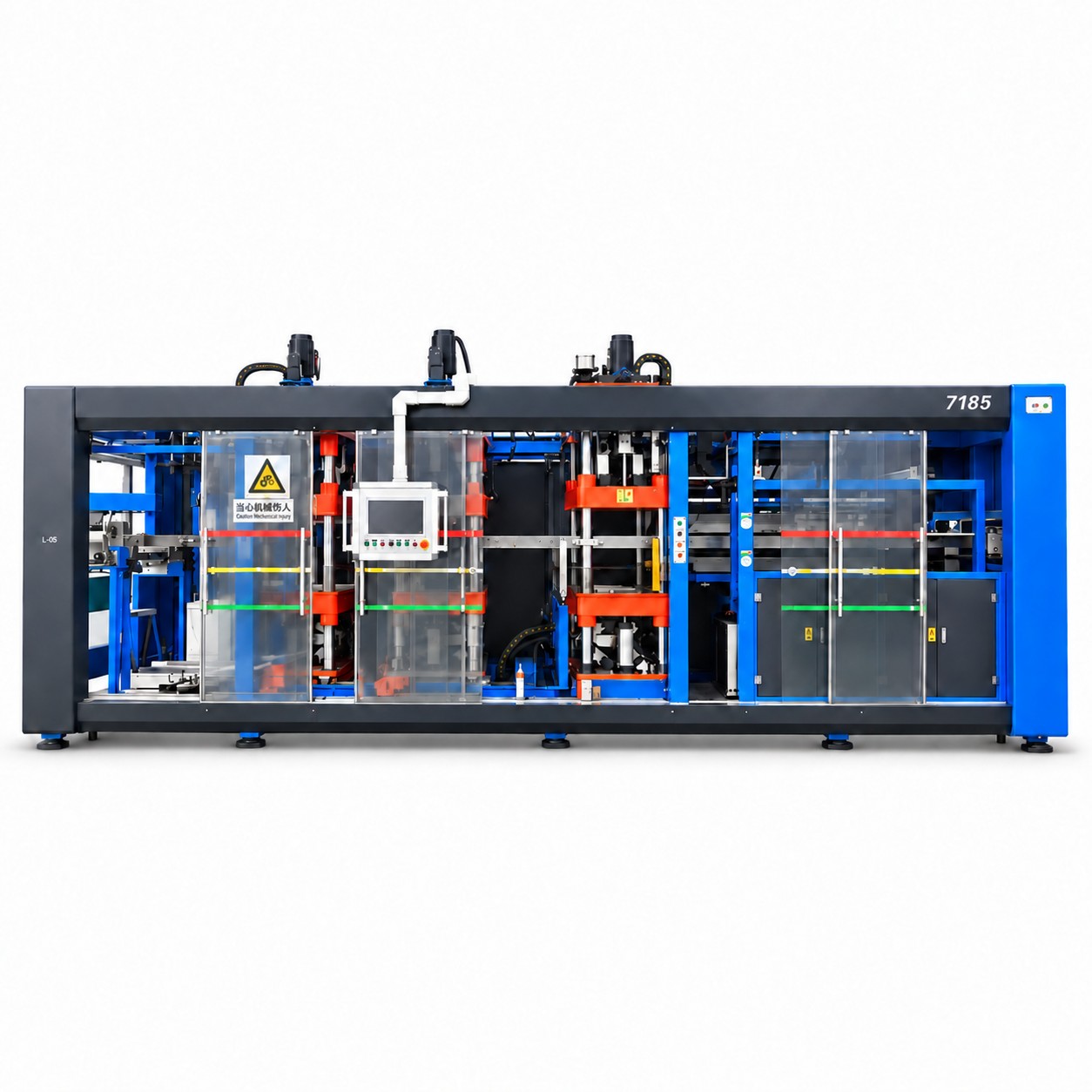
VihoX 710×850 positive & negative pressure 3-station thermoformer for large food boxes and trays: full-footprint 710×850 mm forming and cutting, 0.15–2.5 mm sheet, 120 mm depth, 80 T, Φ700 mm / 500 kg roll, approx. 40–60 kWh, PP/PS/PET/PVC/PLA, high-output packaging.
The VihoX 710×850 is the large-format machine of the VihoX three-station thermoformer family: forming, cutting and stacking occupy three working stations across the widest bed in the 710 mm group, and the cutting station trims the full 710×850 mm footprint.
It suits plants where the part is large or the volume is high, and where sheet arrives on the biggest rolls the family accepts. What distinguishes it from the models either side is not forming depth — all three share 120 mm — but the size of the part, the size of the roll, and the material moving through the machine each hour.
Large parts compound every compromise in a single-station press. A catering tray has a long perimeter, so the cut demands force; it has a broad flange, so trimming must not disturb the draw; and it is heavy enough that a loosely synchronised stacking step becomes the bottleneck. Three stations answer all three at once: forming concentrates on draw and wall distribution, cutting brings 80 T to bear on a perimeter that can run the full length of the 10–15 m knife-line band, and stacking keeps pace with the press. Because the cut also equals the forming area, 710×850 mm, a large or widely spaced layout is trimmed without shrinking the tool.
Only the two adjacent steps are shown, since those are the practical choices.
| Model | Max. Forming Area | Forming Depth | Rated / Total Power | Machine Weight |
|---|---|---|---|---|
| VihoX 710×610 (container step) | 710×610 mm | 120 mm | 120 kW | Approx. 12 T |
| VihoX 710×850 (this model) | 710×850 mm | 120 mm | 120 kW | Approx. 15 T |
| VihoX 710×900 (deepest draw, negative pressure) | 710×900 mm | 150 mm | 120 kW | Approx. 10 T |
| Machine Type | Positive & Negative Pressure 3-Station Thermoformer |
| Working Stations | Forming + Cutting + Stacking |
| Forming Method | Positive + Negative Pressure |
| Forming Servo | Top + Bottom 5.5 kW |
| Punching Servo | Top + Bottom 7.5 kW |
| Suitable Material | PP / PS / PET / PVC / PLA |
| Max. Forming Area | 710×850 mm |
| Min. Forming Area | 420×350 mm |
| Max. Cutting Area | 710×850 mm; knife-line length approx. 10–15 m |
| Applicable Sheet Width | 450–760 mm |
| Sheet Thickness | 0.15–2.5 mm |
| Forming Depth | 120 mm |
| Forming / Cutting Stroke | 150 mm |
| Max. Cutting Force | 80 T |
| Production Speed | Max. 15–35 cycles/min |
| Max. Roll Diameter / Weight | Φ700 mm / 500 kg |
| Air Pressure | 0.6–0.8 MPa |
| Air Consumption | ≥3.5 m³/min |
| Heating Method | Upper & lower 3-section heating |
| Heating Power | 80 kW (source note: two-stage heating in upper and lower furnaces) |
| Rated / Total Power | 120 kW |
| Actual Power Consumption | Approx. 40–60 kWh |
| Cooling Method | Air-cooled chiller |
| Power Supply | AC 380V / 50Hz / 3+N+PE (customizable) |
| Machine Dimension | Approx. L11000×W2300×H2500 mm |
| Machine Weight | Approx. 15 T |
| Typical Applications | Large food boxes, trays, salad boxes, fruit boxes and high-output packaging |
| Recommended Air Compressor | 20 HP |
| Recommended Chiller | 10 HP |
This is the model for parts too big for a medium bed, and for plants that measure success in tonnes rather than pieces.
Two limits are worth reading. A medium box of roughly lunch-box footprint makes this machine over-provisioned: the 710×610 already cuts it at full footprint, and the extra 3 T buys nothing. And if the need is depth rather than area, the 710×900 and its 150 mm forming depth, not a larger platen, moves the part.
All five polymers run here; on a large part the penalty for a poor heating profile scales with area.
| Material | Typical parts on this bed | Notes |
|---|---|---|
| PP | Large meal boxes, catering trays, bulk containers | Takes the widest area draw without tearing; the default for heavy trays |
| PS | Big trays, serving plates, matching lids | Stiffness across a wide flange is its advantage on this bed |
| PET | Large clear boxes, display trays | Visibility is the point; a long part needs even heating to stay optically clean |
| PVC | Oversized industrial trays and specials | Verify the application and local rules before committing tooling |
| PLA | Large plant-based trays and boxes | Tightest window of the five; broad-area uniformity comes from the 3-section furnace |
On a bed this size the cutting die is the dominant tooling cost and wear item. A large tray outline written at 710×850 still builds a long blade perimeter, and a multi-cavity layout pushes the knife line towards the top of the 10–15 m band. That is sustainable within 80 T only when the die is designed for it: even trim margins, radiused corners that spread the shear load and consistent web support all reduce the force each blade section sees. The mold, meanwhile, needs cooling designed for a broad area, because a slow-setting flange deforms on its way to the cutter.
Air demand is a minimum, not a target: at least 3.5 m³/min at 0.6–0.8 MPa, with a 20 HP compressor recommended. An air-cooled chiller in the 10 HP class handles cooling, and on a large-part campaign it works harder because there is more hot sheet to bring down between forming and cutting. The unwind takes rolls to Φ700 mm and 500 kg, the highest capacity in this family, so the roll stand must be specified for that weight.
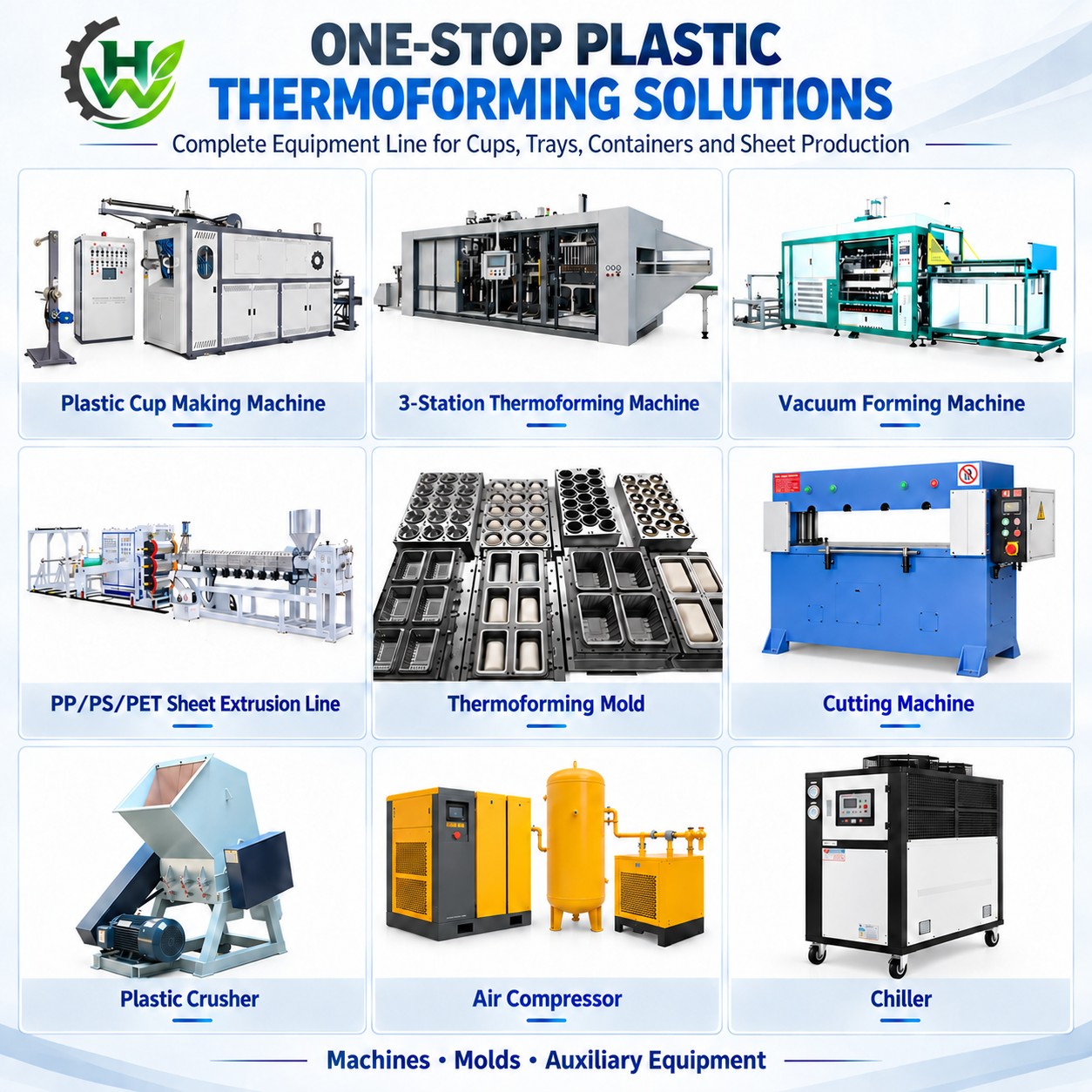
At this output level the press sits at the centre of a system: sheet supply or extrusion, drying, cooling, compressed air, trim recovery and packing all need to match the rate the 710×850 sustains. Starting points: the three-station thermoforming equipment range · cup making machines for cup-only demand · chillers, compressors and other auxiliary equipment · installed-line case studies · our factory · production line planning notes.
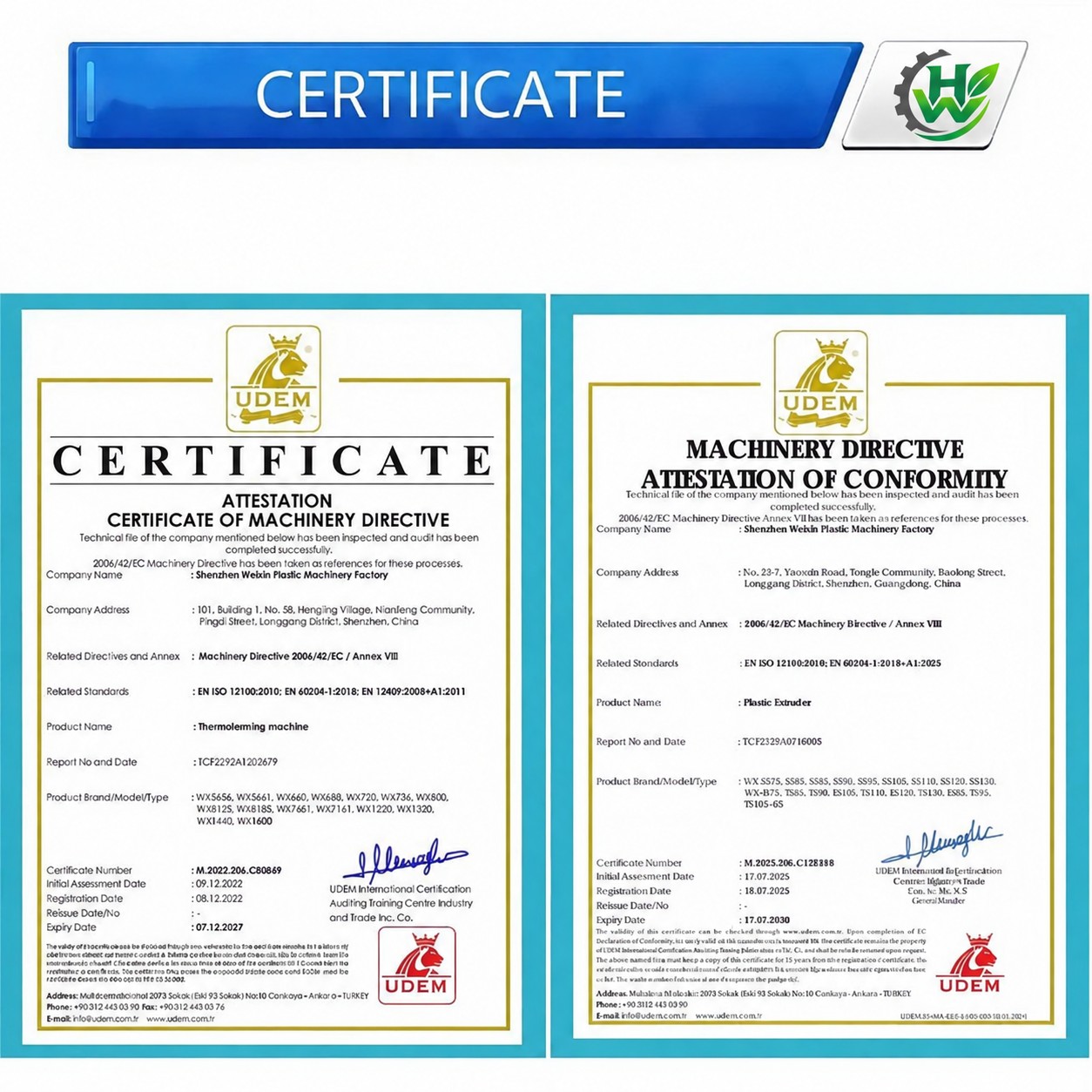
Assembly, wiring and a powered run all happen before dispatch, and the record handed to you includes running video, mold trial video, samples, cabinet photographs, drawings, manuals and the spare-parts list. On a large-part machine the trial should show that a full-width cut leaves a clean edge at the furthest corner of the die and that the stacker holds a square pile at running speed. Inspection at our works, a live video trial, or your own inspector before the balance are all welcome.
What can this model do that the 710×610 cannot?
It trims the full 710×850 mm footprint, so a genuinely large tray or a widely spaced layout fits without compromise, and it accepts rolls to Φ700 mm and 500 kg, the highest capacity in the family.
Does the larger bed push power consumption up?
Only in the running figure. The installed maximum stays at 120 kW, but the consumption reference is higher at approximately 40–60 kWh because more sheet is heated and a longer cut is made each cycle.
When is the 710×850 over-specified?
When the part is a medium container of roughly lunch-box proportions. The 710×610 cuts that at full footprint already, and the extra 3 T of machine plus its longer floor length earn nothing.
Is this machine for cups?
No. Cups are produced on a cup making machine, whose tool cuts each cup free inside the mold. This platform handles boxes, trays, large lids and other open products.
How do roll diameter and weight affect my line?
A Φ700 mm, 500 kg roll is the maximum the unwind accepts. Larger rolls mean fewer changes per shift, but the roll stand, loading method and floor layout must be planned for that weight before installation.
How many cycles per minute should I expect?
The reference band is 15–35 cycles/min, but on a large-format die output is usually set by how many parts the tool holds and how heavy each one is, not by the top of the range.
What tooling does a large tray need?
A forming mold with cooling designed for a broad area, plus a matching cutting die built to a long blade perimeter, radiused and evenly supported to stay within the 80 T available.
What information do you need to quote this machine properly?
The part drawing or sample with outline dimensions and depth, material and thickness, output per shift, your factory supply and country, the largest roll your plant can handle, and whether you need one machine or a complete line.
Describe the large part you intend to form, the sheet you plan to run, the output you need and the maximum roll size your plant can handle. Our engineers will say honestly whether the VihoX 710×850 is the correct step in the family, and will quote it together with the forming mold, cutting die and the auxiliaries the line needs.
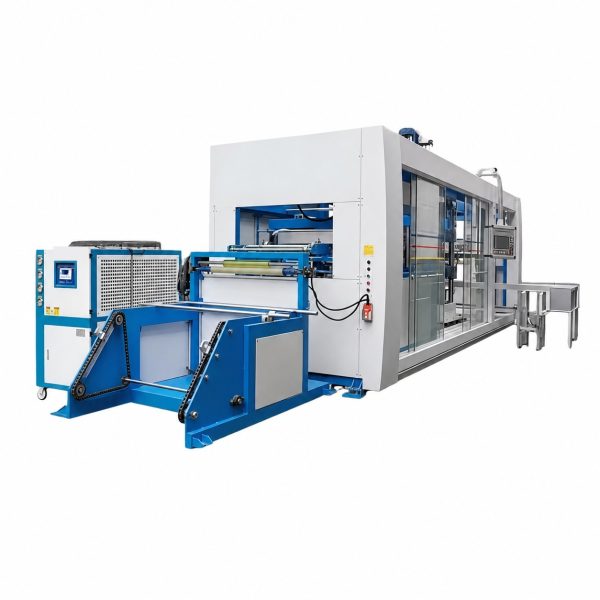
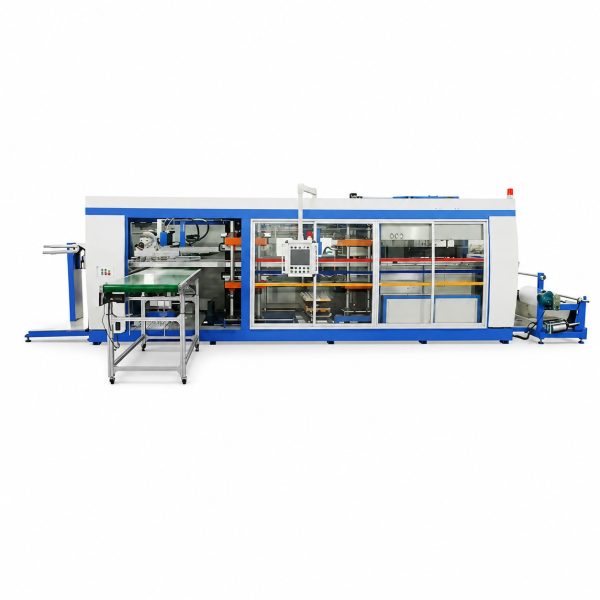
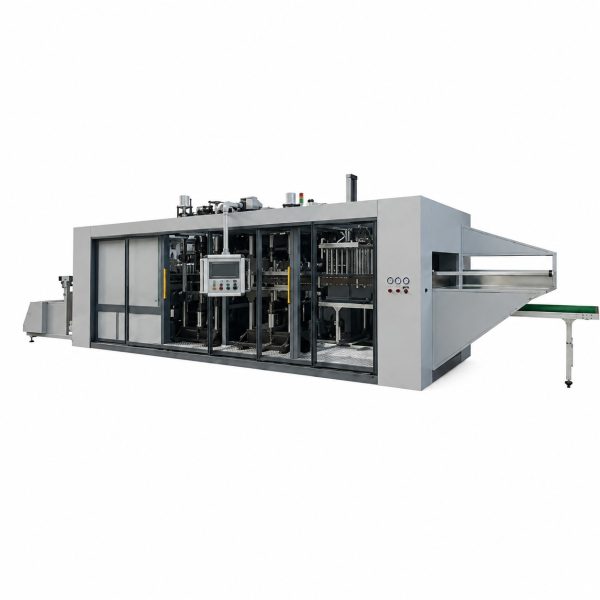
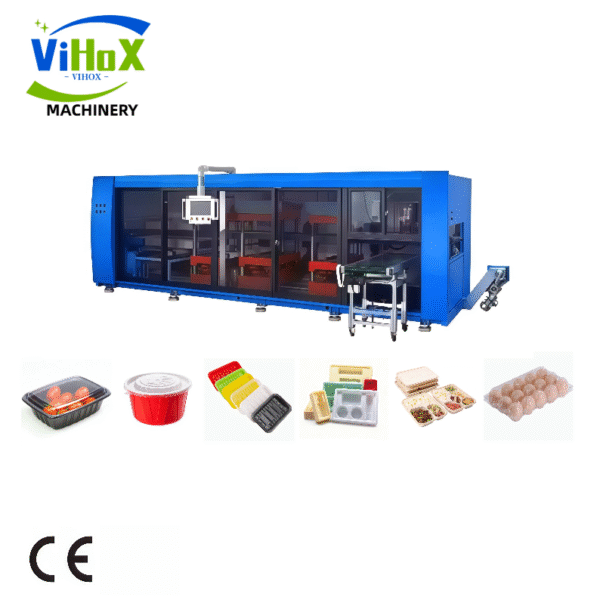
Matched molds and auxiliary equipment — crushers, mixers and recycling units sized to this machine.
See this machine family running in overseas case studies — background, output and on-site photos included.
Request pricing, technical specs or a video machine test — reply within 24 hours.