
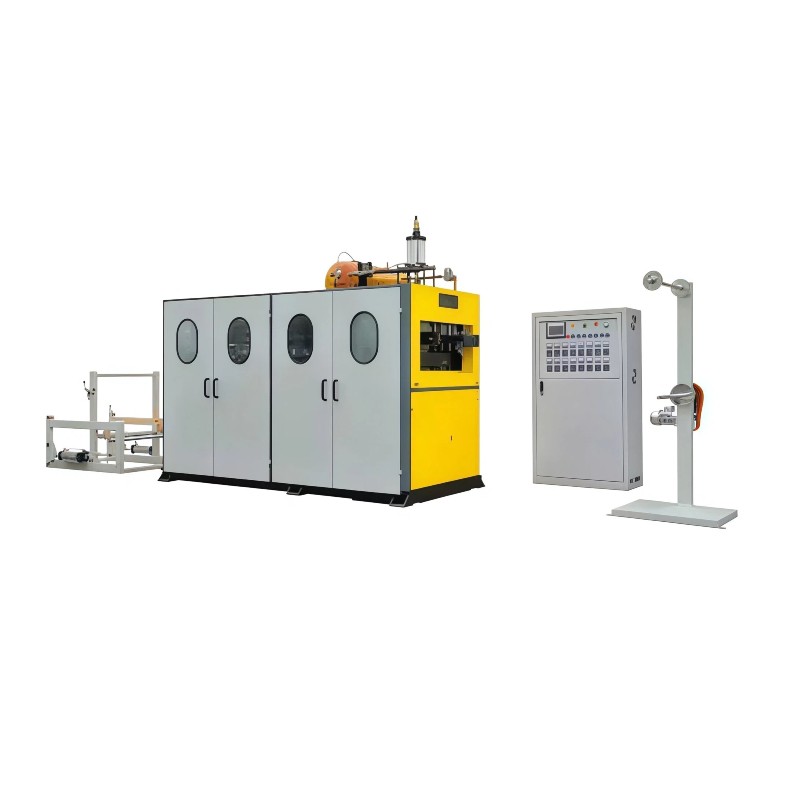
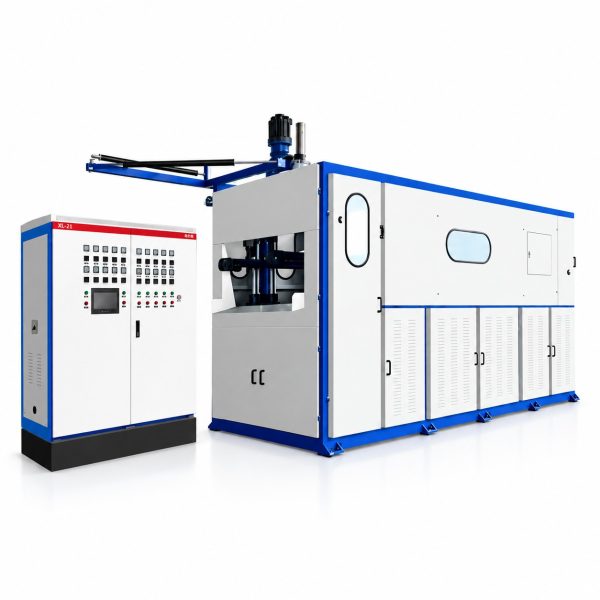
VihoX-750-A Type A automatic plastic cup thermoforming machine: 750×520 / 750×560 mm forming area, 18.5 kW hydraulic lower clamp, 0.3–3.0 mm sheet (PP/PS/HIPS/PET/PVC/PLA), 180/220 mm forming depth, 5–10 HP chiller, 165 kW total power. Designed for thick-sheet forming of deep bowls, large cups and food containers. Factory test run before shipment.
Product Category: Plastic Cup Making Machines
VihoX-750-A is a Type A automatic plastic cup thermoforming machine with a cylinder-driven upper mold and an 18.5 kW hydraulic lower clamp, built on a 750 × 520 / 750 × 560 mm forming platform that accepts 0.3–3.0 mm sheet and forms cavities of 180 / 220 mm.
This model exists for factories whose product has outgrown thin sheet. Once the material reaches 2.5–3.0 mm, or the part is a genuine 180–220 mm deep draw, the limits shift from cycle speed to clamp force, frame rigidity and draw control. Extra thickness and a larger formed area both raise the closing force the press must hold and the heat the mold must pull out of every part. The VihoX-750-A answers those with a hydraulic lower clamp, a heavier frame and a 5–10 HP cooling requirement, while keeping the Type A arrangement — the simplest of the three VihoX configurations.
Upgrading the drive system only pays where the product benefits.
| Type | Upper mold drive | Lower mold drive | Sheet feeding | Best for |
|---|---|---|---|---|
| A (this model) | Cylinder | Hydraulic | Standard | Thick-sheet and deep-cavity work where force and rigidity decide the result |
| B | Servo upper stretching (11 kW) | Hydraulic | Standard | Adding stretch repeatability to the same forming envelope |
| C | Servo | Servo closing | Servo | Cycle and energy optimisation across uninterrupted production |
On this platform the hydraulic lower clamp carries the load. Drawing 3.0 mm sheet across a large container demands sustained closing pressure while the material is still soft, and a hydraulic circuit supplies it through an architecture any maintenance team can look after. The cylinder-driven upper mold handles the plug side of the draw. Type A does not offer programmable stretch motion or servo-controlled cycling.
If your margin depends on holding an identical cycle for three shifts, or on trimming energy per part over a long run, evaluate the VihoX-750-B with its 11 kW upper stretching servo, or the VihoX-750-C with upper and closing servos plus servo sheet feeding — total power to be confirmed by final servo configuration.
| Machine Type | Type A (Upper Cylinder + Lower Hydraulic) |
| Forming Area | 750 × 520 / 750 × 560 mm |
| Hydraulic Motor Power | 18.5 kW |
| Max. Sheet Width | 780 mm |
| Sheet Thickness | 0.3–3.0 mm |
| Max. Forming Depth | 180 / 220 mm |
| Speed | 15–35 cycles/min (reference) |
| Air Pressure | 0.6–0.8 MPa |
| Air Consumption | Approx. 3.8 m³/min |
| Water Consumption | Approx. 20 L/min |
| Cooling Recommendation | 5–10 HP Chiller |
| Suitable Material | PP / PS / HIPS / PET / PVC / PLA |
| Power Consumption | 40–80 kWh (reference) |
| Total Power (Max.) | 165 kW |
| Power Supply | AC380V / 50Hz / 3 Phase / 4-wire (customizable) |
| Machine Dimension | Approx. L7400 × W2250 × H2700 mm |
| Machine Weight | Approx. 10 T |
| Typical Applications | Water cups, milk tea cups, beverage cups, meal boxes, bowls, etc. |
How to read these figures
Cup diameter, height, weight and cavity count come from the mold, so send the drawing or a sample photo and we will check it against this platform.
| Material | Typical products | Notes |
|---|---|---|
| PP | Hot-drink cups, thick-wall drink cups, containers | Tough and heat resistant; a natural pairing with 3.0 mm sheet |
| PS | Lightweight cups and dessert items | Easy processing; useful where the draw is shallow and the cavity count high |
| HIPS | Dairy cups, dessert tubs, food service containers and trays | Higher impact resistance than standard PS; readily drawn on thick sheet, and widely chosen where the container must survive handling and stacking |
| PET | Clear beverage cups and transparent containers | Optical clarity depends on controlled heating; thick PET needs a settled heating profile |
| PVC | Specialised and industrial items | Verify destination market regulations before tooling is ordered |
| PLA | Bio-based cups and food containers | Restricted processing range; drying and forming temperatures fixed by test run |
HIPS is the material that most often brings buyers to this model: it allows a heavier, more impact-tolerant container at this gauge. PE is not on the approved list — for PE, ask about the VihoX-720 family.
Sequence on this model: unwind and index the roll → heat through the full sheet gauge → hydraulic draw forming → trim and separate → cup stacking → counting and packing.
Thick sheet rewrites those priorities. Heating takes longer to soak through the material, so the oven is set for penetration rather than surface temperature, while the softened sheet gains weight and sags between the rails — which is why the indexing behaviour of a heavier frame matters as much as the press. The draw has to move material that resists stretching, so closing force is held longer each cycle. Cooling then lets the part keep its shape: a chiller at the upper end of the range gives the mold the headroom to set a 3.0 mm wall.
Tooling is engineered around a forming area of 750 × 520 or 750 × 560 mm, a maximum sheet width of 780 mm and a depth of 180 or 220 mm. Because two platen sizes are offered, the mold drawing and the machine order must state the same value.
Deep draws constrain cavity layout more tightly than shallow ones, so cavity pitch, draw ratio and clamp land are planned together; molds are built to your cup dimensions and output, and we flag any layout that cannot release cleanly.
Cooling capacity is the decision buyers most often under-specify. The recommendation is 5–10 HP: thin sheet and shallow parts run comfortably at the lower figure, while 3.0 mm sheet, deep bowls, hot ambient conditions or an aggressive cycle target need the upper end. Plan an air compressor delivering 0.6–0.8 MPa at roughly 3.8 m³/min against your duty cycle, cooling water of approximately 20 L/min, and stacking and packing equipment matched to your automation level.
Thick-sheet forming is sensitive to what happens on either side of the press: a stable sheet supply protects the heating window, while cooling, air, stacking, packing and scrap handling decide whether the machine holds its setting. Where sheet gauge, width or colour has to be controlled in house, a sheet extrusion line deserves evaluation.
Further reading: selecting the right plastic cup thermoforming machine and building an integrated cup production line.
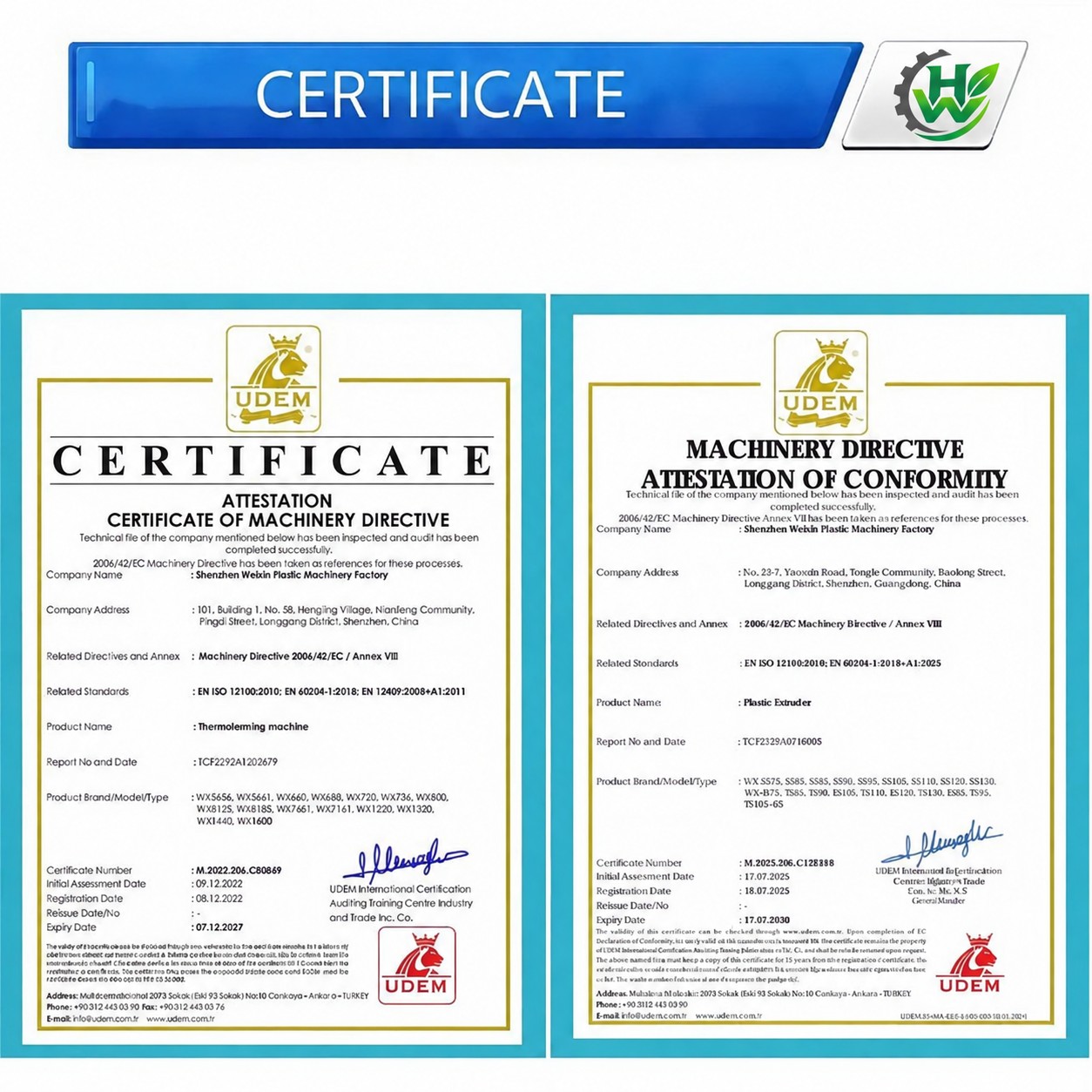
Before dispatch the machine is run under test, and the evidence goes to the buyer: running footage, mold trial footage, the formed parts, images of the electrical cabinet and principal components, and packing photographs, with drawings, manuals and the spare-parts list. A factory visit, a live video trial with your own cup data, or a third-party inspection is welcome. CE documentation is available for relevant machines.
What sheet thickness and forming depth does the VihoX-750-A handle?
Sheet 0.3–3.0 mm, depths of 180 / 220 mm, maximum sheet width 780 mm, forming area 750 × 520 or 750 × 560 mm.
Why is the cooling recommendation a range rather than one figure?
The heat load changes with the job: thin sheet and shallow parts are served by the lower figure, while 3.0 mm sheet, deep draws, hot workshops or a fast cycle target need the upper end.
Is HIPS supported, and what does it add?
Yes — HIPS is on this model’s list alongside PP, PS, PET, PVC and PLA. Its impact resistance is higher than standard PS, which suits dairy and food service containers.
Can I transfer the molds I already use on a 720 machine?
No. Platen size, sheet width and depth range differ between the 720 and 750 platforms, so tooling must be made for this forming area.
Should I buy the 750-A or move up to the 750-B?
If the difficulty is force and rigidity on thick sheet or deep draws, Type A is sound. If the difficulty is holding an identical cycle over long runs, evaluate the VihoX-750-B or VihoX-750-C.
How much output should I plan for?
No fixed output can be promised. Tell us the cup and the target capacity and we will estimate the range your mold layout can deliver.
Which type of drive is used, and can it be changed later?
Type A: cylinder-driven upper mold with a hydraulic lower clamp, fixed at manufacture, so settle the choice before ordering.
What information do you need to quote accurately?
The cup drawing, top and bottom diameter, height, weight, material and sheet gauge, the forming area size, target capacity, factory voltage and country.
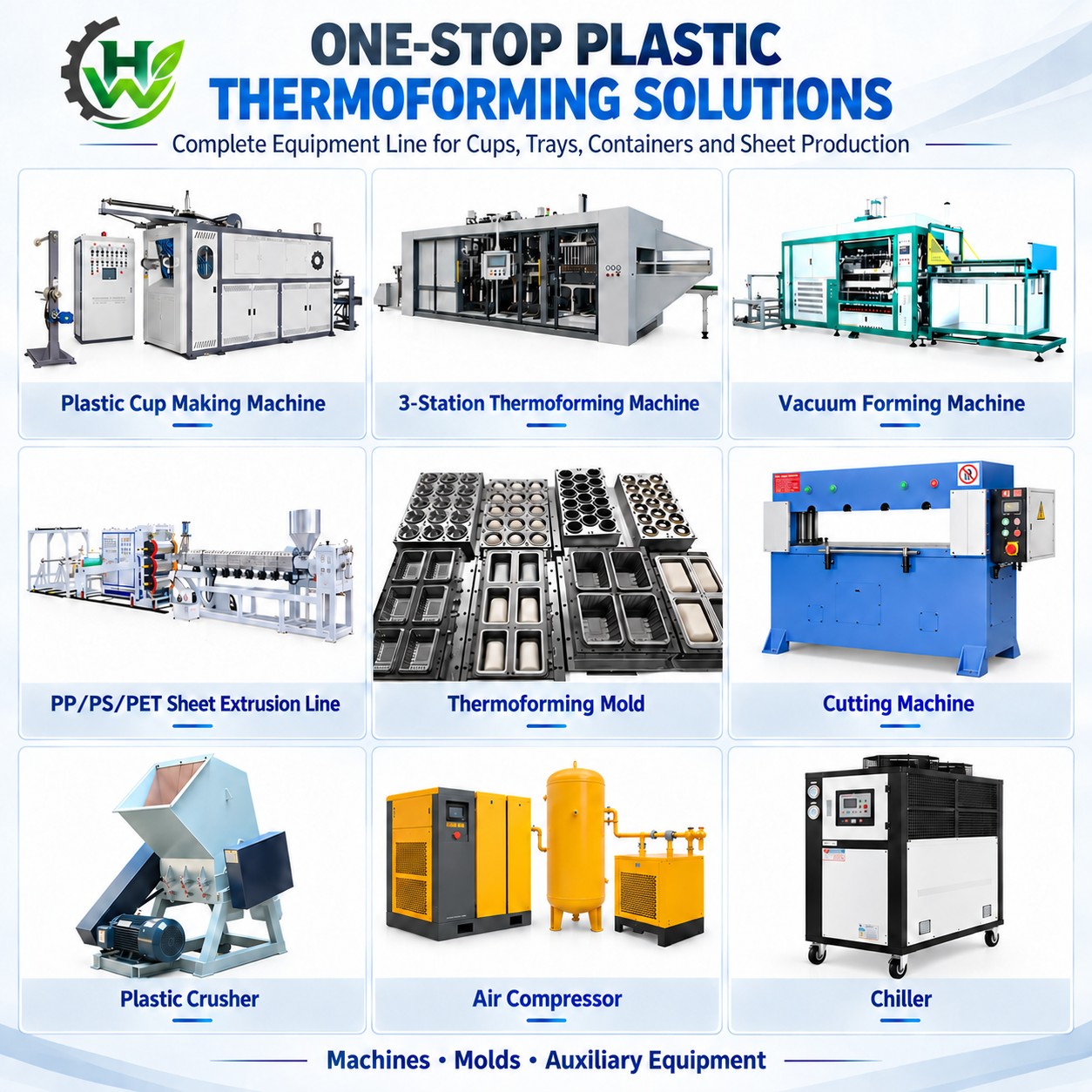
Send the cup drawing, its dimensions and wall gauge, material, sheet thickness, planned capacity, factory voltage and country. Our team will confirm whether the VihoX-750-A fits — and say so if the 750-B or 750-C is closer — then reply with a factory-direct quotation covering machine, mold and auxiliary equipment.
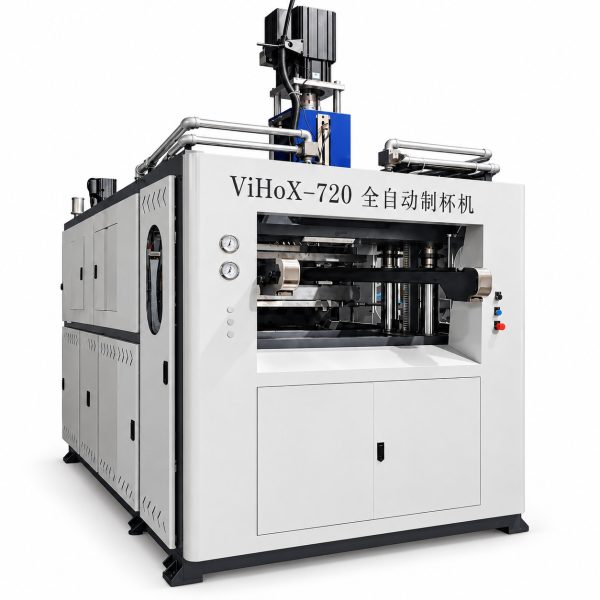
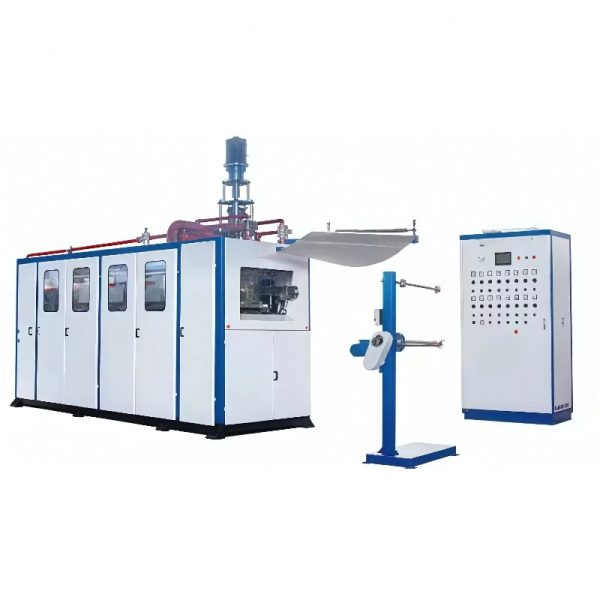
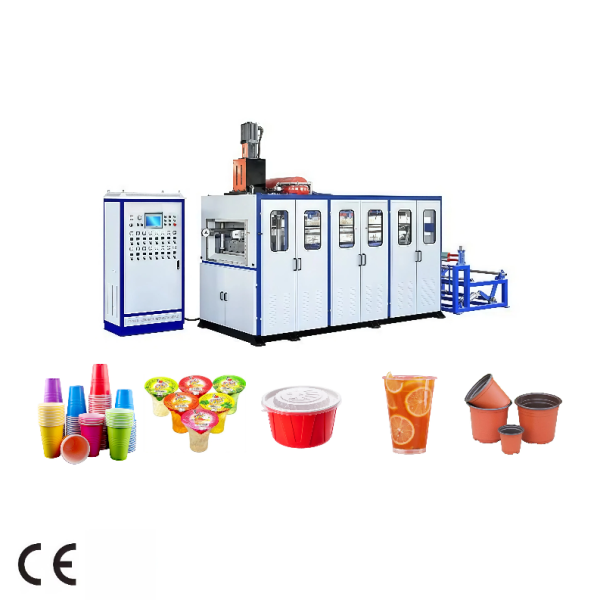
Matched molds and auxiliary equipment — crushers, mixers and recycling units sized to this machine.
See this machine family running in overseas case studies — background, output and on-site photos included.
Request pricing, technical specs or a video machine test — reply within 24 hours.