
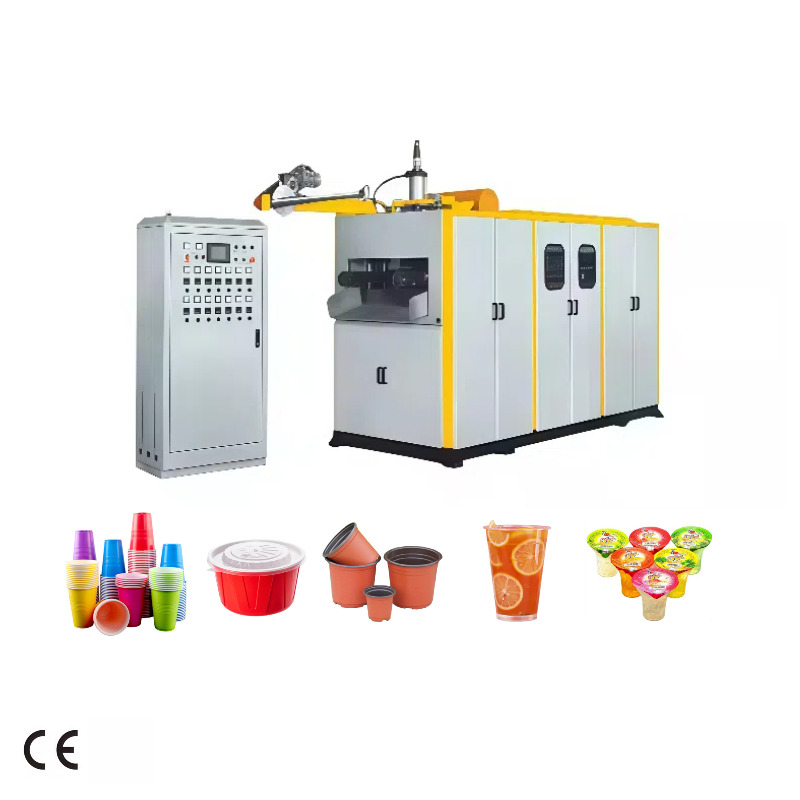
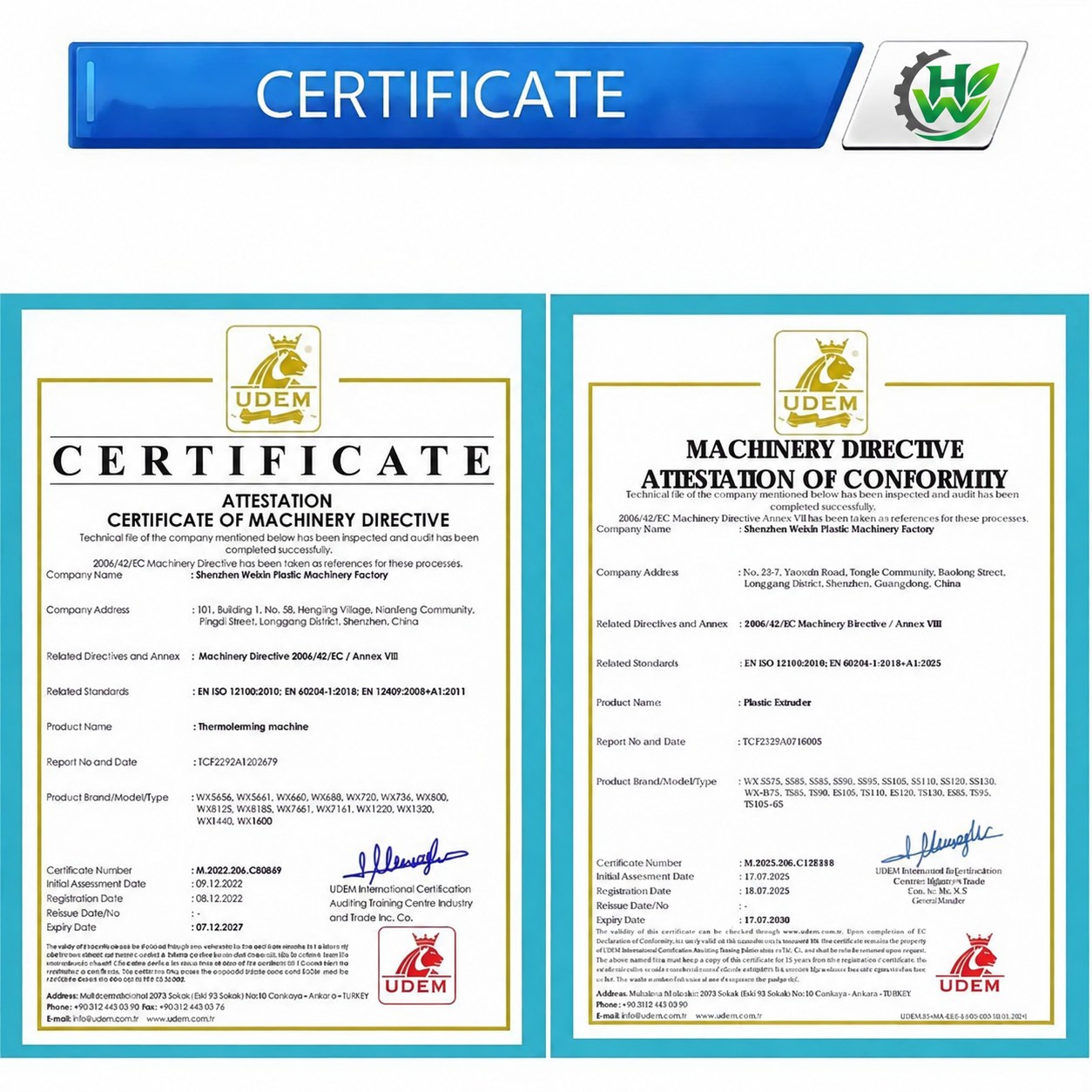
Disposable beverage cup production on one automatic line, from thin sheet at high cavity counts and matched to the filling line you already run. Send the cup size and the hourly target and the forming area follows. CE marking available.
Product Category: Plastic Cup Making Machines
A disposable beverage cup line is judged on two numbers: how many cups leave the machine in an hour, and how many of them reach the packing station without a defect. This page sets out how the VihoX disposable cup machines are configured for that job.
The machines are assembled and test-run in our factory in Yuanzhou Town, Huizhou. Because the same plant makes the mould and the machine, the cup geometry and the forming conditions are matched to each other before the line is shipped.
| Type | Upper mold drive | Lower mold drive | Sheet feeding | Best for |
|---|---|---|---|---|
| Type A – upper cylinder + lower hydraulic | Cylinder | Hydraulic | Standard | Entry-level volume production; simple structure, low maintenance cost |
| Type B – upper servo + lower hydraulic | Servo | Hydraulic | Standard | Higher forming precision and stability; products with strict wall-thickness requirements |
| Type C – full servo | Servo | Servo | Servo | Full servo control; the most stable cycle and lowest energy loss for long continuous runs |
Beverage cups are thin-walled and run at high cavity counts, so the clamping arrangement decides how evenly the material is pulled across the whole bed. Type A lifts the upper mould with a cylinder and is a sound choice for straightforward water cups; Type B adds servo control on the upper mould for tighter wall tolerance; Type C removes the hydraulic unit from the forming motion altogether.
| Parameter | 660 × 320 mm | 720 × 420 mm | 750 × 520 / 560 mm | 850 × 560 mm |
|---|---|---|---|---|
| Max. sheet width | 680 mm | 760 mm | 780 mm | 880 mm |
| Sheet thickness | 0.3–2.0 mm | 0.3–2.5 mm | 0.3–3.0 mm | 0.3–3.0 mm |
| Max. forming depth | 150 / 180 mm | 150 / 220 mm | 180 / 220 mm | 180 / 220 mm |
| Speed | 15–35 cycles/min (reference) | 15–35 cycles/min (reference) | 15–35 cycles/min (reference) | 15–35 cycles/min (reference) |
| Hydraulic motor power | 18.5 kW | 18.5 kW | 18.5 kW | 18.5 kW |
| Total power (max.) | 130 kW | 155 kW | 165 kW | 190 kW |
| Air pressure | 0.6–0.8 MPa | 0.6–0.8 MPa | 0.6–0.8 MPa | 0.6–0.8 MPa |
| Air consumption | Approx. 3.8 m³/min | Approx. 3.8 m³/min | Approx. 3.8 m³/min | Approx. 3.8 m³/min |
| Water consumption | Approx. 20 L/min | – | Approx. 20 L/min | Approx. 20 L/min |
| Cooling recommendation | 3–5 HP Chiller | 5 HP Chiller | 5–10 HP Chiller | 10 HP Chiller |
| Machine weight | Approx. 7 T | Approx. 8 T | Approx. 10 T | Approx. 15 T |
| Typical applications | Water cups, yogurt cups, jelly cups, etc. | Water cups, milk tea cups, beverage cups, meal boxes, bowls, etc. | Water cups, milk tea cups, beverage cups, meal boxes, bowls, etc. | Salad bowls, large-capacity food containers, catering trays |
| Power supply | AC380V / 50Hz / 3 Phase / 4-wire (customizable) | |||
Four forming areas are built on the same frame family. A wider bed normally means more cavities per cycle rather than a bigger single cup.
Most beverage cup projects start from a cup that already exists in the market: a 90 mm rim water cup, a tall milk tea cup, a double-wall candidate. We copy nothing, but we do work from your sample or drawing so the cup stacks, nests and seals the way your existing filling line expects.
Cups for cold drinks and cups for hot drinks are not the same job. A hot drink cup needs a wall that survives the temperature of the filling; a cold drink cup is usually run in thinner sheet at a faster cycle. The machine is configured around whichever of the two is the bulk of your volume.
| Material | Typical cups | Notes |
|---|---|---|
| PP | Water cups, hot drink cups, general disposable cups | Good toughness and heat resistance |
| PS | Jelly cups, lightweight food cups | Good thermoforming performance |
| PET | Clear cold drink cups, transparent packaging cups | High transparency; needs suitable sheet quality and temperature control |
| PVC | Industrial and special applications | Confirm local regulations and market requirement before selection |
| PLA | Eco-oriented cups and containers | Narrower processing window; drying and temperature control must be confirmed by trial |
Thin disposable cups live or die on sheet quality. Sheet under 0.5 mm hides nothing: a small variation in gauge shows up as a visible streak in the wall. If your sheet comes from an outside supplier, send a sample roll with the enquiry so the machine is set for that material.
For a disposable cup, the largest single cost is the sheet, not the machine hour. That is why the practical route to a lower cost per cup is usually an in-line extrusion line feeding the thermoformer, so sheet thickness is under your control and trim goes straight back into the extruder instead of being sold as scrap.
The second cost driver is unplanned stop time. A line that runs unattended through a shift with a cup stacker at the end will beat a faster machine that needs an operator at the discharge every few minutes.
A cup mould is a precision tool, and its rim and stacking geometry determine whether the cup works on your filling line. Moulds for this range are cut in our own workshop and proven on the machine before shipment.
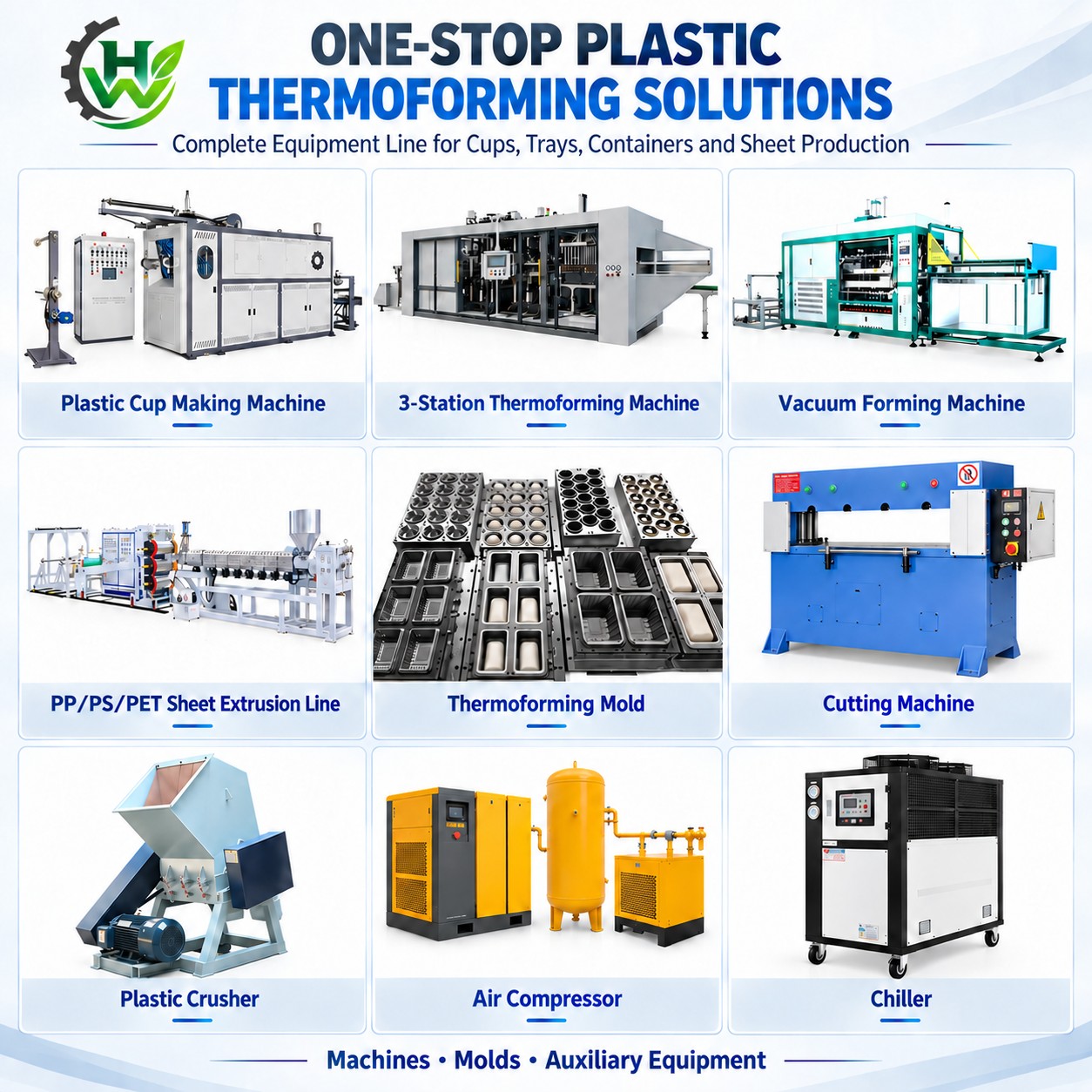
A complete arrangement typically pairs the thermoformer with a sheet extrusion line, a chiller matched to the hydraulic unit, an air compressor, a trim grinder, and a stacker for the finished cups.
Each of the models below is described by its forming area, drive type and built parameters. If you already know the cup diameter and the hourly target, the comparison takes a few minutes.
Your cup mould is run in the factory before shipment, the settings are written down, and the samples travel with the machine. Commissioning, operator training and the spare parts supply all come from the factory that built it.
How do I work out how many cups per hour the line will make?
Multiply the number of cavities in your mould by the forming cycles the machine completes in a minute. The cycle range quoted for the range is a reference figure; the real number is measured on your own mould before shipment.
Can one machine run water cups and milk tea cups?
It can, if both moulds fit the bed. The two cups use different moulds and usually different sheet, so the machine is ordered to suit the larger of the two and the smaller mould is run at the same bed size.
How thin can the cup wall be?
That is set by the mould and the sheet, not by a fixed machine limit. Market practice for a disposable beverage cup is generally between 0.5 mm and 1.2 mm; bring your target to the enquiry and we will confirm it on the trial.
Do you build the machine to our local voltage?
Yes. The standard build is a three-phase AC380V 50Hz four-wire supply, and the electrical configuration is adapted to the destination country when the order is placed.
What about the trim and the rejected cups?
Both are reground. A grinder is normally supplied with the line, and the regrind is fed back into the sheet extruder where one is part of the project.
Is a stacker necessary?
At low cavity counts the cups can be handled by hand. Once the discharge rate passes what one operator can keep up with, a cup stacker or manipulator keeps the machine running without stopping.
Can the machine run PLA cups for a compostable range?
PLA forms on the same machine but within a narrower temperature window than PP or PS. Drying and heating conditions are confirmed by trial on your material rather than assumed from the generic table.
How is the machine shipped and what documents come with it?
It is packed with waterproof sheeting, stretch film and wooden cases where needed, then loaded in our own yard. You receive the packing list, the bill of lading, loading photographs, the container number and, where required, a pre-shipment inspection slot.
Tell us the cup you want to run and the output you need per shift. We will come back with the forming area, the drive type and the mould that fit that target, priced as one line rather than as unrelated items.
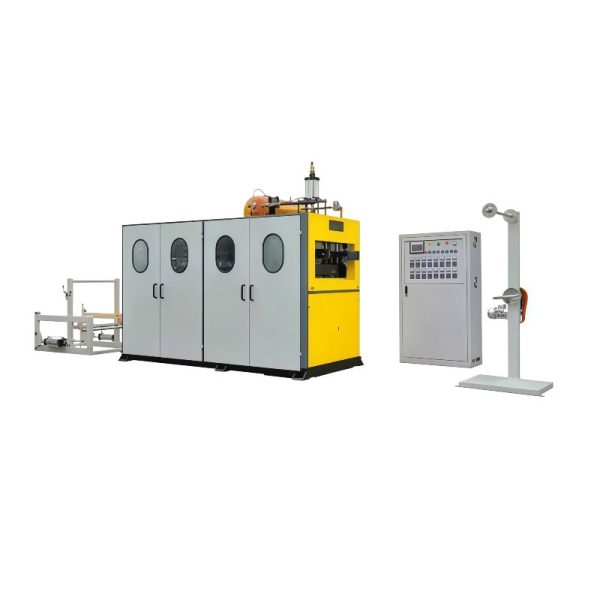
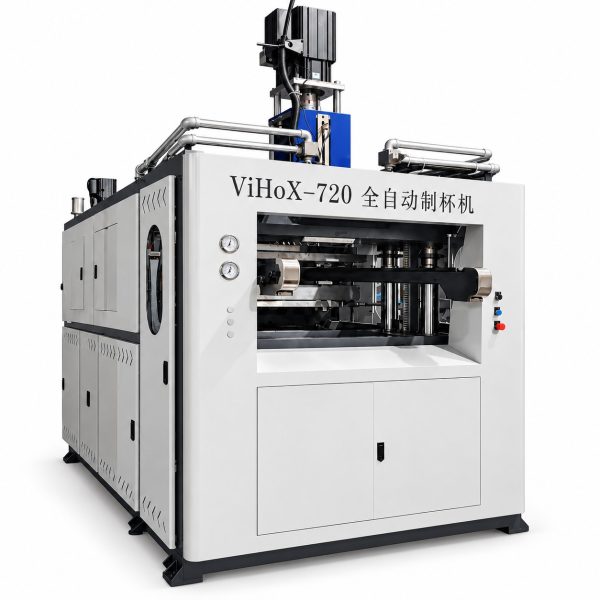
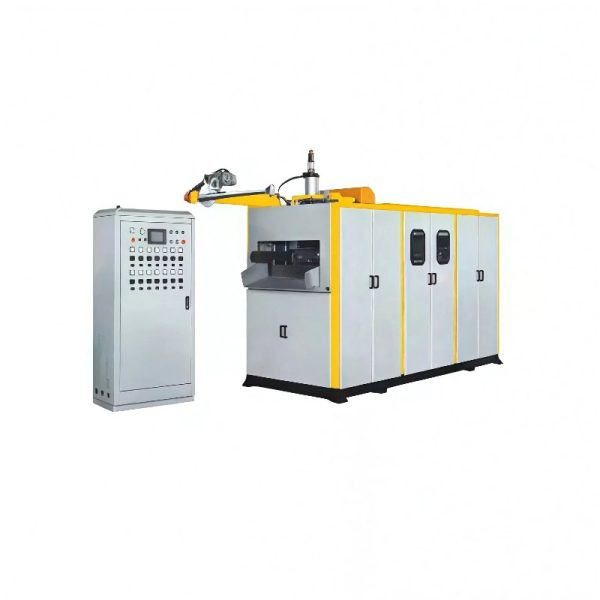
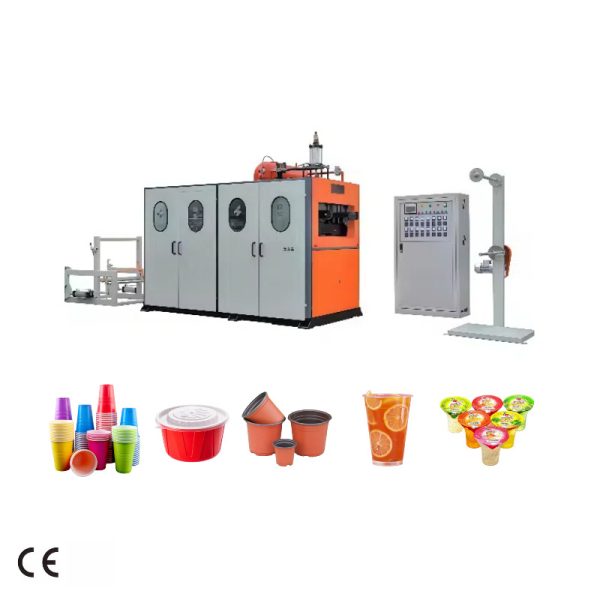
Matched molds and auxiliary equipment — crushers, mixers and recycling units sized to this machine.
See this machine family running in overseas case studies — background, output and on-site photos included.
Request pricing, technical specs or a video machine test — reply within 24 hours.