
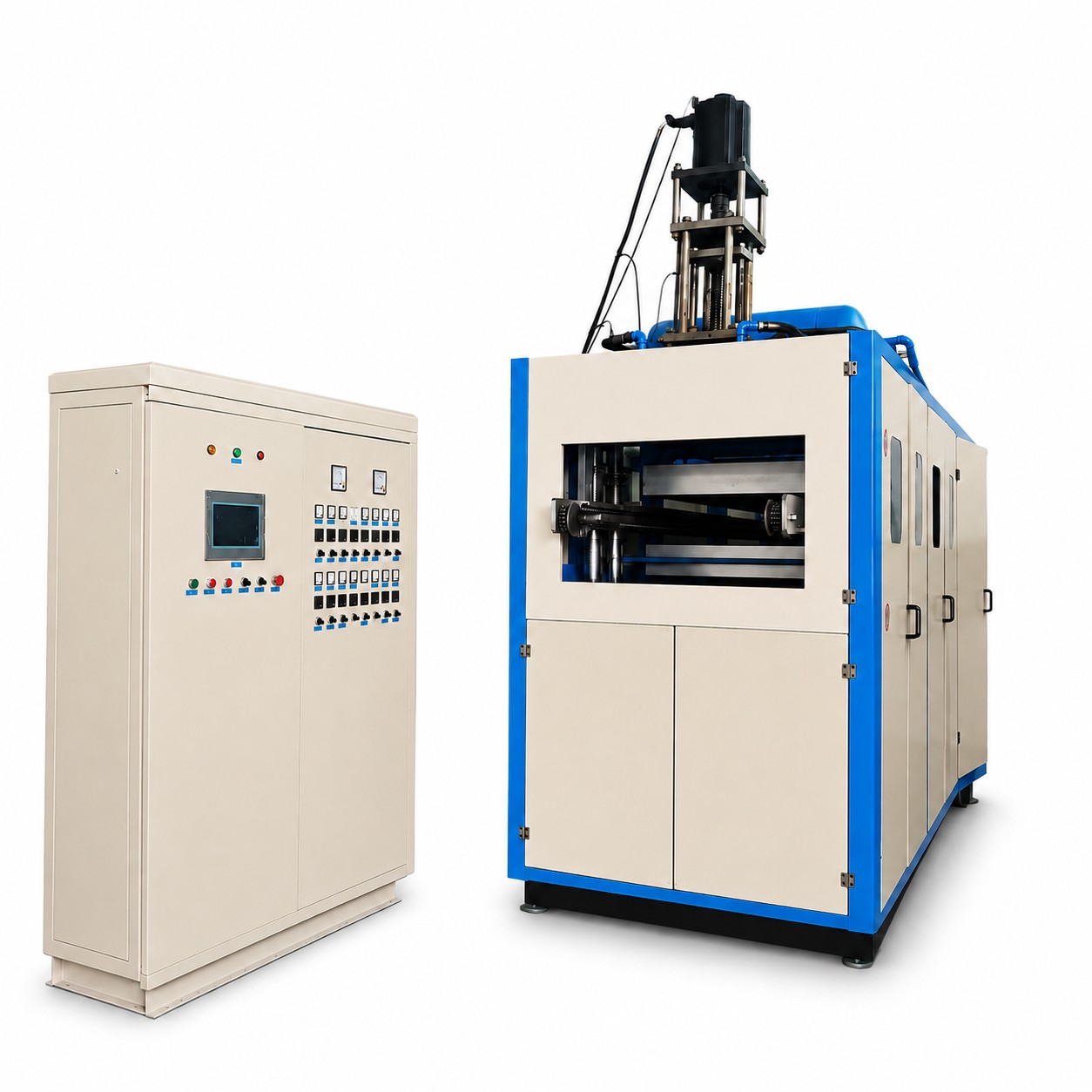
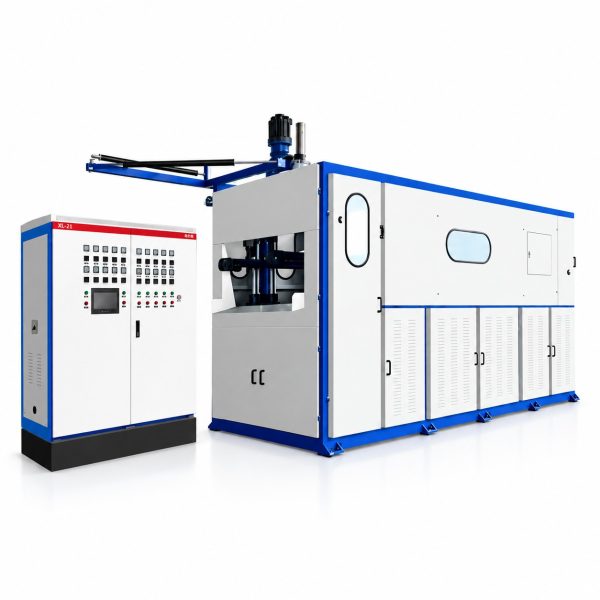
VihoX-850-B automatic plastic cup and bowl thermoforming machine: 850×560 mm forming area, 0.3–3.0 mm PP/PS/HIPS/PET/PVC/PLA sheet, 220 mm max depth, 11 kW upper stretch servo with 18.5 kW hydraulic clamp, 190 kW total power, 10 HP chiller. For salad bowls, large food containers and catering trays. Custom mold, factory running test with video before shipment, AC380V/50Hz (customizable).
Product Category: Plastic Cup Making Machines
The VihoX-850-B is a Type B heavy-duty automatic thermoforming machine with an 850 × 560 mm forming area and a 190 kW installed maximum power. It unwinds thermoforming sheet roll, heats it, forms each shot with a servo-driven upper stretch against a hydraulic lower clamp, then cuts and stacks the parts in a continuous sequence.
This is the widest platform in the VihoX range, serving a different product family from the drinking-cup models: salad bowls, large-capacity food containers and catering trays, where the binding constraints are forming footprint, draw depth and clamp tonnage.
Drive architecture matters more on a platen this size, because every cycle moves a heavier mold and stretches a wider sheet.
| Type | Upper mold drive | Lower mold drive | Sheet feeding | Best for |
|---|---|---|---|---|
| A | Cylinder | Hydraulic | Standard | Lower-cost volume work; simple mechanics and easy upkeep |
| B (this model) | Servo | Hydraulic | Standard | Repeatable wall thickness on deep draws; one or two fixed large items per line |
| C | Servo | Servo | Servo | Full servo architecture; frequent large-item changeovers and very long continuous runs |
The stretch axis runs on an 11 kW servo motor while the lower clamp stays hydraulic at 18.5 kW — suited to a plant with one or two settled large items: servo stretching keeps a deep draw even across a wide sheet and hydraulics supply the holding tonnage an 880 mm sheet needs.
| Machine Type | Type B (Upper Servo + Lower Hydraulic) |
| Forming Area | 850 × 560 mm |
| Hydraulic Motor Power | 18.5 kW |
| Upper Stretch Servo Motor Power | 11 kW |
| Clamp Servo Motor Power | N/A on Type B |
| Sheet Feeding Servo Motor Power | N/A on Type B |
| Max. Sheet Width | 880 mm |
| Sheet Thickness | 0.3–3.0 mm |
| Max. Forming Depth | 180 / 220 mm |
| Speed | 15–35 cycles/min (reference) |
| Air Pressure | 0.6–0.8 MPa |
| Air Consumption | Approx. 3.8 m³/min |
| Water Consumption | Approx. 20 L/min |
| Cooling Recommendation | 10 HP Chiller |
| Suitable Material | PP / PS / HIPS / PET / PVC / PLA |
| Power Consumption | 45–80 kWh (reference) |
| Total Power (Max.) | 190 kW |
| Power Supply | AC380V / 50Hz / 3 Phase / 4-wire (customizable) |
| Machine Dimension | Approx. L8000 × W2400 × H2800 mm |
| Machine Weight | Approx. 15 T |
| Typical Applications | Salad bowls, large-capacity food containers, catering trays |
How to read these figures
No narrower platen in the series can match it: one mold layout here carries bowl-format cavities that will not fit a smaller table, and one sheet feed turns out several large containers per cycle. Anything wider than 850 mm, longer than 560 mm in the feed direction or deeper than 220 mm falls outside it.
Where the 850-B is wrong for you: ordinary drinking cups, milk-tea cups or small yogurt cups do not need this platform. A 660 or 720 machine forms them to comparable wall quality on far less installed power and floor space.
| Material | Typical large-format items | What it means at 850 mm width |
|---|---|---|
| PP | Microwave-safe bowls, takeaway containers, catering trays | Tough and heat resistant; the usual starting point for foodservice ware |
| PS | Lightweight cold-food trays, display bowls | Forms easily on wide molds, though stiffness drops on large flat areas |
| HIPS | Rigid opaque bowls, meal-prep containers | Extra stiffness keeps a large panel flat after release |
| PET | Clear salad bowls, transparent catering ware | Needs disciplined sheet quality and even oven control across the width |
| PVC | Special and industrial large containers | Check local regulation and market acceptance before tooling is cut |
| PLA | Compostable bowls and catering trays | Narrow window; drying and temperature settings must be settled by trial |
Sheet roll → sheet feeding → oven heating → forming (servo upper stretch + hydraulic clamp) → cutting / separation → stacking → counting and packing
At this size the binding constraint is heat. An 880 mm sheet up to 3.0 mm thick must reach an even forming window across its full width before the mold closes, or a bowl draws thinner on one side. The 10 HP cooling circuit and the 15 T frame keep temperature and clamp position predictable.
Tooling is engineered per project around 850 × 560 mm and 220 mm of depth: cavity layout, corner radius, rim design and stack height all follow from the part.
Fewer, larger cavities is usually better: three or four bowl positions that heat evenly, release cleanly and cut without flash beat a crowded layout that fights the oven.
Plan a 10 HP chiller for the platen load, a compressor matched to real duty cycle, and stacking suited to deep parts awkward to collect by hand.
A second selection boundary: one large product, one mold, one shift — a Type B machine already forms that part. A full-servo platform buys changeover convenience and continuous-run consistency, not a different part shape.
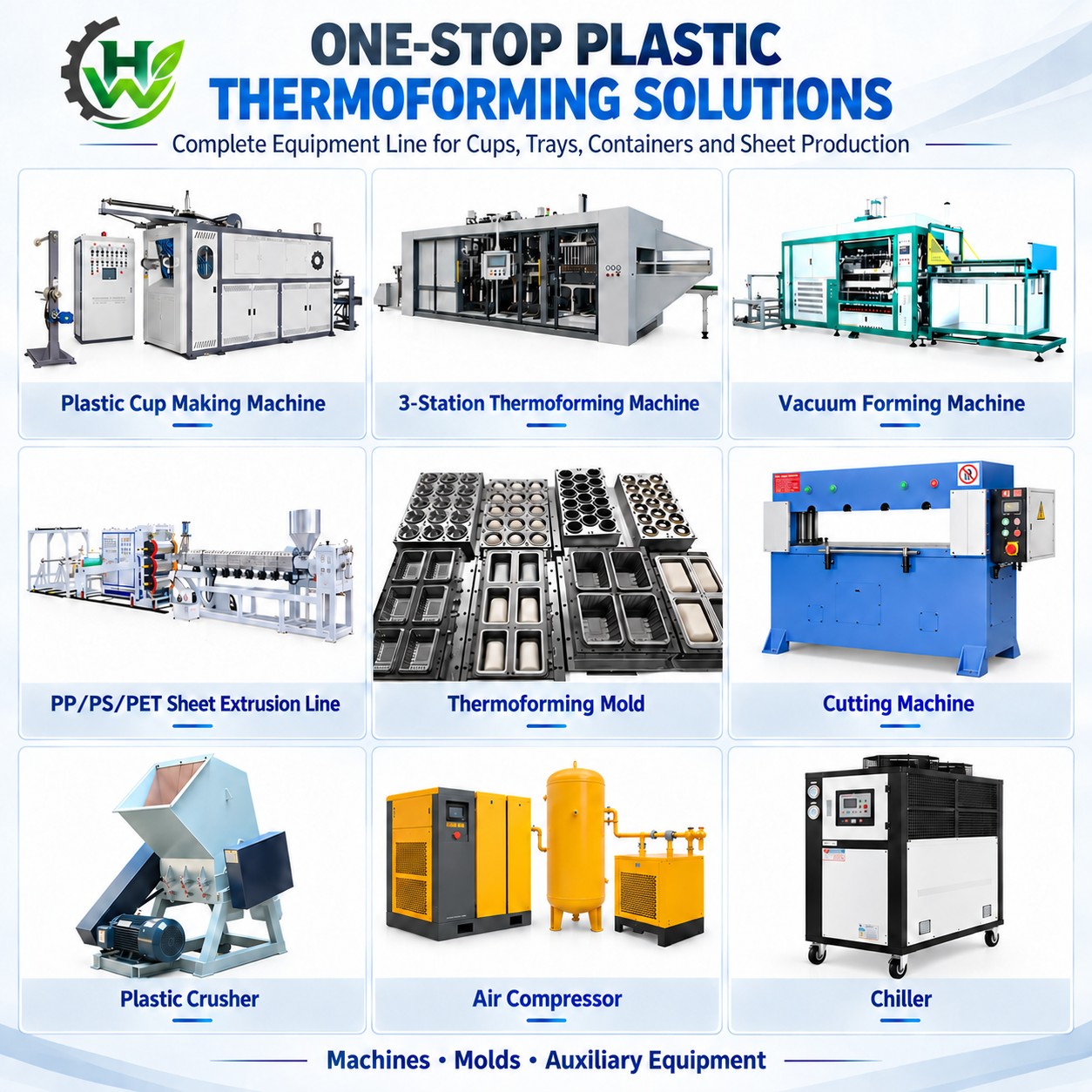
A line for these products usually joins sheet extrusion, forming, molds, cooling, compressed air, stacking, packing and trim handling. Add extrusion for control over sheet width, thickness or formulation.
Related reading: How to Choose a New Plastic Cup Making Machine for Your Factory, What Equipment Is Needed for a Complete Plastic Cup Production Line? and the Complete Plastic Cup Production Line solution. Molds sit under molds, matched units under auxiliary equipment, and the cup-oriented VihoX-660-A shows the smaller-platform alternative.
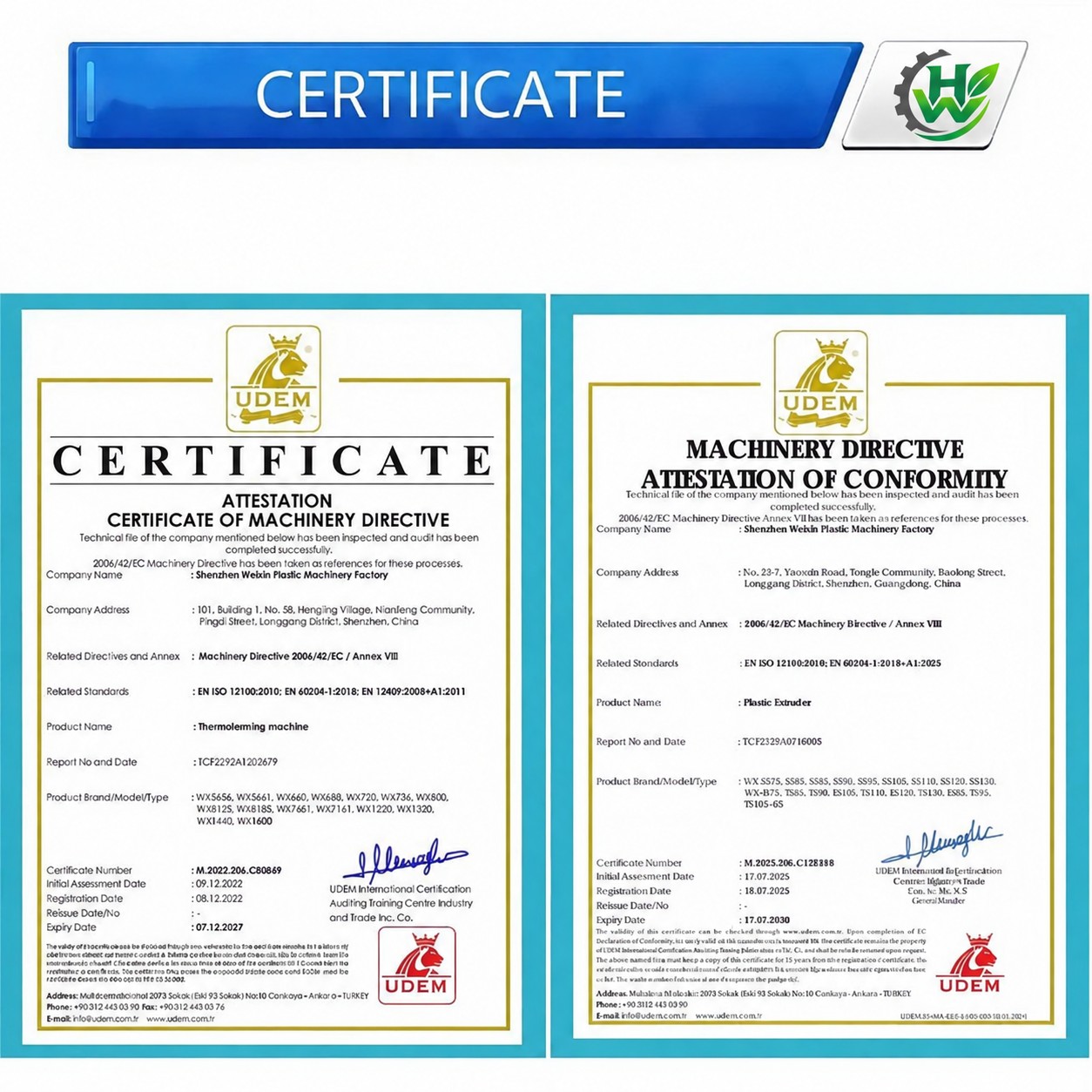
Every machine is powered up and run in our works before dispatch, with the customer’s mold where available. Buyers receive running footage, forming trials on their product, sample parts, cabinet photographs, loading images, schematics and manuals.
What does an 850 × 560 mm forming area actually allow?
It is the working area open to the mold, with 880 mm maximum sheet width and 180 / 220 mm maximum forming depth.
Can the VihoX-850-B form a salad bowl with a 220 mm draw?
Yes. 220 mm is this model’s maximum depth, and deep bowl molds normally run with the servo stretch driving the draw.
Why does this model need a 10 HP chiller when smaller machines use 3–5 HP?
Because far more surface must be cooled: a wide, deep part holds more heat before release.
Is 190 kW the electricity the machine uses while running?
No. 190 kW is the installed ceiling; running consumption is a separate reference that depends on product, material and operation.
Should I choose Type B or Type C on this platform?
Type B fits a plant running one or two fixed large products with rare mold changes; where molds change weekly, compare the Type C version.
How many pieces per hour should I plan for?
Output follows the cavity count in your mold: theoretical pieces per hour = actual cycles per minute × cavities × 60, and less in practice.
Does the machine form parts from plastic granules?
No. It runs finished sheet roll in PP, PS, HIPS, PET, PVC or PLA between 0.3 and 3.0 mm; extrusion is a separate line.
What should I send before you quote?
The part drawing with dimensions, material and sheet thickness, target output, mold quantity, your plant voltage and country, and whether you need a full line.
Send the item you want to form, its dimensions, material and target capacity, plus your factory voltage and country. Our engineers will confirm whether the VihoX-850-B is the right platform, or point you to a smaller model, and quote the machine with matched mold and auxiliary configuration.
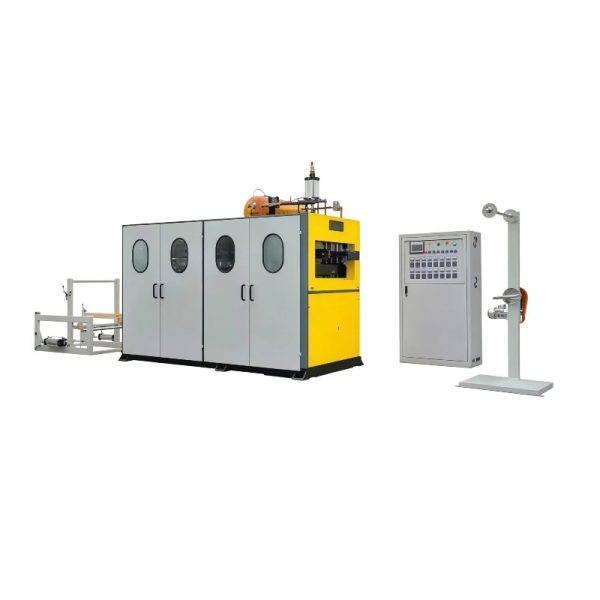
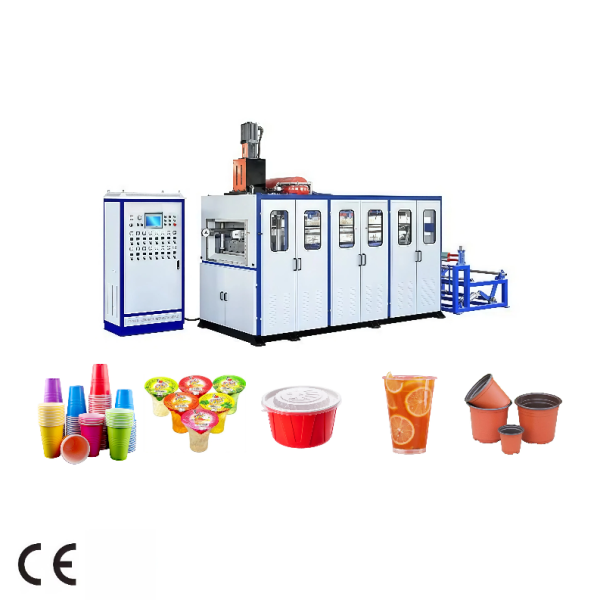
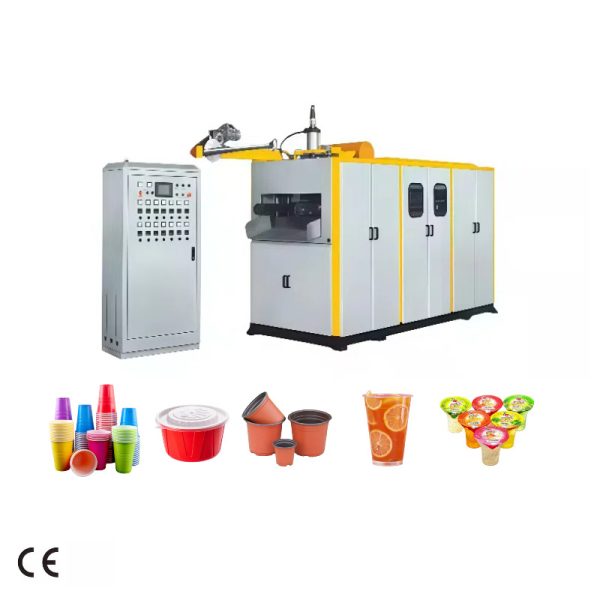
Matched molds and auxiliary equipment — crushers, mixers and recycling units sized to this machine.
See this machine family running in overseas case studies — background, output and on-site photos included.
Request pricing, technical specs or a video machine test — reply within 24 hours.